The Good Developer
June 2026
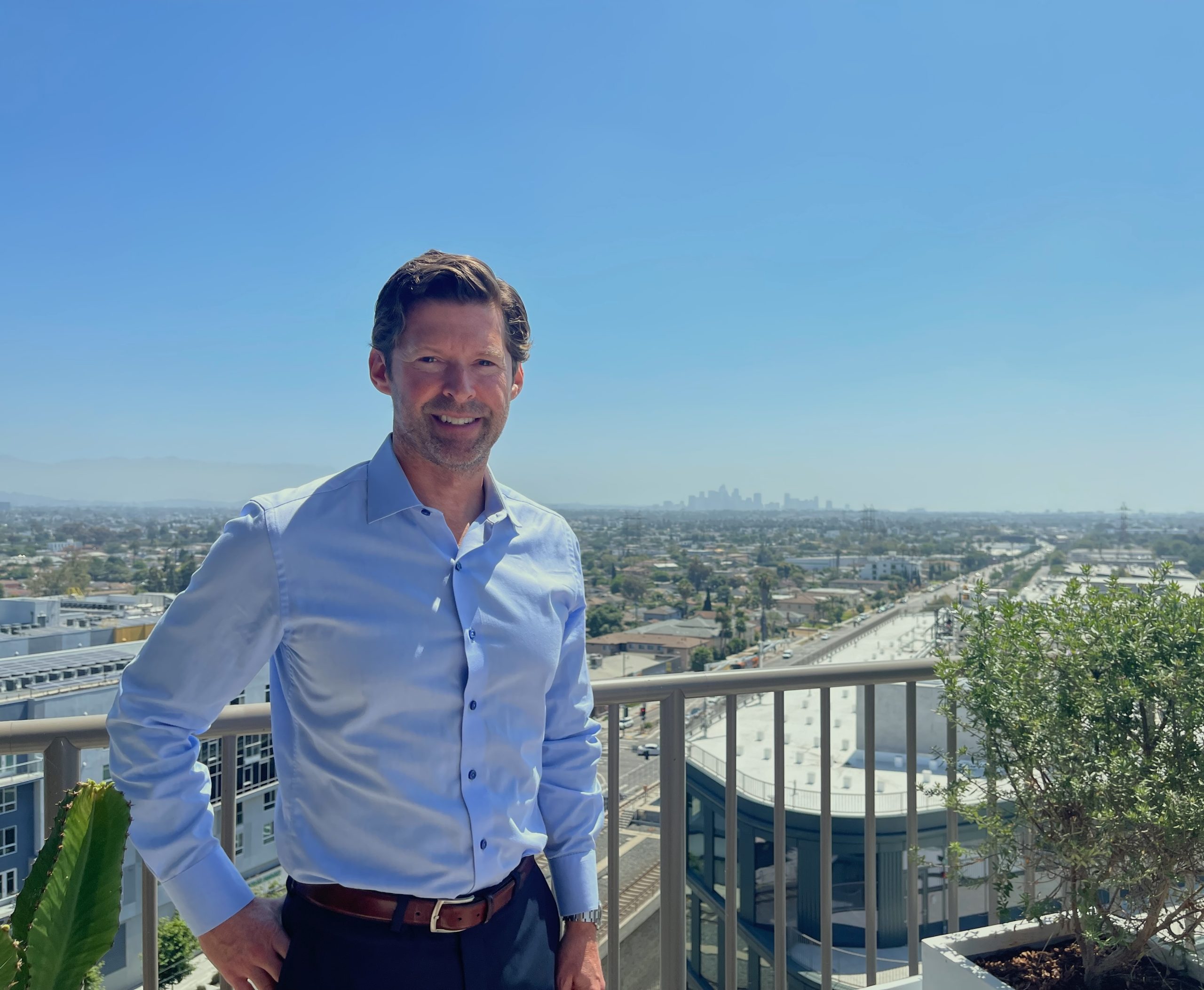
Ryan Burton, Lendlease
The Next Great Place!
By Frances Anderton for FORT: LA
Key Buildings: Habitat, developed by Lendlease ( architecture by ShoP and executive architect Steinberg Hart, landscaping by RELM, Interiors by Kelly Wearstler); past buildings Burton worked on: Ivy Station, Culver City (with Lowe), restoration of historic Taft Building, Hollywood and Vine, and “The Plaza at Santa Monica,” a mixed-use development at 4th Street and Arizona Avenue in Santa Monica, designed by architect OMA but never built (both with Clarett West).
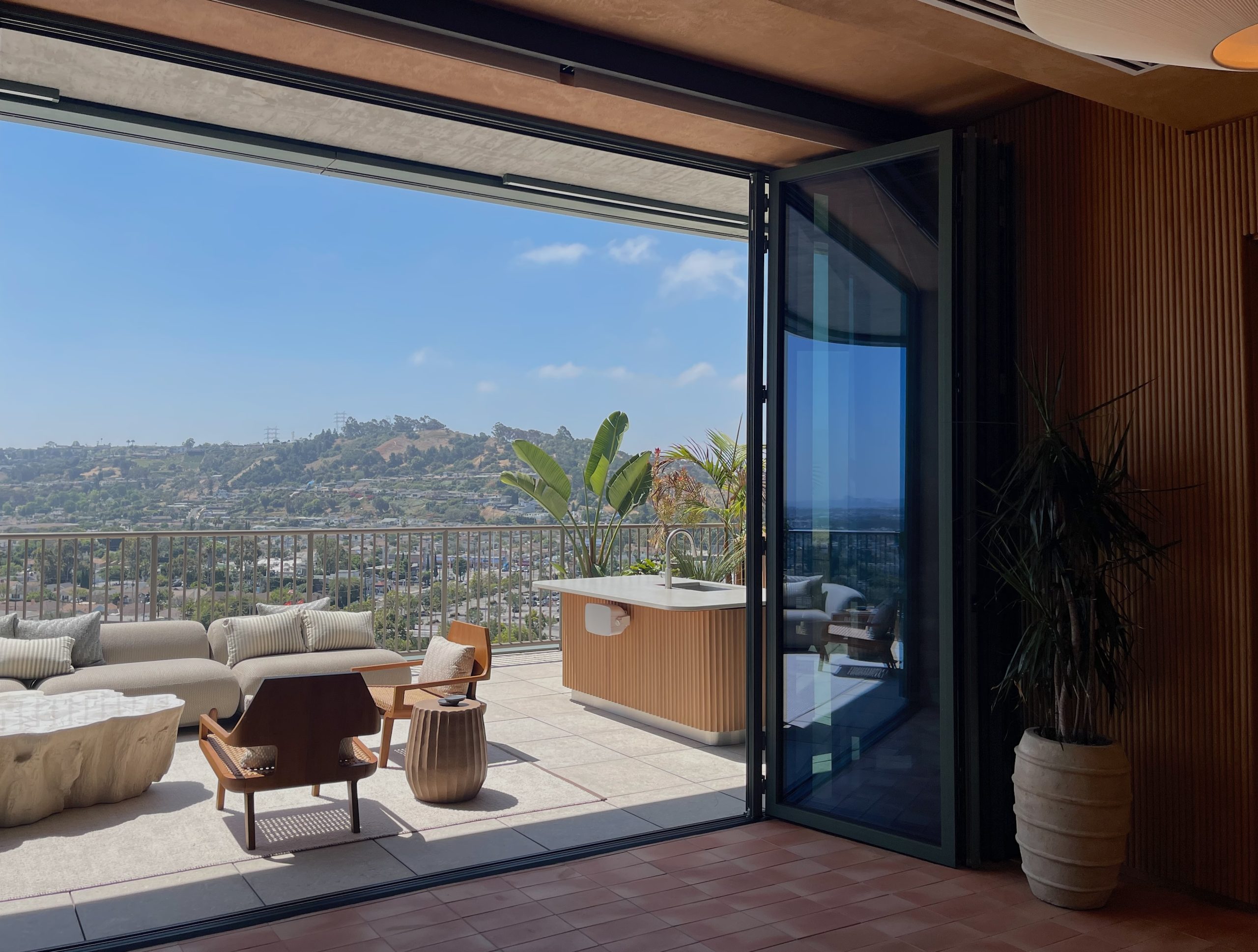
Best Amenity: The 12th floor, bookable dining room at Habitat, with the indoor-outdoor NanaWall.
Favorite Construction Site Sandwich: Italian sub at Jackson Cafe. When we started out, Jackson was one of the only restaurants in this immediate neighborhood that’s within walking distance.
Fantasy Building Name: Habitat. That really symbolizes this place that people identify with.
Most Annoying City Code/Tax/Department: Measure ULA.
LA Developer Hero: Rick Caruso, because he pushed the envelope to make great places.
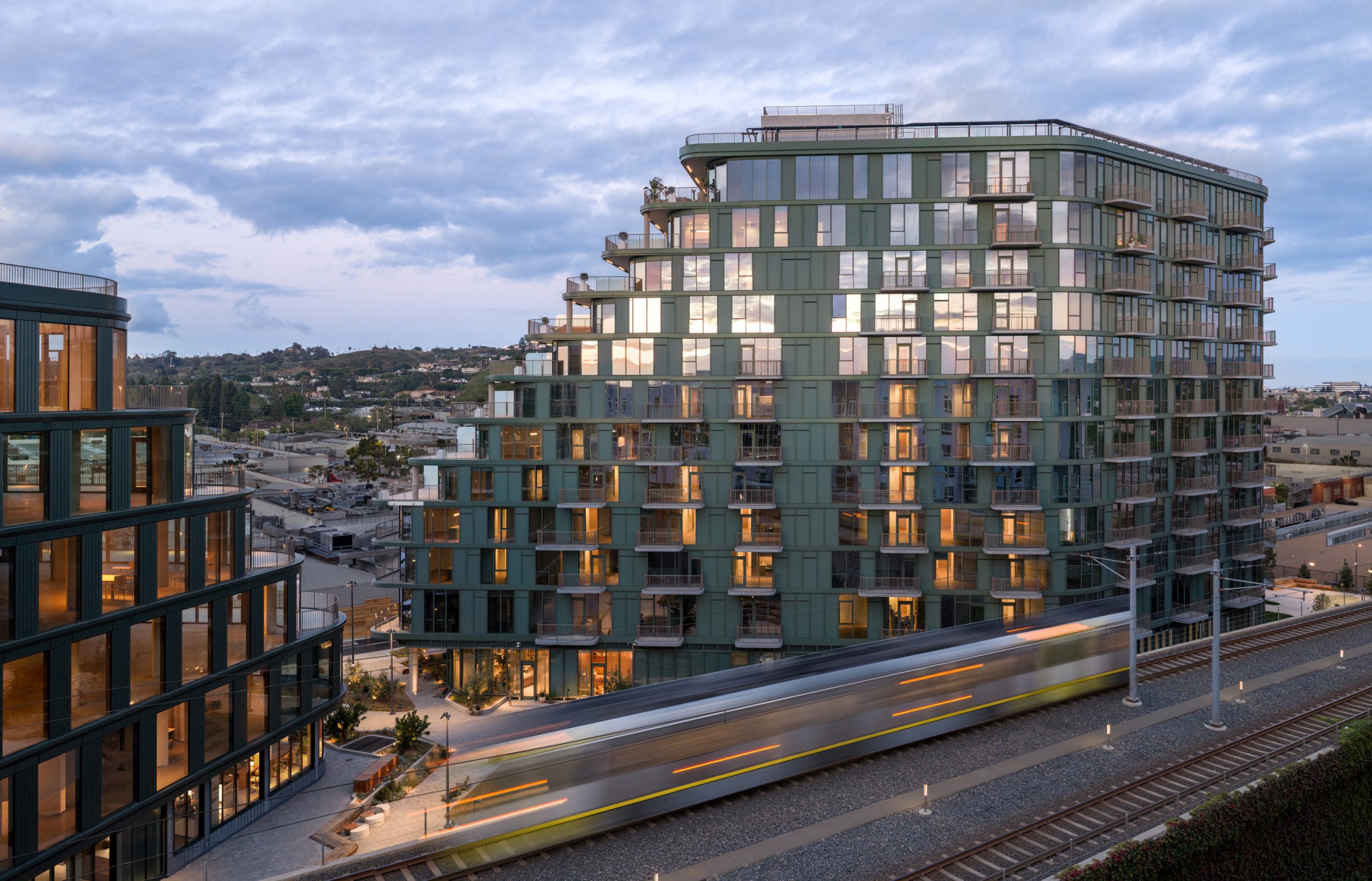
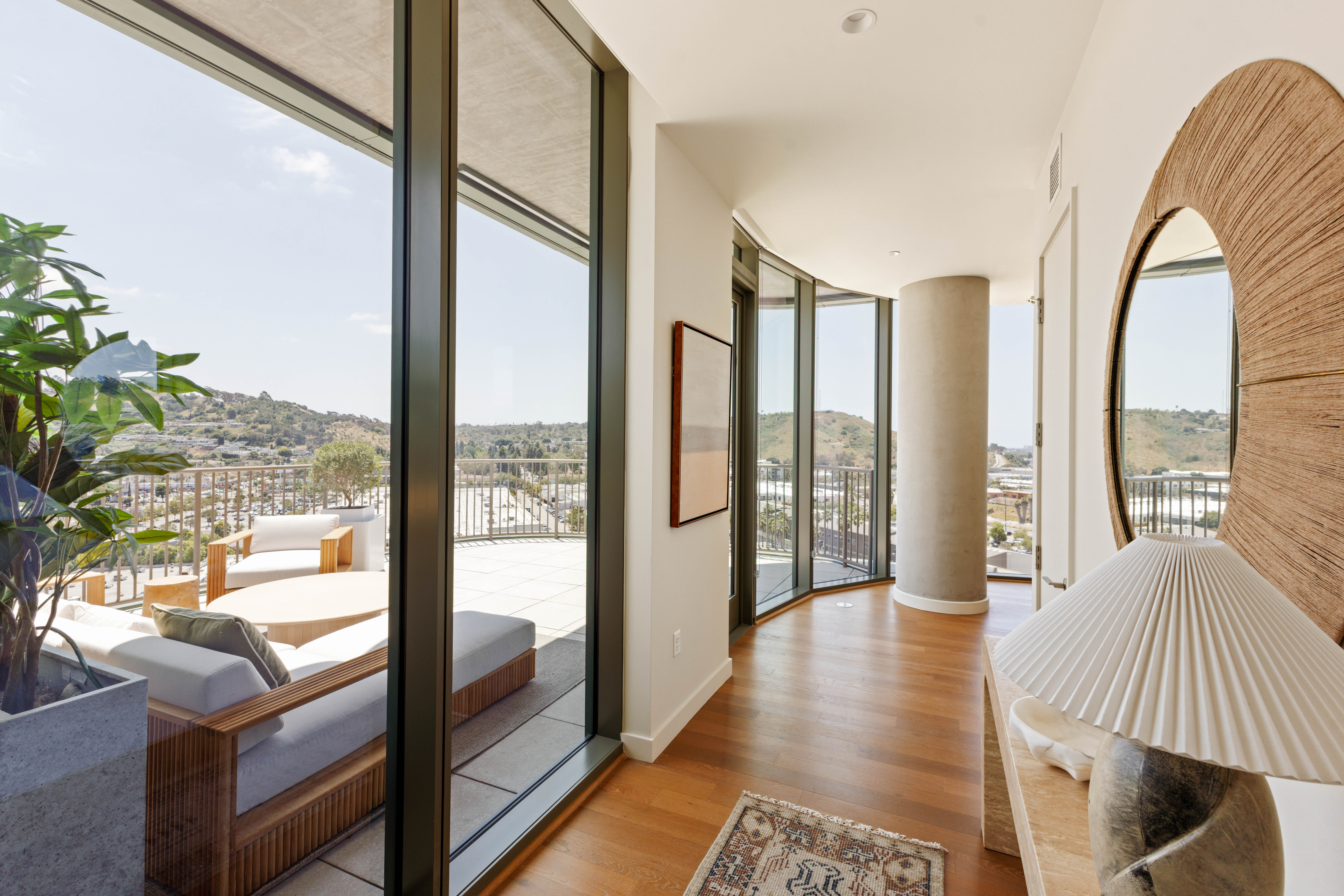
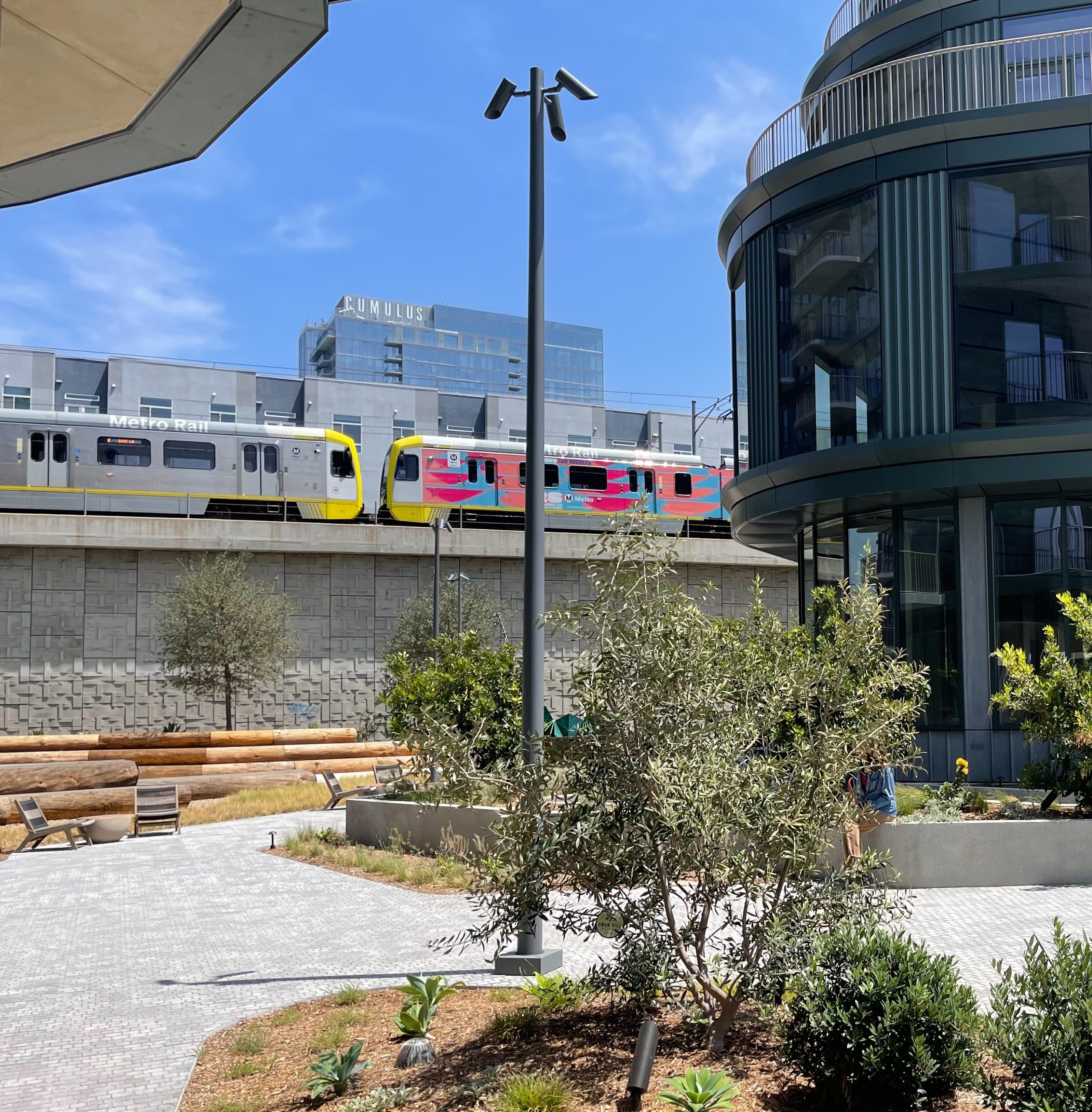
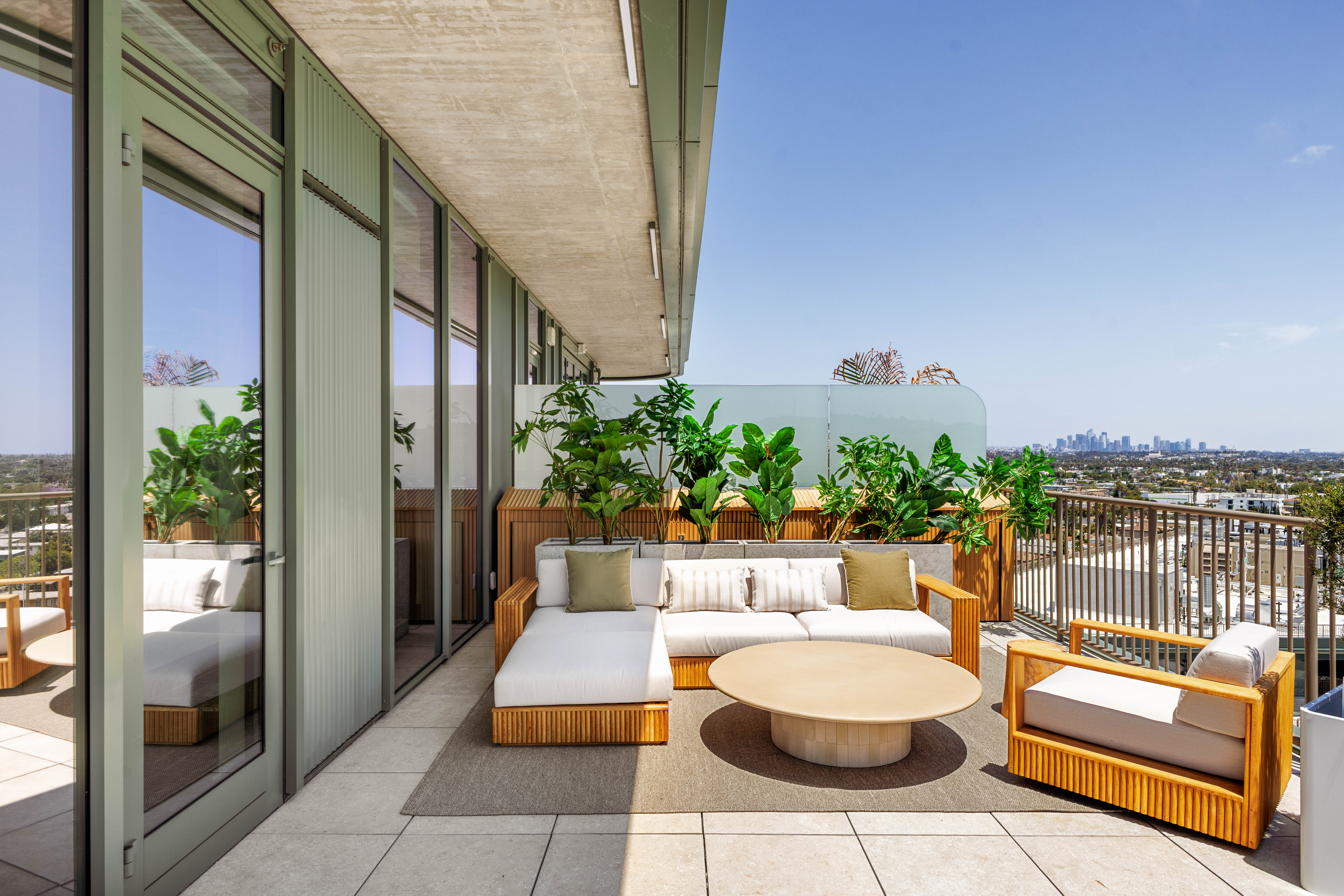
If you’re looking for future living in Los Angeles, it just might be in the form of an apartment on a high floor at Habitat Residences, with a view south of the Baldwin Hills, a view north of a passing train on the Expo Line and the Hollywood Hills yonder, and, when the wind is blowing in the right direction, a sweet waft of chocolate.
Habitat is a new campus comprising a 12-story, 260-unit apartment building and “a next generation, destination office building,” developed by the Australian company Lendlease, at the intersection of La Cienega and Jefferson. It officially opened in May, taking its place alongside Cumulus, Whole Foods, the (W)rapper, and, close by, See’s Candies. It marks the latest stage in the ongoing redevelopment of the one-time light industrial neighborhood into what Lendlease Development Lead Ryan Burton calls the “next great place.”
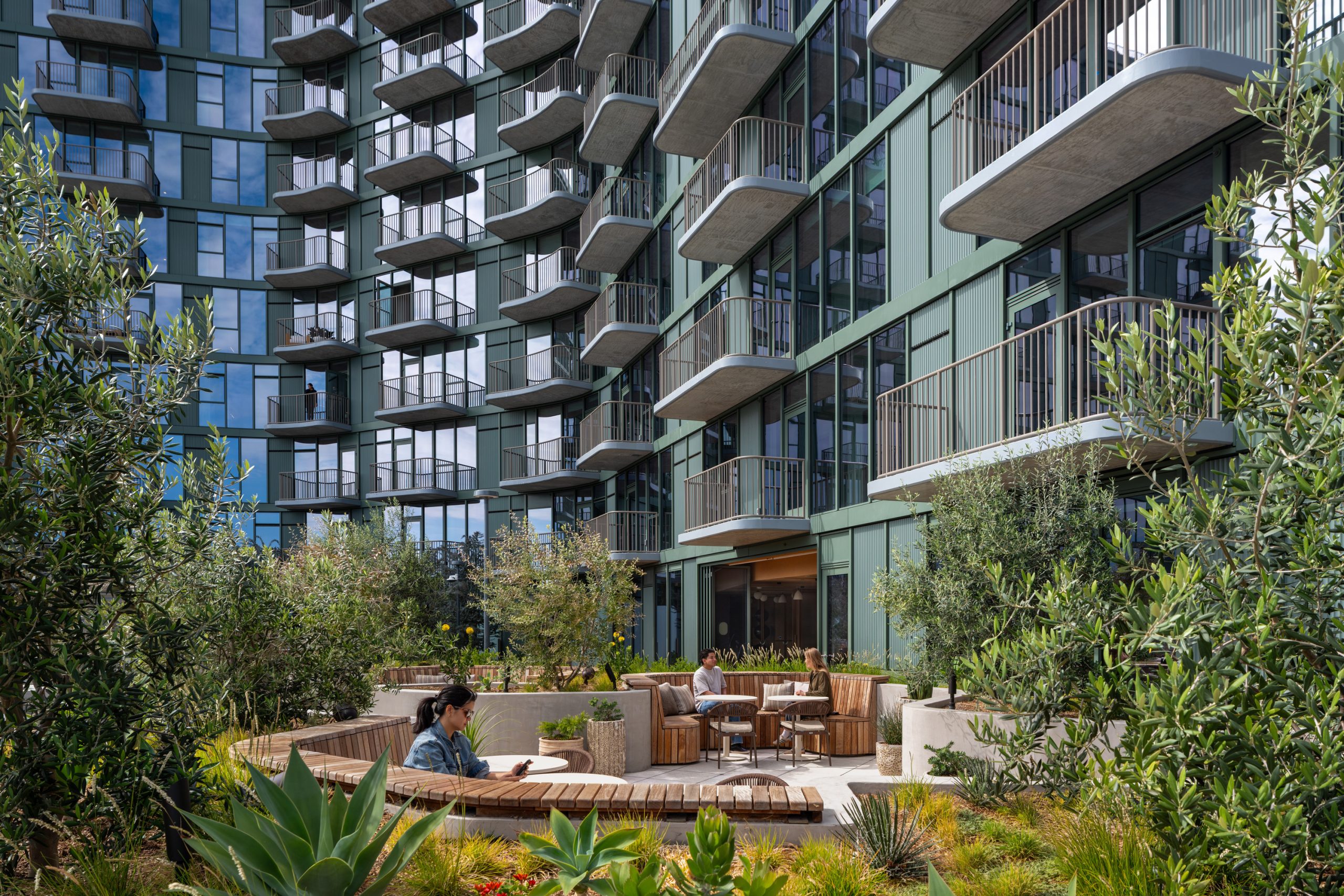
Burton came on board some five years ago, after helping build the Ivy Station complex located one Metro stop west in Culver City. Together with SHoP Architects lead designer Dana Getman, he and their team worked up a design aimed at doing high density sensitively, by stepping back the levels of the volume, keeping view corridors through the separate residential and retail buildings, and cladding the structure in a soft green metal reminiscent of the soft coloring of craftsman bungalows and the LA chaparral.
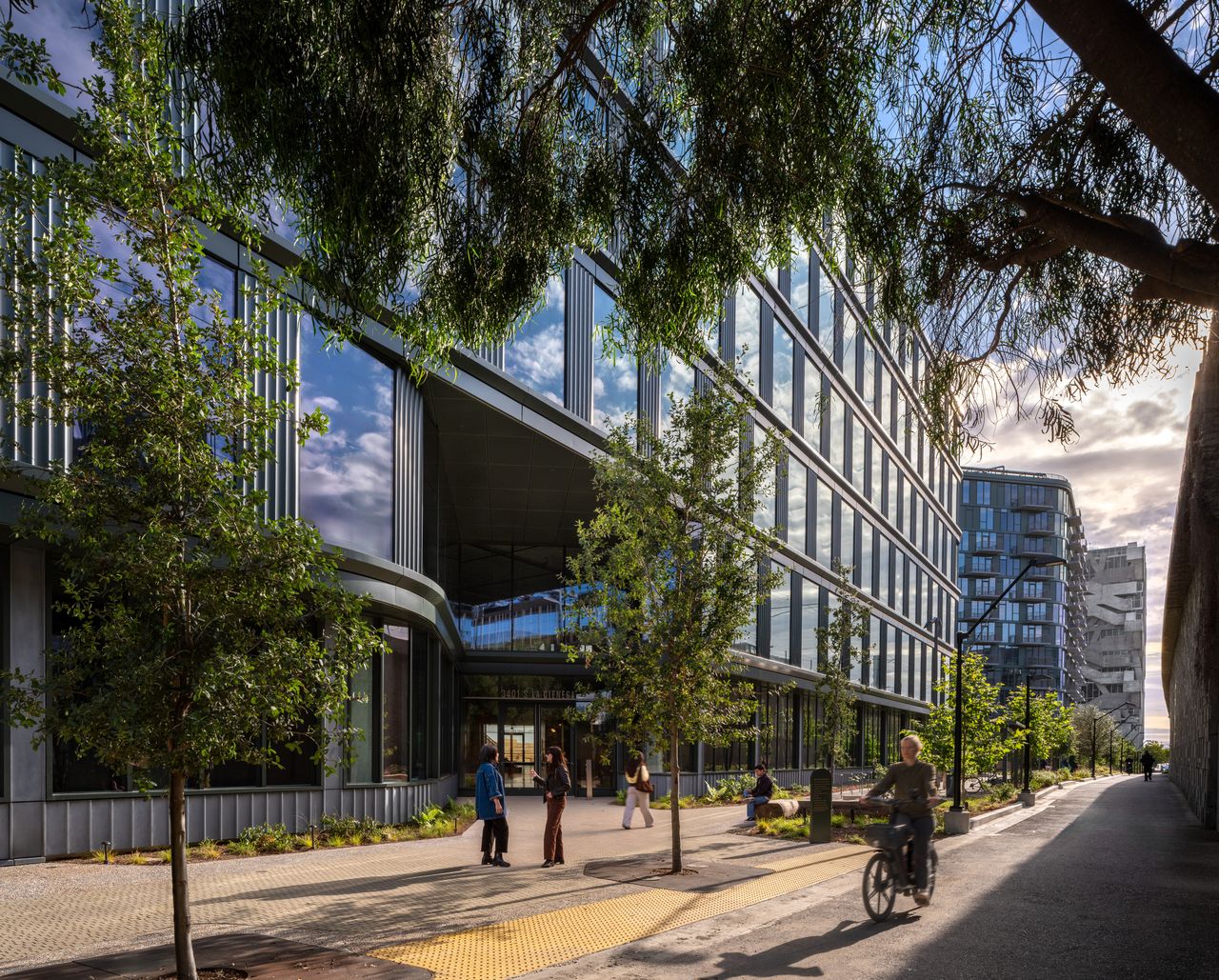
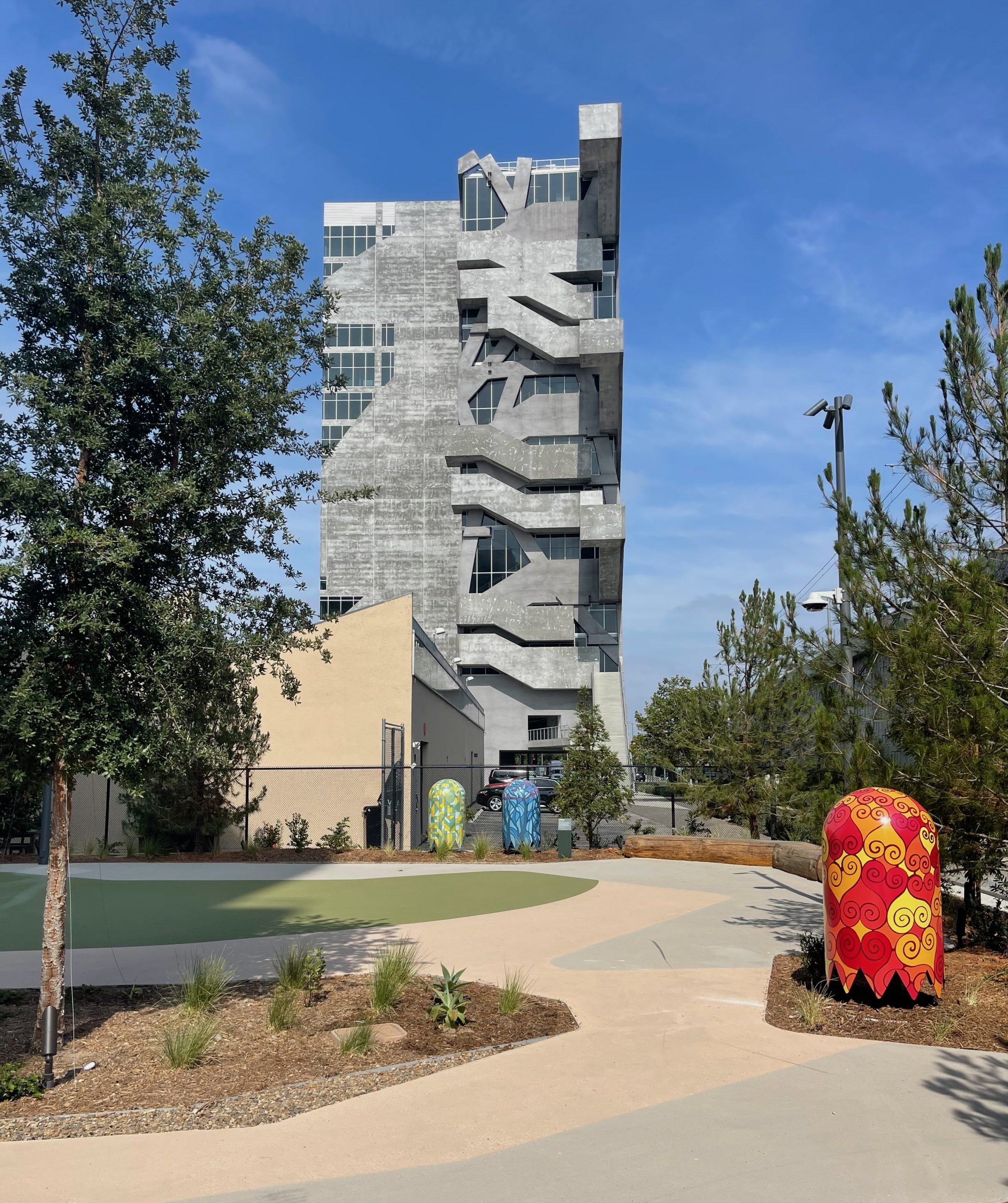
They created a ground-level, one-acre park, which bleeds into a public bike lane that connects with the Ballona Creek Bike Path. Landscaping by RELM is intended to evoke the Arroyo de Sacatela that once irrigated this area. Amenities including a gym opening directly onto the pool, and decor by Kelly Wearstler – earth tones, artisanal wood accents, marble flooring – give the complex an intentionally luxe, coastal California, boutique hospitality vibe. But the siting of Habitat, cheek-by-jowl with the Expo Line, a public bike lane, the Eric Owen Moss-designed, dystopic (W)rapper and the distant pastoral views, positions it in an unusual and interesting urban mix.
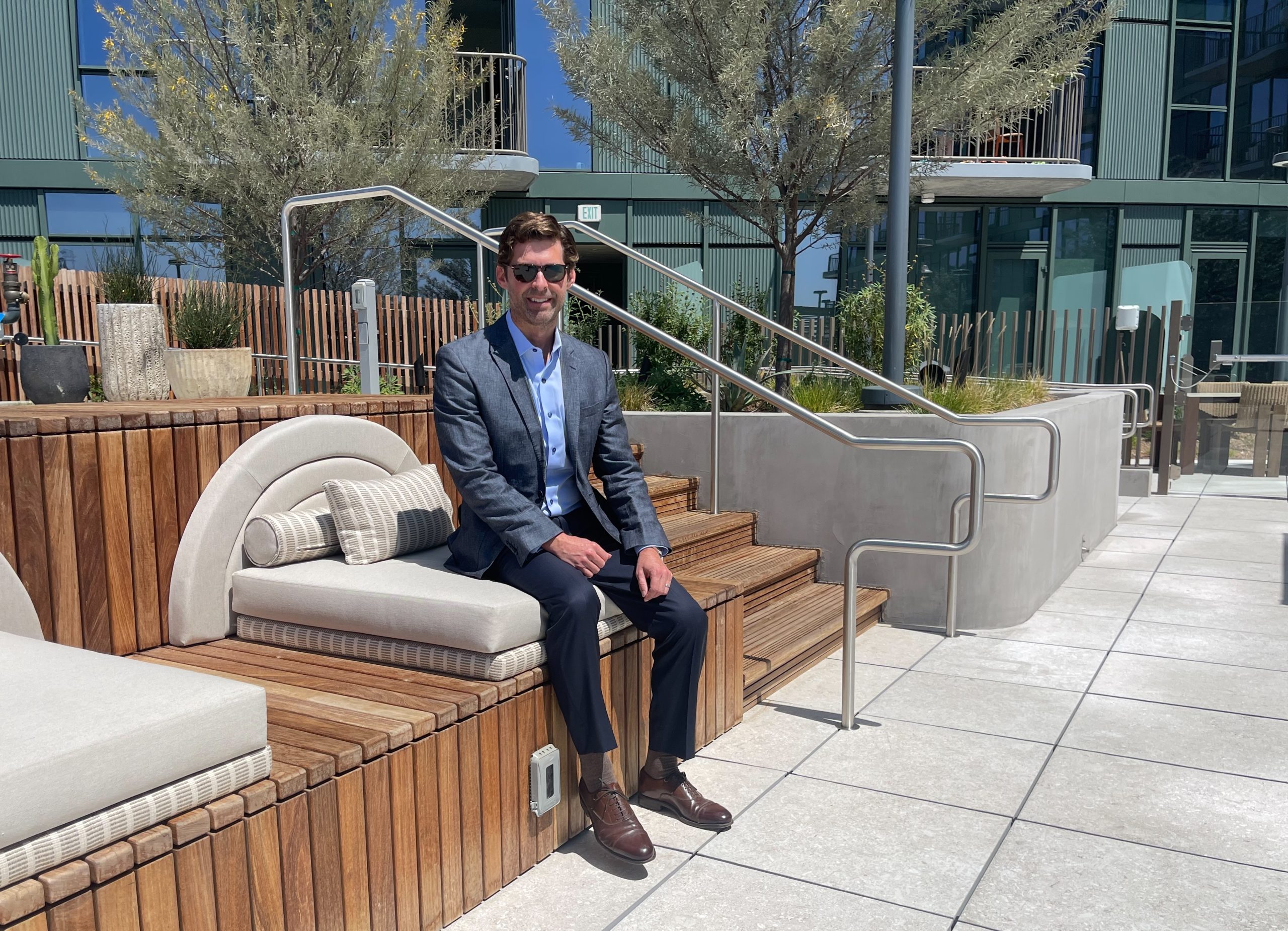
However, as Habitat opens its doors, Lendlease closes its doors, at least for now, on real estate development in America. Just why that might be, as well as the vision and challenges that went into the creation of Habitat, were among topics discussed with Burton, while feeling the breezes in one of his favorite spaces in the residential building: the bookable group dining room on the 12th floor, with folding glass NanaWall opening onto a stunning view of Baldwin Hills.
The Good Words
Frances Anderton
How did this project come about?
Ryan Burton
Habitat started out five and a half years ago. The site had all these great components. There were other investments going on in this neighborhood. The Whole Foods had been announced across the street, you had 1,200 units under construction – Cumulus. It was located right at the La Cienega Jefferson train stop, making it more of this pedestrian destination that didn’t exist before. And if there’s a micro-neighborhood where there’s other investment that we can be part of that’s really powerful. So it’s an extension of an existing place. We saw this as the next great place in LA.
Coming from Ivy Station, one Metro stop to the west, I had seen how surface parking lots at a train stop could be completely transformed.
The other thing going on was Culver City had traditionally been a back lot to the studios, but now has become a prime location for those next-generation techtainment tenants like Apple or Amazon or HBO, and so you had all these new jobs and people coming into Culver City, but there was a lack of new development, and so it was an opportunity to continue to establish this immediate neighborhood as a great place that didn’t exist before.
FA
Is this a light industrial zone, and did you have to get a variance on the zoning, or had the zoning already changed?
RB
The zoning was already in place for this mix of uses, and it could be up to 50% residential and 50% commercial separately. When we were going through our entitlements, there’s an expedited path called a SCEA (Sustainable Communities Environmental Assessment) that required a minimum of 50% residential; it’s similar to an EIR, but more expedited than an EIR. So that really solidified that we were going to pursue 50% residential.
FA
You have separated your commercial and residential, unlike a lot of developments around town where the residential is over the commercial. Why?
RB
There were several reasons, but we viewed the office building and the residential building very much like a campus, and we wanted to have two separate buildings as part of creating that place.
FA
You’ve talked about an ocean vibe, even though we’re not right at the ocean. What did you mean by that?
RB
That was another key aspect of this site: how do we take advantage of this amazing weather and, in the afternoon, the ocean breeze? We’re a few miles from the ocean but the ocean breeze picks up, and you can see the ocean from the top floor of the residential building where we are today. So the project was really playing into great weather, natural light, fresh air, indoor-outdoor, a lot of green space, and acknowledging where we are, in Los Angeles, in this global gateway market, and just playing up those attributes to enhance the daily lives of the people that are living and working here.
FA
So it creates views for the people using the building, but it also does not block views for people on the ground. It’s quite different – in my view – from Cumulus which is just a great big unbroken wall on the street. At Habitat you can look through the cut between the residential and retail, and you can still see the mountains. Was that something that was important to you as you thought about the design?
RB
That certainly was. We needed the height and the density to make the numbers work, but then you also want to make sure the scale of it fits into the surrounding environment. So even though it is a 12-story, 150-foot tall residential building and a six-story office building, the outdoor terraces that step back as you move up the building really make it feel more approachable and less overwhelming and more just blending in with the surrounding environment.
FA
Your primary architects were SHoP, which is based in Lower Manhattan. So it took a New York team to come in and read LA.
RB
Sure, but the lead designer, Dana Getman at SHoP, grew up in Los Angeles. I think we were trying to find a balance of creating this next great place in LA, but taking the best of some of these dense locations in a city like New York and giving it its own LA flavor.
FA
Let’s talk about the bike path and that piece of the new LA. How usual is it for a private residential and office development like this to have a shared public space area that actually connects to a public thoroughfare?
RB
It’s not as common as you would think in LA, and so that was another piece that we really wanted to play up. Most people drive a car in LA, but how do we, as a developer, nudge or encourage these other modes of transportation, really making it a pedestrian-first environment? And then on top of that, bikes haven’t always been a priority in planning in Los Angeles, so having this dedicated bike path that connects with the Ballona Creek Bike Path (starting in Culver City) that will take you over to the ocean was something we really wanted to celebrate. We as a team did that ride and it was about 20 minutes to the ocean.
FA
Was this something that you and your team came up with, or did the City of LA want it?
RB
The inspiration came out of Covid. We had all been remote for six months, and we were trying to get together as a team, and one of the ideas was, we can be outside, we can ride bikes. So we met onsite before Habitat was built, and we all took electric bikes down to the ocean. It was this great experience, and we were like, why not ride your bike in LA, and this is a way to do it. So it was never something the city told us to do. It was more this inspirational moment we had, and so that’s when we incorporated this end-of-trip facility in the office building for bikes, and also added electric bikes to Habitat Residences.
FA
That story really opens the door to just what it is to be a developer. Can you explain what it is about doing development that is exciting to you? There were many challenges on the path to realizing Habitat, but there is that exciting moment where you’re standing on an empty piece of barbed-wired land, and you’ve got a vision for changing it.
RB
I think one of the most exciting and rewarding parts of being a developer is that journey of discovery, and then being part of and leading a team, and being part of transforming a place into something better. So taking this site from what it was to creating Habitat and all that deep work with a team to overcome all the challenges was very rewarding. Then you see the project at the end – that’s one of the most rewarding things for me as a developer.
FA
Did you study real estate development? How did you get into this industry?
RB
Early in my career, I pursued commercial real estate more as a value add, so my focus was existing buildings. I was always strong in finance – leasing and capital markets, like raising equity or debt – and then I realized that I wanted to explore real estate in general, and I wanted to have a bigger impact on creating great places. So I went back to school and pursued an MBA and a Master of Real Estate Development at USC. At USC I was able to really focus on real estate development, and how you could create these great places, and then see people living and working in that place and really enhancing their daily lives. I’ve been fortunate to be able to work in real estate development for the last 20 years.
FA
Do you think that at USC, or at real estate school generally, they emphasize enough the quality of life, place-making aspects of development, or is there more of an emphasis on spreadsheets and pro formas and return on investment?
RB
It’s really a balance. You do need to earn a return on investment, and if you create these great places that people love, usually the return follows too.
FA
Habitat was taking a bit of a risk, because it was offering a different proposition, in terms of a way of living. Are you feeling a positive response yet? Are people moving in?
RB
We’ve had a great response. Overall feedback as the residential opened up is that the leasing is going according to plan. We’ve had multiple tours of the office building, and that’s been really positive too. It’s still early. The project just finished, but all of the feedback to date has been really positive.
FA
And would you say this is upper middle income, or would you call it luxury? Where does it fit demographically?
RB
There is that balance. As part of our entitlements we have an affordable housing component, and really to develop in Los Angeles today you have to build to the top of the market, and so we did build to a higher-end profile.
FA
In terms of this issue of affordable housing, is that way of doing it where you have a percentage of inclusionary, low-income units, and then all the rest of the apartments are high income, is that the best way to achieve affordability in your view?
RB
That was a feedback item from the local council district, where they said, there’s a missing middle; what about the police officers or the firefighters, the teachers, and the nurses that grew up in this neighborhood? They have a good income, but it’s not high enough to get to be in a brand new apartment, and it’s not low enough to be affordable housing. So we volunteered another seven units to get up to 15% affordability at a higher, more of a middle, workforce housing. We are hopeful we will have some of those local citizens of LA live in our building too, in that middle price point.
FA
You have said this was a journey, and there were challenges along the way. What can you share about some of the challenges or frustrations for your company, Lendlease, along the way?
RB
Well, we definitely have long-term belief in LA. We have things like the Olympics coming. We’re in the World Cup right now, the Super Bowl is coming back, so there’s all these positive attributes of the city. This is a global gateway market, and it’s a place we all live in and identify with. So we’ll come back.
But the regulatory environment in LA has gotten just too much. I think it would be better if there was more consistency in the regulatory environment, and if it wasn’t maxed out on all these fees like Measure ULA. We’re hoping there’s some improvements to how ULA currently exists, because we had acquired our site and already committed to moving forward on the project, and then the ULA tax passed. Those kinds of things have a big impact on the future value of our project. So, like I said, we certainly believe in LA long-term, but the regulatory environment has been a real challenge to get the project finished and to see it through to a successful financial outcome.
FA
Are you planning to sell the building? I thought ULA only kicks in if you sell.
RB
Lendlease makes a long-term commitment to a neighborhood, so it doesn’t have quite as big of an impact for us because we’re a long-term holder, but it’s just another regulatory issue that impacts new investors wanting to come into Los Angeles.
FA
What about other linkage fees?
RB
There’s linkage fees on top of that. Yes, so it’s fees on top of fees, and the city could certainly spur more development if there was a reduction in fees, even temporarily.
FA
So you worked on The Ivy in Culver City, in your prior position with Lowe, and that in some was a precursor to this. Tell me a bit about The Ivy.
RB
Sure, there were some similarities, and that’s just one metro stop to the west. When I was working on that project for over five years at Lowe, we saw this surface parking lot for Metro, and we transformed it, and it became the next great place in Culver City. So Apple, Amazon, HBO, they all wanted to be in Culver City, and so it really transformed that micro-neighborhood too. We had the retail development Platform across the street too, and Helms Bakery, so all these factors made it a new micro-neighborhood that was pedestrian-first with the train, and it became this great place that didn’t exist before.
FA
What kind of demographic moved in in the end?
RB
It was a demographic that really wanted amenities at their fingertips, so you had retail, restaurants, fitness, coffee, all within a short walk. The other thing is these places really grab on to a completely mixed demographic, so there it wasn’t necessarily one type of person, it’s all different ages, different ethnicities, it’s like a melting pot of people that want to be part of a community.
FA
Did you need municipal support to achieve a project like Ivy Station, or Habitat?
RB
Yes, you definitely need city support. Ivy Station was a site that had been assembled by the city of Culver City, where they really wanted that project to succeed, and they wanted it to have a large outdoor park space that was like the backyard for the neighborhood with events and activities, and so early on we had full support from Culver City, and worked closely with the city to manage and work through collective objectives. I think it’s a great example of a public-private partnership. It also is on Metro land, so we had close collaboration with Metro to create this great place, and encourage Metro ridership.
With Habitat, we had to have support of the local council district and of the planning department, and so we were very proactive along the way in meeting with those groups, in addition to meeting with the local community stakeholders, and looking for their support to work through entitlements in an expedited way.

FA
In terms of outreach, did that involve talking to the neighborhoods? One hears often about concern from the neighbors that they’re going to be displaced, prices are going to go up too much. Did you get that pushback from people worrying that this project would bring about gentrification, and what assurances were you able to give them?
RB
We did a very active outreach program, where I met with many different community groups in the neighborhood. Our intent was early outreach, eliciting feedback, speaking to the different community groups about what we were trying to do, but also hearing from them what they wanted, and then as the project was progressing, having follow-ups. One point in time there was a press article that left out that we were doing some affordable housing, and the West Adams Neighborhood Council immediately calls me up and sends me an email thinking that we had changed what we said we were going to do. So I went and met with them and assured them, no, we have affordable housing. I think that went a long way – not only having that early outreach, but then that continual open dialogue, and then being consistent in doing what you said you were going to do. That goes a long way as a developer.
FA
So we have various policy changes, ongoing, having to do with trying to get more density. Taking effect on July 1 is SB 79. Could SB 79 stimulate projects like this?
RB
It certainly helps, having a clearer entitlement path, which I think that initiative does. There are still some other challenges, like ULA, and so it seems like we need to do more to improve the regulatory environment, to further stimulate more housing. But it definitely takes care of one component, which is the uncertainty. You hear these stories within LA about how a project is just stuck in entitlement limbo, or it took 10 years, and so I think it really helps clear that path, but there’s other things like the regulatory environment that still make it challenging to build in LA.
FA
So ULA is is LA-specific, but Lendlease, as I understand it, is pulling out of the US altogether. What is it about the US in general that’s off-putting?
RB
Well, Lendlease is staying in the US as an investor. We just are not developing right now, after we finish up Habitat. There are other factors in play like higher interest rates and other things and the regulatory environment that make it more challenging, but it’s not to say Lendlease doesn’t become a developer again in the US.
FA
So, what’s your future? Are you still staying with Lendlease?
RB
Yes, and so my focus right now is finishing Habitat. We have another few weeks of finishing out the punchlist, finishing construction, and then setting up the operations, moving people into the residential building, doing the leasing on the office building, and so that’s my focus right now.
FA
Does it make you feel sad that Lendlease is stopping development in LA and this country generally just as it’s finished a really quite bold project?
RB
Yes, and I think my whole team could speak to this, that this is what we love to do. We love to create these great places. It’s also the nature of the business that we all chose to be in that development moves in cycles. So we just have to wait it out a little bit and be ready to jump back into the next thing.
FA
So developers have be born optimistic?
RB
Yes. I mean, as a developer, you have to be optimistic. You have to persevere through the challenges and be flexible and opportunistic and resourceful in how to overcome them and work with people. It’s so critical that you work with different stakeholders, and try to understand their concerns and to come up with these optimal outcomes.
Read about our other Good Developers, Joe Sharaf, Bridget Wexman, Aaron Van Schaik, Cameron Hassid, Michael Tessler, and the Introduction to the year-long series.