The Good Developer
April 2026
Cameron Hassid
A Very Modern Classic!
By Frances Anderton for FORT: LA
Key Buildings: The Jardinette, 5128 Marathon Street, Los Angeles
Most Annoying City Code/Tax/Department: Measure ULA “scam”
Best Amenity: The history behind The Jardinette, which was designed by Richard Neutra
Favorite Construction Site Sandwich: Telegrama Burger with a double patty, from Cafe Telegrama
Fantasy Building Name: I love the name of this building, Jardinette, or “little garden”
LA Developer Hero: Rick Caruso, one of coolest, most down-to-earth, most versatile developers in the city

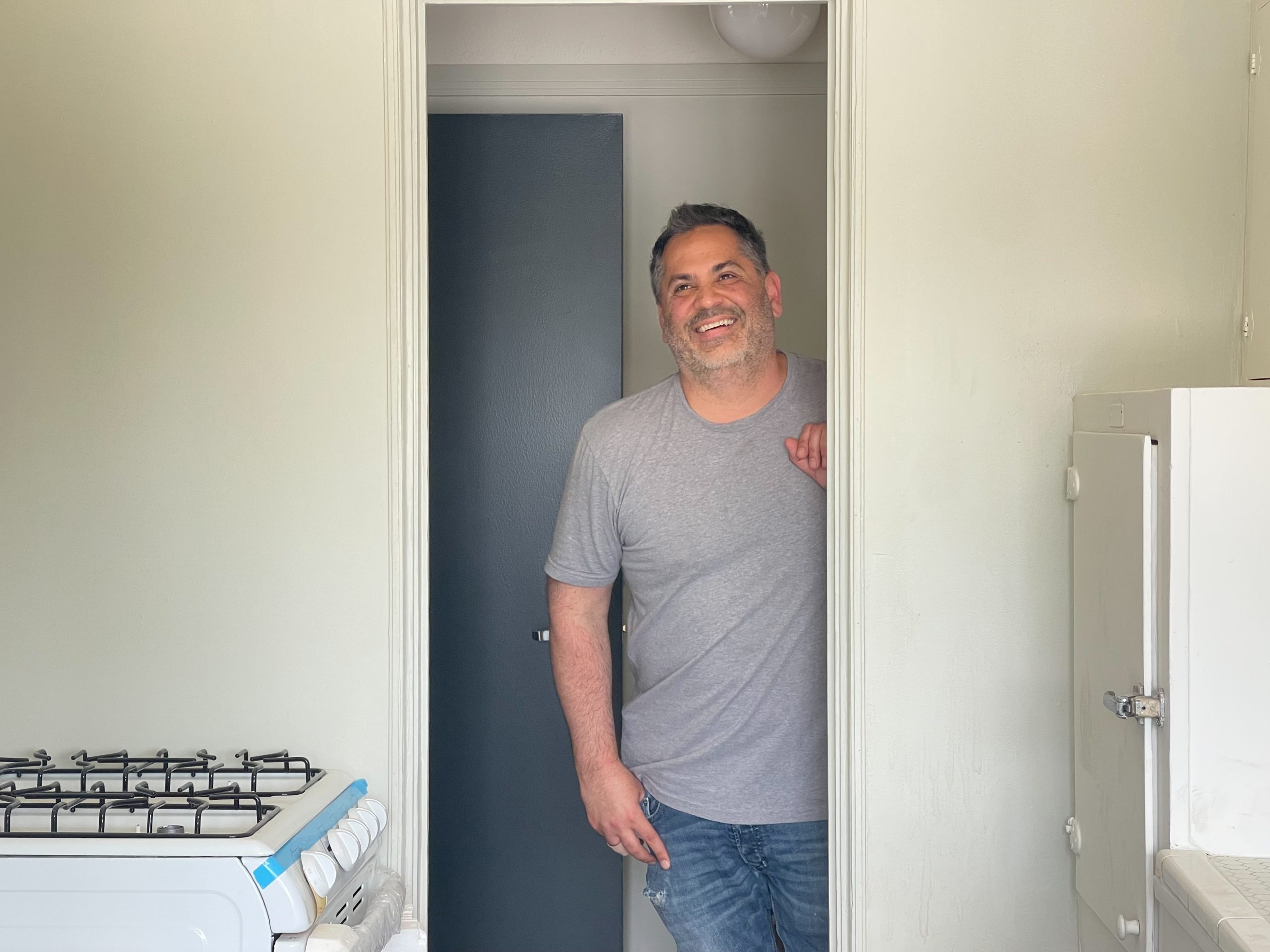
Cameron Hassid and his family typically invest in existing rental apartment buildings. But when he set eyes on a structure that many people would consider a dump, he knew he wanted to undertake a rescue mission. The sad-looking, orange and green, concrete mid-rise on Marathon Street in East Hollywood, filled with pigeon droppings and rotting wood, was in fact the once hypermodern Jardinette apartments, designed by Richard Neutra, and built in 1928.
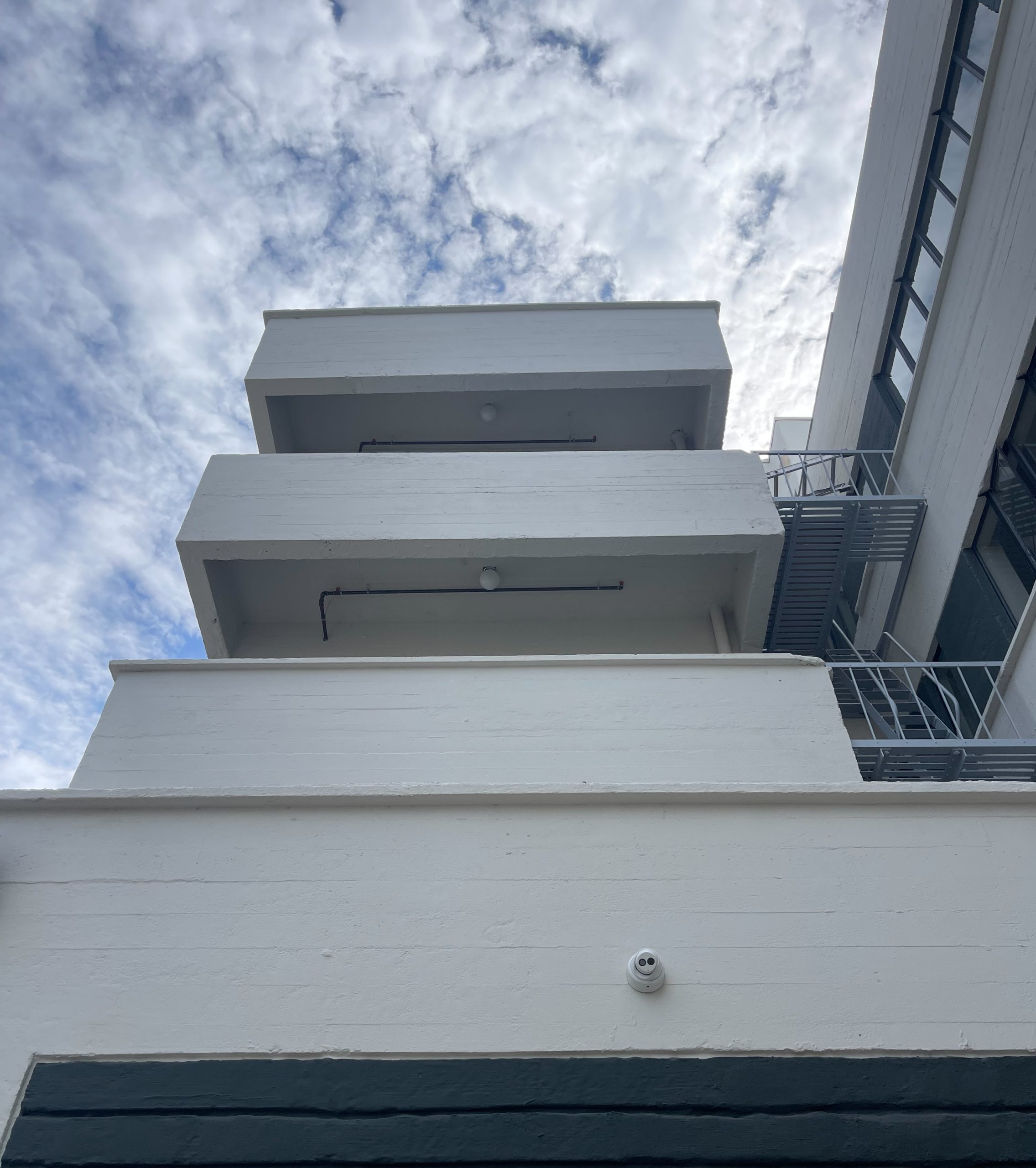
The Jardinette (“Little Garden”) was named for the outside balconies stacked at the east end of the building that would contain pots of hanging plants. It was one of nine Class-B apartment buildings planned by a New York developer Joseph H. Miller during the roaring 1920s. He parachuted into LA to build for the growing influx of Hollywood wannabes ready to live, not in the single homes springing up in the thousands, but in newly fashionable small apartments in Hollywood and the Westlake area, stocked with the latest modern conveniences. Miller even promised refrigerated vaults for residents’ furs, and up-to-date dog kennels in his buildings. Also, while many of the apartment towers of the time were in period revival styles, The Jardinette was bracingly Modern.
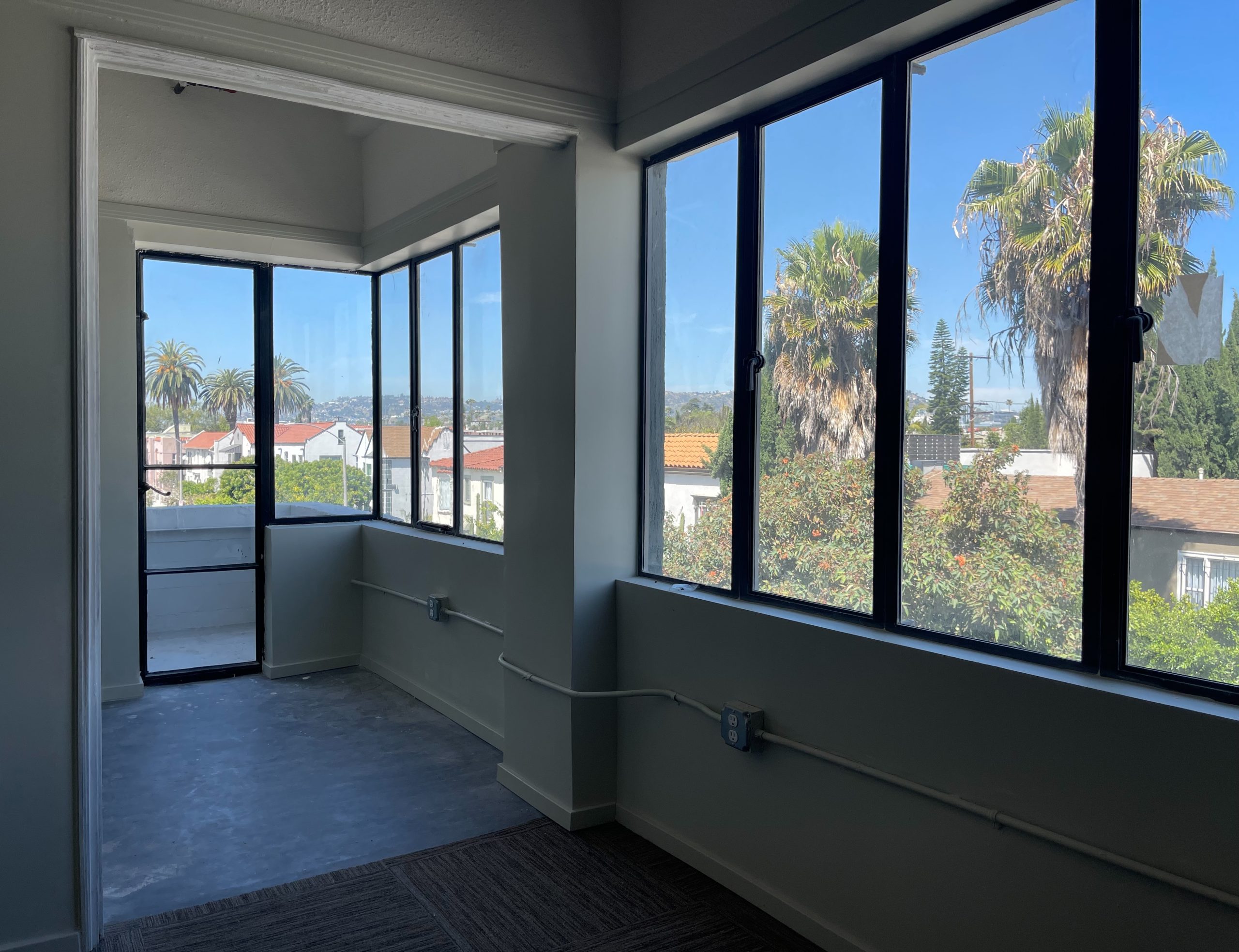
It was designed by Richard Neutra – at the same time as he was working on the Lovell House – with an assist from then business partner R.M. Schindler. He designed a three-winged, four-story, reinforced concrete structure, containing forty-three studio and one-bedroom units ranging from 400 to 700 square feet, with cantilevered balconies, all wrapped around a small, open landscaped courtyard. These balconies, to be filled with pots and plants, were described by the Hollywood Examiner at the time as “gardens for cliff-dwellers!” The petite dwellings were highly efficient, with open planning, built-in cabinets, fold-down Murphy beds, borrowed light via translucent glass panes in doors and partitions, and small, functional kitchens. Horizontal ribbons of windows flooded these small spaces with light.
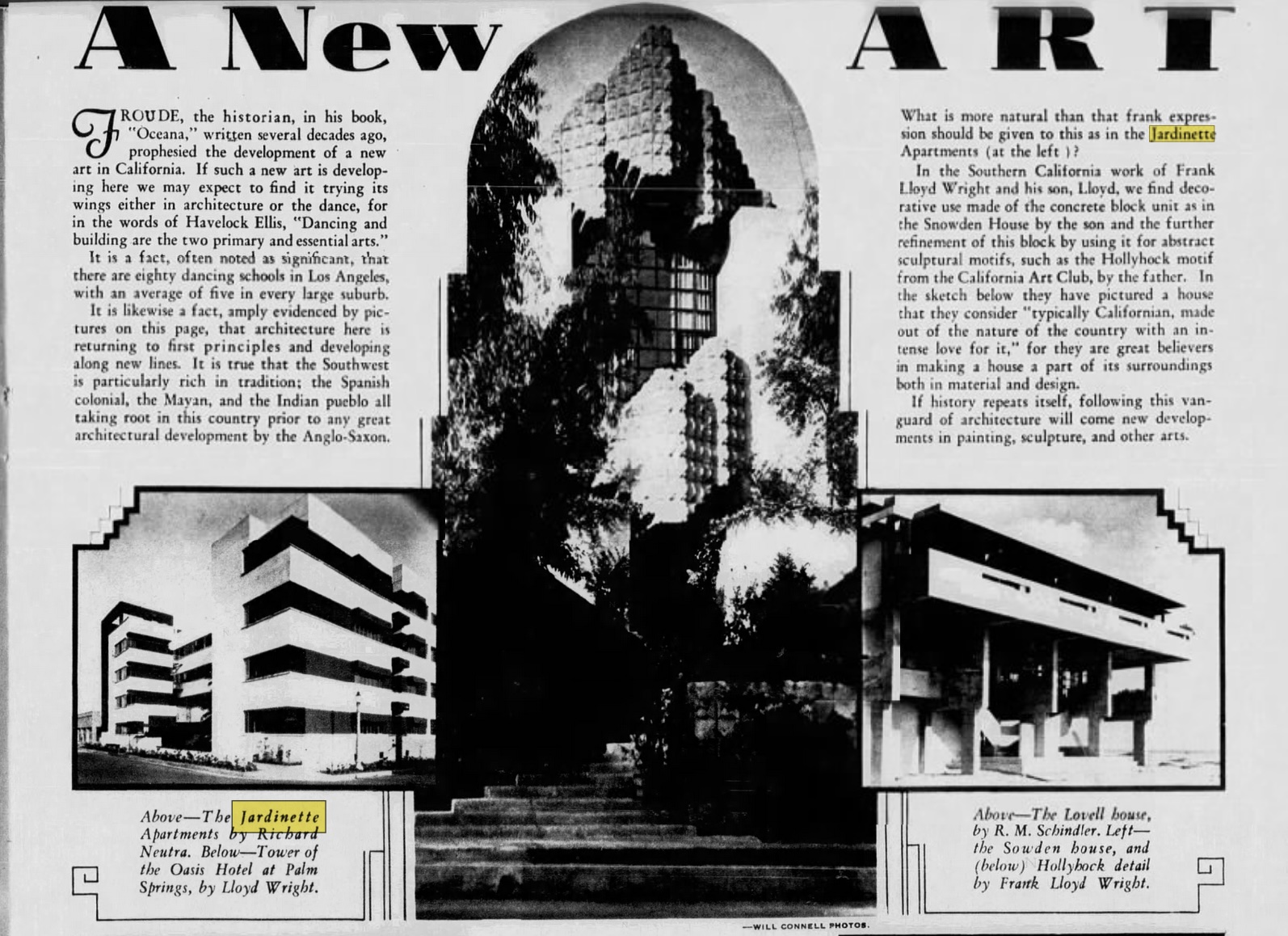
The design was so avant-garde that it was featured in the Museum of Modern Art’s seminal Modern Architecture: International Exhibition and published in The Modern Flat, a 1930s book showcasing the latest in International Style housing. Of all the buildings shown, The Jardinette was one of only two from America and it was the earliest of all the schemes, preceding even projects by Le Corbusier and Walter Gropius.
However, The Jardinette, also known as Marathon Apartments, was fated from the start. It opened on the eve of the Great Depression and Miller did a runner. The building, aimed at middle-class renters, pretty quickly sank down the economic ladder. By the early 21st-century it had become low-rent, what is now termed “naturally occurring affordable housing.” Even though it was added to the National Register of Historic Places in 1986, and designated as a City of Los Angeles Historic-Cultural Monument in 1988, the building was shuttered in 2017.
Enter, in 2020, Cameron Hassid of Apollo Capital. With the support of a team including the architects Corey Miller and Anant Topiwala, at June Street Architecture, as well as the architectural preservationist and Neutra historian Dr. Barbara Lamprecht, and Mike Norberg, a land use and permit consultant with Cali Planners, he set about restoring the building. He endeavored to achieve a “rehabilitation” rather than a perfect “restoration,” that would hold onto the historic features while integrating the new where necessary.
Hassid says they got “very crucial support and guidance” from Lambert Giessinger and Melissa Jones, both in the Office of Historic Resources at the City of Los Angeles, which administrates the Mills Act.
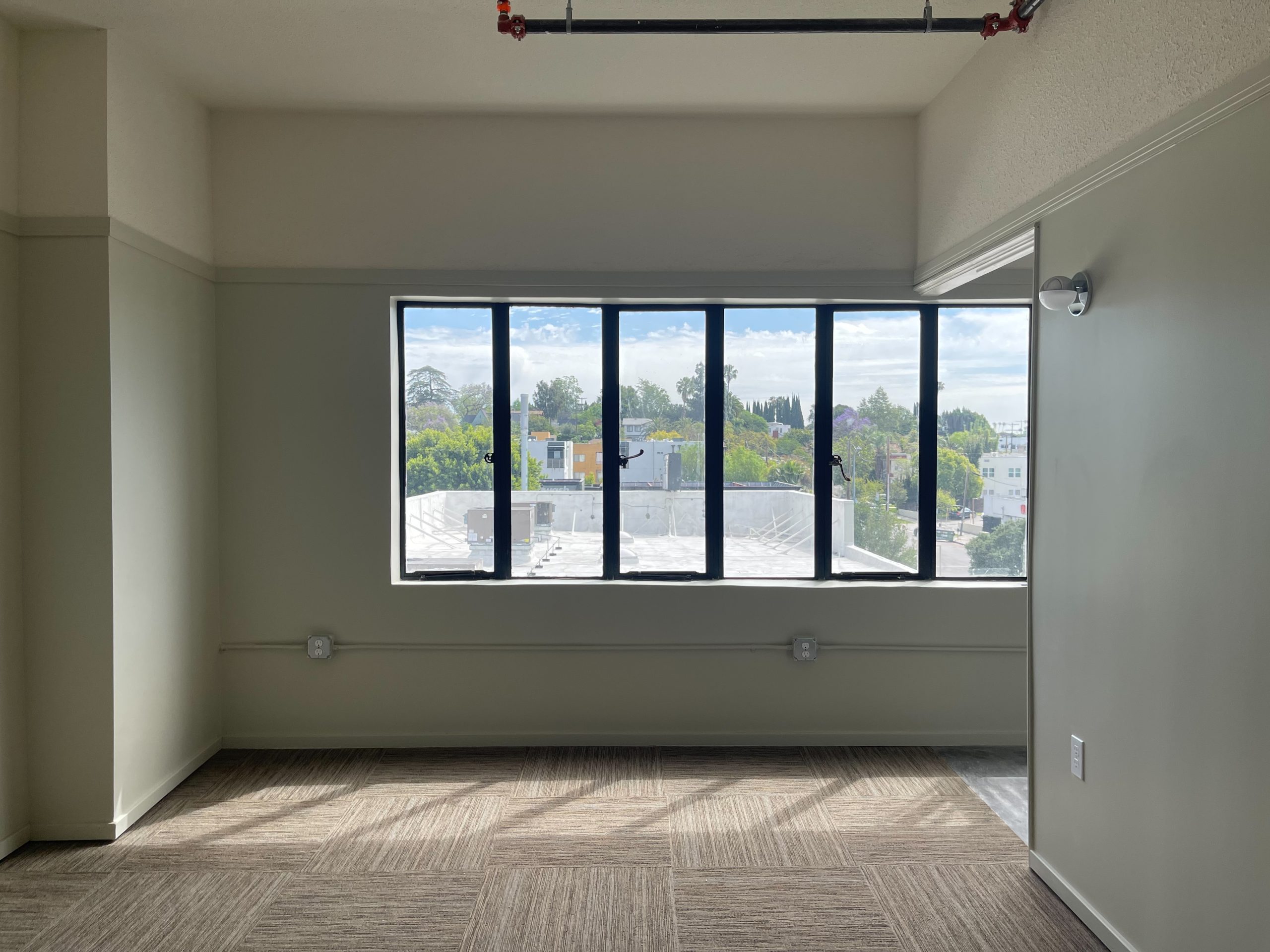
A walk through the building is a revelation. There are numerous delightful details: the newly unveiled skylight, allowing sunlight down through the center of the staircase; plaster work on the ceiling that extends down to the picture rail, below which walls are painted a soft gray-green “limestone” color, giving small spaces a greater sense of height. Original tilework is woven into contemporary tile in a way that adds richness. Restored cabinetry in the kitchens, and windows with special hinges set slightly off from the building. Then there are oddities like two doors placed just inches from each other. It turns out one of them originally opened to the pulldown Murphy beds, sadly no longer there.
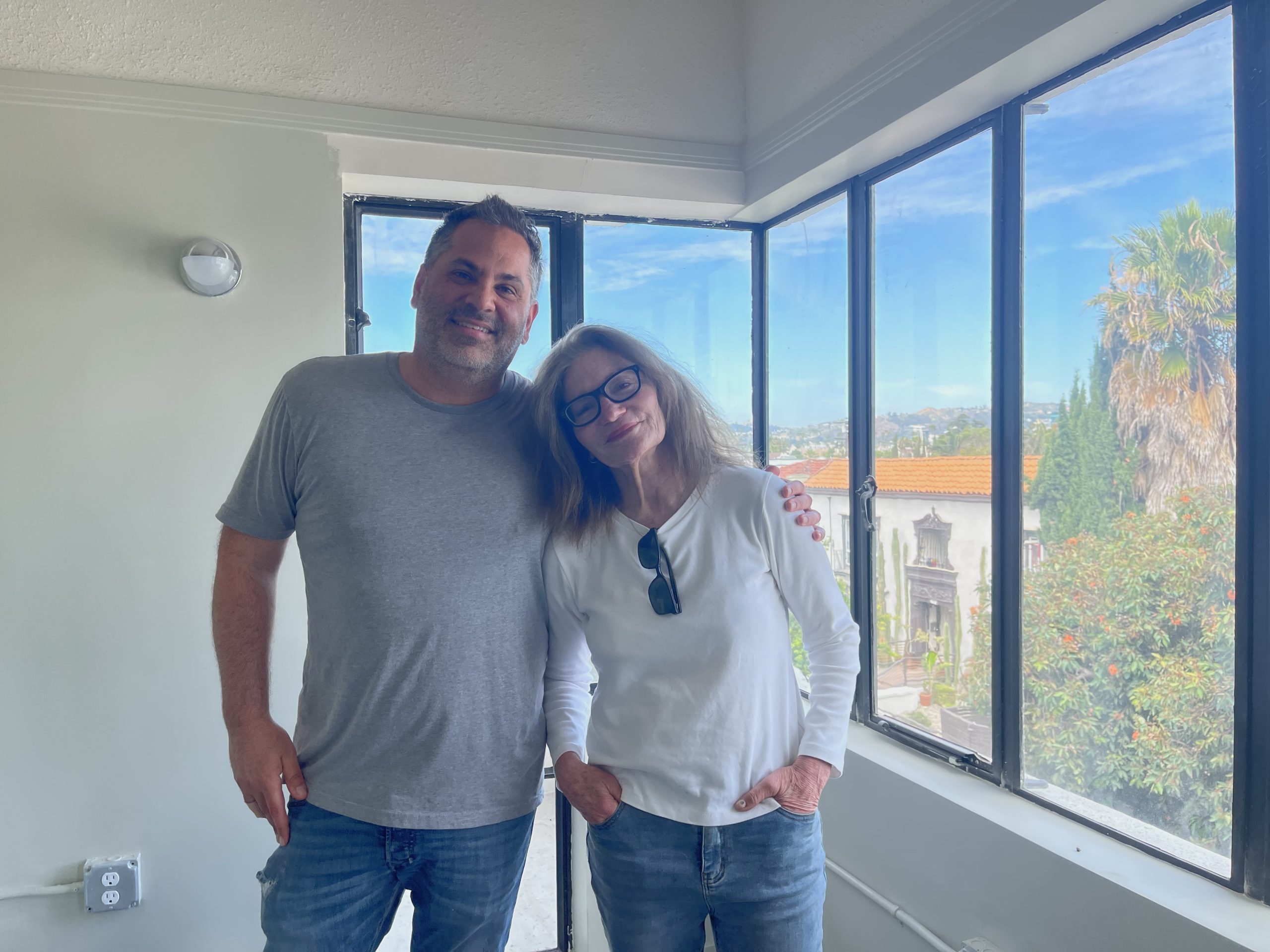
Now the reborn Jardinette is ready for primetime and Hassid has put it on the market, to sell to a market rate or affordable housing investor who will treasure the building the way he has. FORT: LA got to tour the building with Hassid and Lamprecht and learned about the trials and triumphs of bringing this building back to life.
The Good Words
Frances Anderton
So you took on a really complicated job with this one. Why were you interested in this building?
Cameron Hassid
There were a lot of reasons. It was just one of a kind, needle in a haystack kind of building and art piece, and I just felt like it was a fun, harsh challenge, and it ended up being exactly that, times 10. Also, it was purchased with our Opportunity Zone Fund, which was a tax deferment program, so it kind of checked all the boxes. But the days of this place making financial sense are long gone.
FA
Why fun and why harsh? Let’s talk first about the fun, and then we’ll do the harsh.
CH
The fun part is working with Barbara, Cory, Anant, Mike, who also was in the trenches with the city fighting through our permitting process, and also working with the crew every day. They’re great guys. They work hard and they never complain. Thank God for Lambert, Melissa, and Barry Milofsky (City Planning) who had our back and supported us through this whole thing.
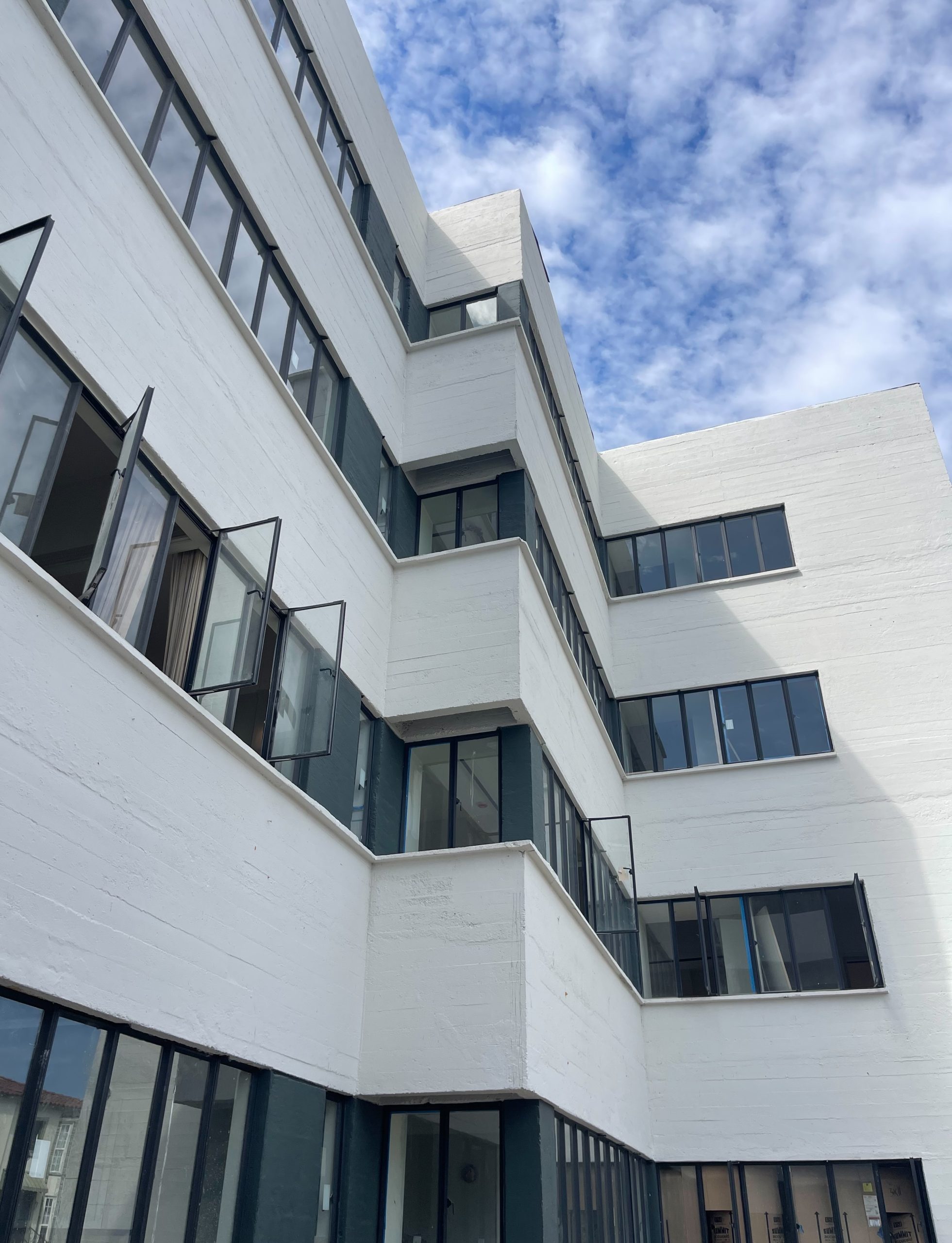
Part of the fun was taking on this historic treasure, taking on the challenge, taking on maintaining the treasure without destroying it. You know, even the little nicks here and there, the imperfections, keeping them and just trying to make them as presentable as possible, while paying respect to the old, but making people understand that inside of these walls everything is brand new. It’s all new plumbing, all new electrical. It’s got fire sprinklers. There’s a fire alarm system throughout the whole building. These are things that weren’t here before. Every single unit is wired for cable and internet. Now these units have individual heating and cooling. They have individual ACs everywhere, using heat pumps or so it’s ducted mini split systems with heating and cooling. It’s basically setting this building up for success over the next 100 years.
Dr. Barbara Lamprecht
What’s really exciting about Cameron is that a lot of the stuff that a typical developer would have left out, we’ve always argued for using as much of the old fabric as possible, but to differentiate.
CH
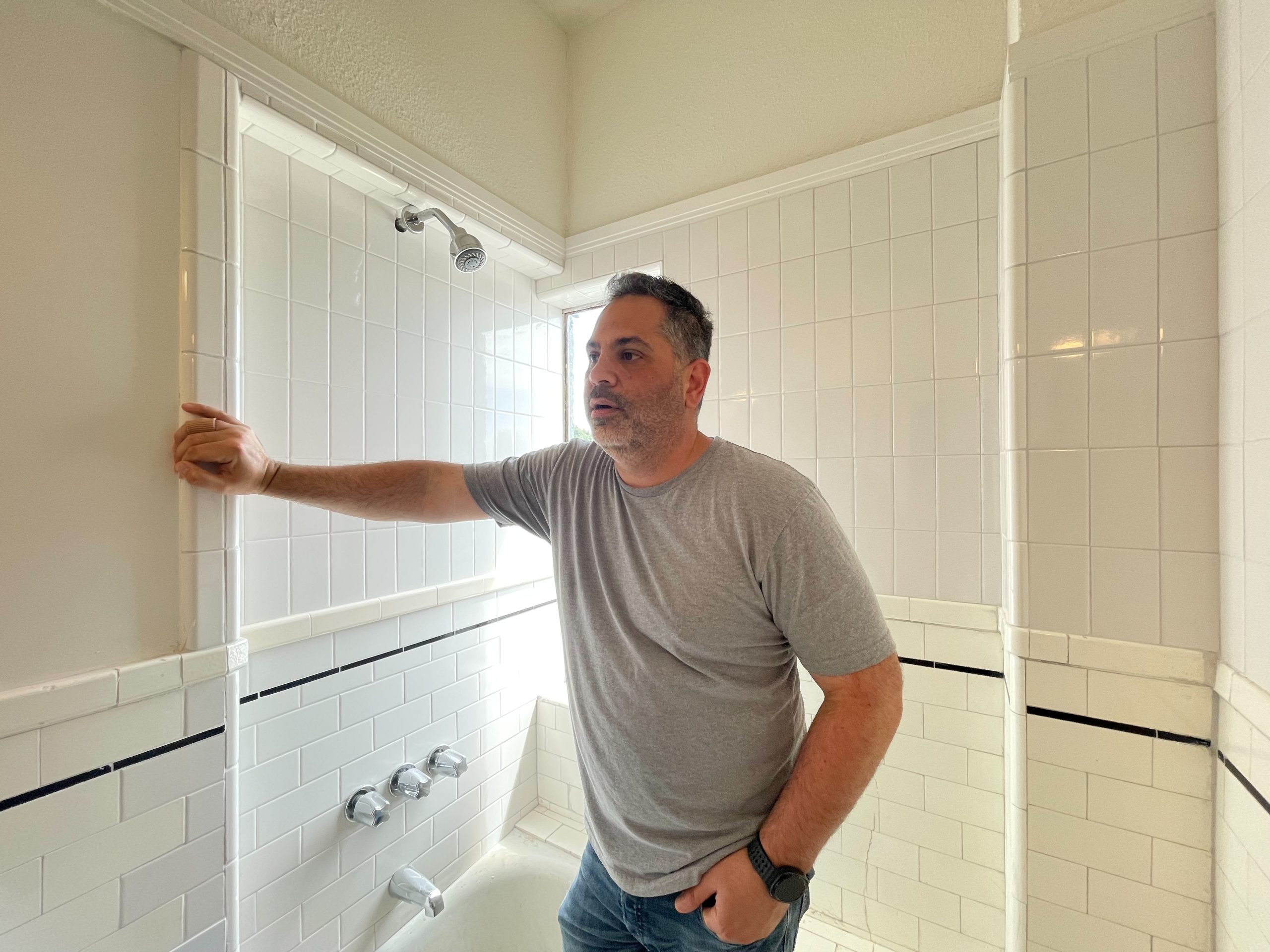
So this is tile from bathrooms that had to be demoed, but we decided to reuse where we could…
BL
There are four approaches to the treatment of historic properties: preservation, restoration, rehabilitation and reconstruction. This is rehabilitation, which is the most liberal of the four treatment approaches, because it admits we’re living in a different century. So we have to enumerate, what are the character-defining features, what is important about a building? And then every time there’s a treatment proposed, we evaluate it according to, will the building still continue to convey its historic significance? You know, Cameron could have come in and just added wall to ceiling paint or ripped out of the moldings or whatever, which were all redone. He also went so far in terms of structure, and strengthening and reinforcing.
FA
So why the commitment?
CH
My grandparents used to live at 848 North Kings Road, which looks directly into the Schindler house. So it was a full circle moment when I told my mom, I’m looking at buying this building. And her exact words were, ‘you’re out of your f**king mind’. What are you doing? And then once she realized the connection, she’s jumped with joy, and corrected me on the pronunciation of Neutra’s last name. And said, let’s do this.
I’ve always liked architecture, but I was never really into it as much as I am now. But now, understanding who Neutra was to architecture, it gives you a different level of appreciation for the building, at least for me and my family. He’s like the Michael Jordan or the Kobe Bryant of architecture, because he’s in that realm, in that upper echelon.
So it ended up being more a passion project than an investment, because if you were doing it from an investment standpoint, yeah, that was long gone out the window. But I still believe in the overall value of this place in comparison to others. I mean, sure you can go buy multiple historical apartment buildings. But the difference is, you’re going to have to go through hell redoing those when it’s fully occupied. Finding something like this, where it’s vacant and I can go in and do a full scale upgrade, it’s impossible to find. If this building was occupied, there’s no way we would have been able to do all of this work, because if I would have had to relocate every tenant in this building, I would have lost the building. It’s just not possible.
FA
So it’s on the market now? Are you going to open it up to market rate or Affordable?
CH
I want to keep my options open but I think Affordable housing makes more sense. After all, it was built for studio workers and to be affordable.
FA
So if a nonprofit developer can afford it, then they can come in and deed-restrict it or implement whatever program they want to do?
CH
That’ll be up to them. If I get somebody who understands that this building is an art piece, I’ll sell it, but I’m not just going to sell it to some regular apartment investor who could care less.
FA
This has been a long and complex process. Is there anything that could have eased it?
CH
The people who work within the city and the LADWP are fantastic but their upper management communications are not as good as they should be. I wish all city departments communicated better with each other. They should all be on the same system. The way it is now is a mess, resulting in unnecessary delays and costs.
FA
You also are concerned with Measure ULA. Why?
CH
It was originally supposed to be the Mansion Tax then they applied to everything and they take 5.5% of the gross sale price instead of the net profit, which makes no sense. Better yet, there should no tax at all, after Measures A, B, C, D through Z and then Props 1 through a 1000 that were all other separate taxes. What are they doing with all this money?
FA
What’s next for you? Do you have your eye on any historic building?
CH
I have my eyes on a few different properties, but I’m always looking. I got bitten by the bug working on this building. It’s a niche type of real estate. It’s not buying ugly buildings and slapping a coat of fresh paint on it. Although stressful, I fell in love with the process and the stories behind this building. When I look at the building now I get nostalgic, and I am filled with joy and happiness.
Read about our other Good Developers, Joe Sharaf, Bridget Wexman, Aaron Van Schaik, and the Introduction to the year-long series.