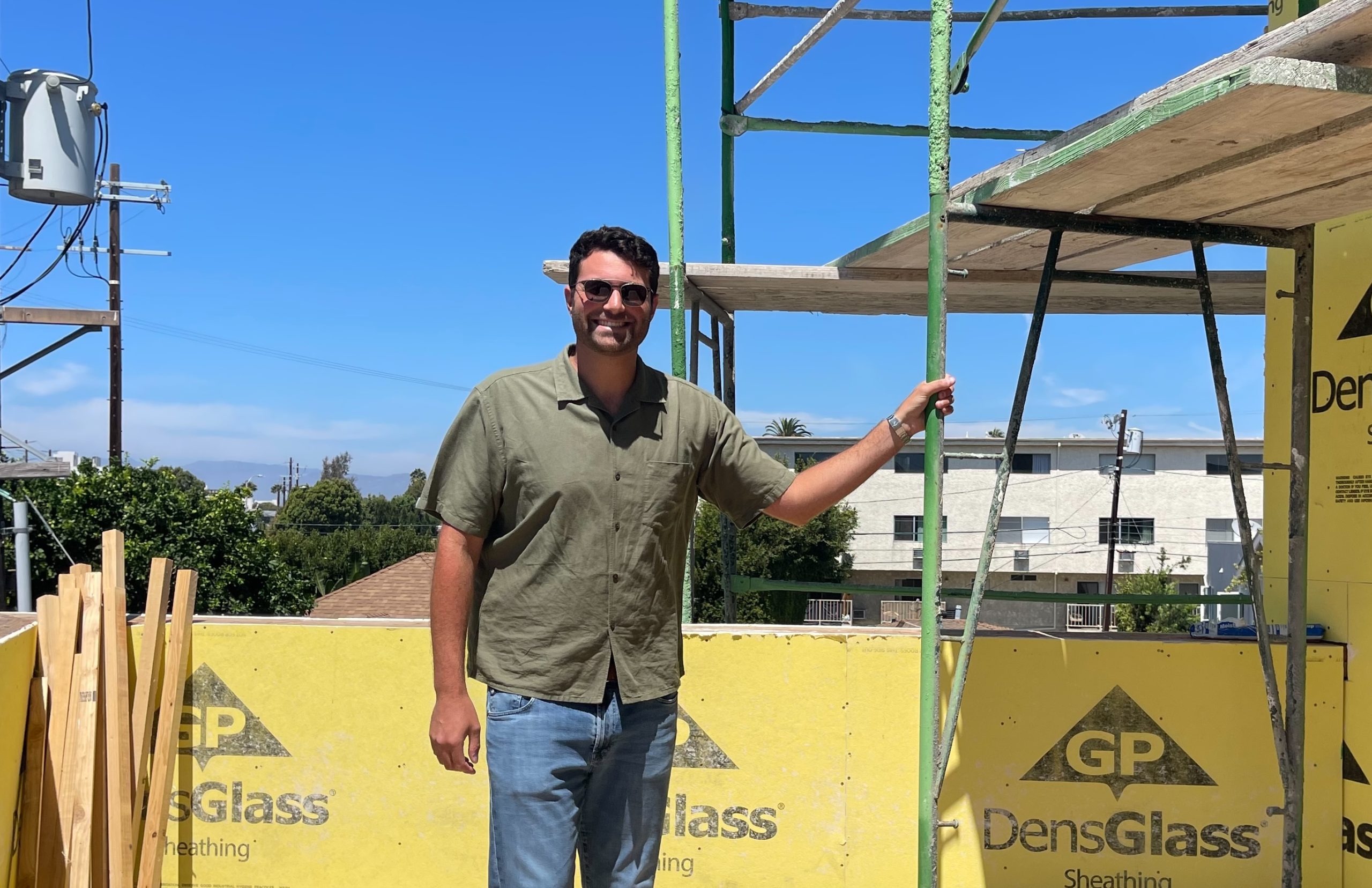
The Good Developer
August 2026
Schuyler Dietz
Artist of the Deal!
By Frances Anderton for FORT: LA
Key Buildings: 1172 Nelrose Avenue, Venice (11-unit rental, under construction); Small Lots, Big Impacts private development site winner; Over 120 ADUs and five bungalow courts across LA through the housing startup, United Dwelling.
Best Amenity: Covered outdoor space.
Favorite Construction Site Sandwich: The Ggiata Buffalo Chicken Wrap.
Fantasy Building Name: I think building names are funny, as in funny bad. Nobody says I live in ‘The Park on Orchard’; they say, I live in an apartment building.
Most Annoying City Code/Tax/Department: It’s the unknowns, and it’s working with The DWP and getting power release (authorization of electrical work, enabling the power to be switched on.) The DWP is the most powerful group in the city of LA.
LA Developer Hero: I have a lot of people I respect. Drew Planting (Managing Partner at GPI Companies) is incredible. Jeff Worthe (Worthe Real Estate Group) is incredible. Joseph Eichler is probably the greatest housing developer ever. We had the Mutual Housing Association (MHA) that built Crestwood Hills – genius!
The Holy Grail in housing these days is “missing middle” homes, built by the private sector on infill sites at a relatively low scale, and attainable to people at moderate rents or purchase prices.
One developer dedicated to figuring out how to achieve this is Schuyler Dietz, Developer–in–Residence at Six Peak Capital, a company that both develops and builds housing in Los Angeles, New York, Chicago, Seattle, and San Francisco.
As part of a team with Frolic Community, a cooperative housing developer in Seattle, and the architecture firms West of West and Aero Collective, Schuyler submitted an RFI (Request for Information) to Small Lots, Big Impacts, a program sponsored by cityLAB-UCLA, LA4LA, and Genesis LA. The goal was to select up to three development teams to build demonstration projects on parcels of privately owned land that would offer housing for sale, with either 50% of units priced for people earning a “moderate” income (120% Area Median Income, or AMI) or 25% at low income (80% AMI). This program is separate from the ongoing Small Lots, Big Impacts public land development program, also led by cityLAB-UCLA and LA4LA, with the City of Los Angeles.
Their team was one of the three that won, and they are now seeking a site, whose development and construction will be supported by a low-interest loan from the nonprofit Genesis LA.
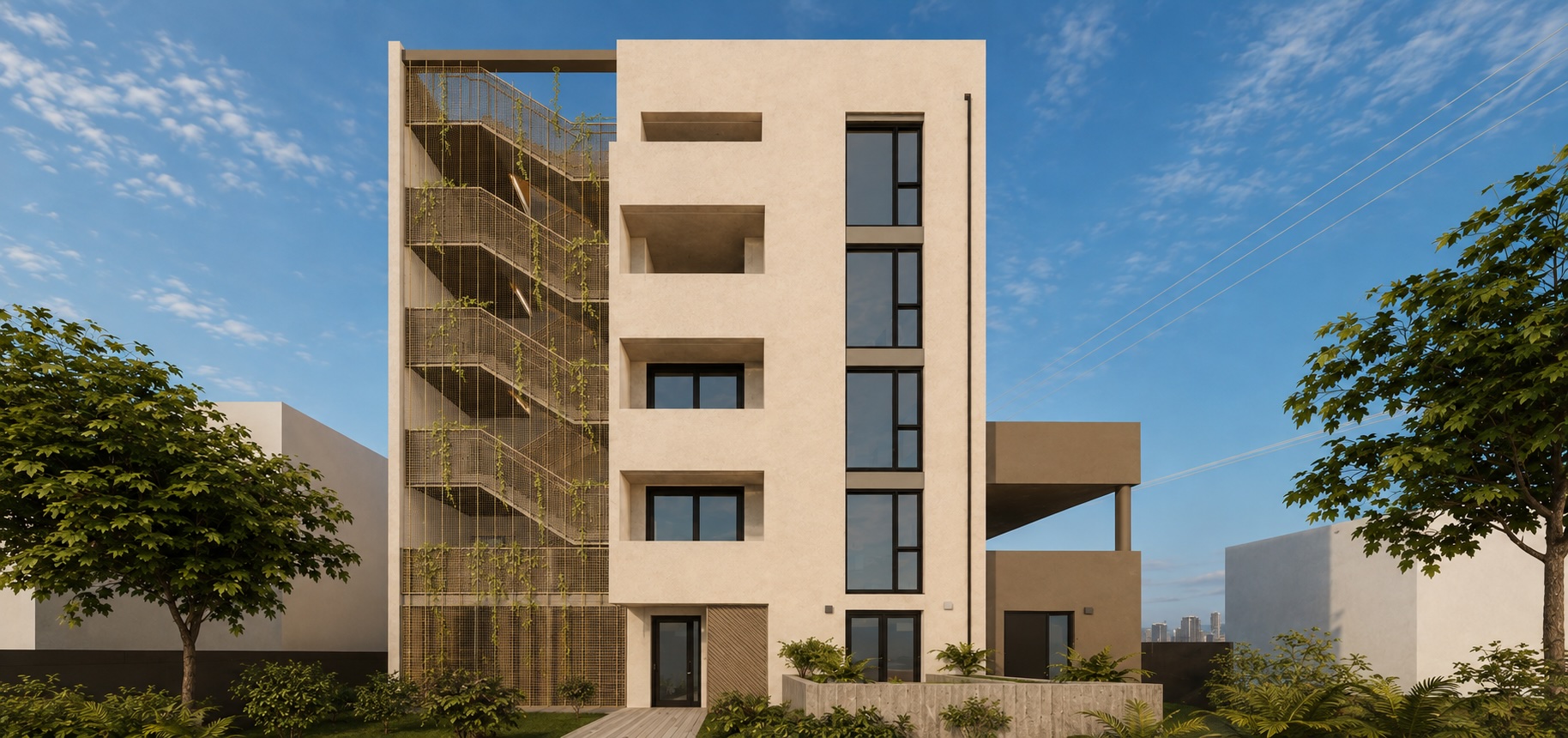
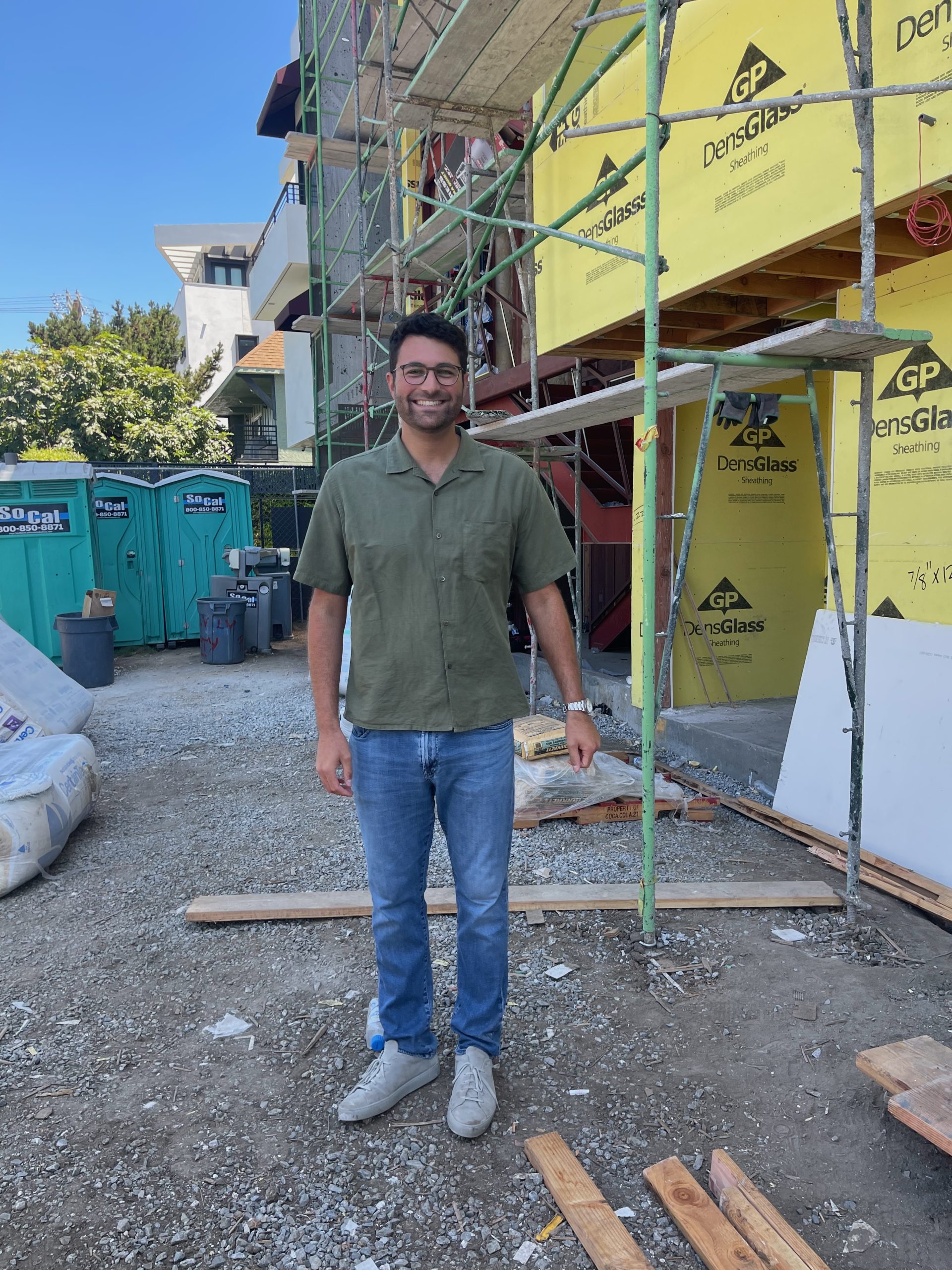
Meanwhile, Dietz is also hard at work on the construction of a building what he hopes will model “missing middle” rental living: an 11–unit apartment building just east of Lincoln Boulevard in Venice, designed by Aero Collective, built by Six Peak Capital’s construction subsidiary LV Construction.
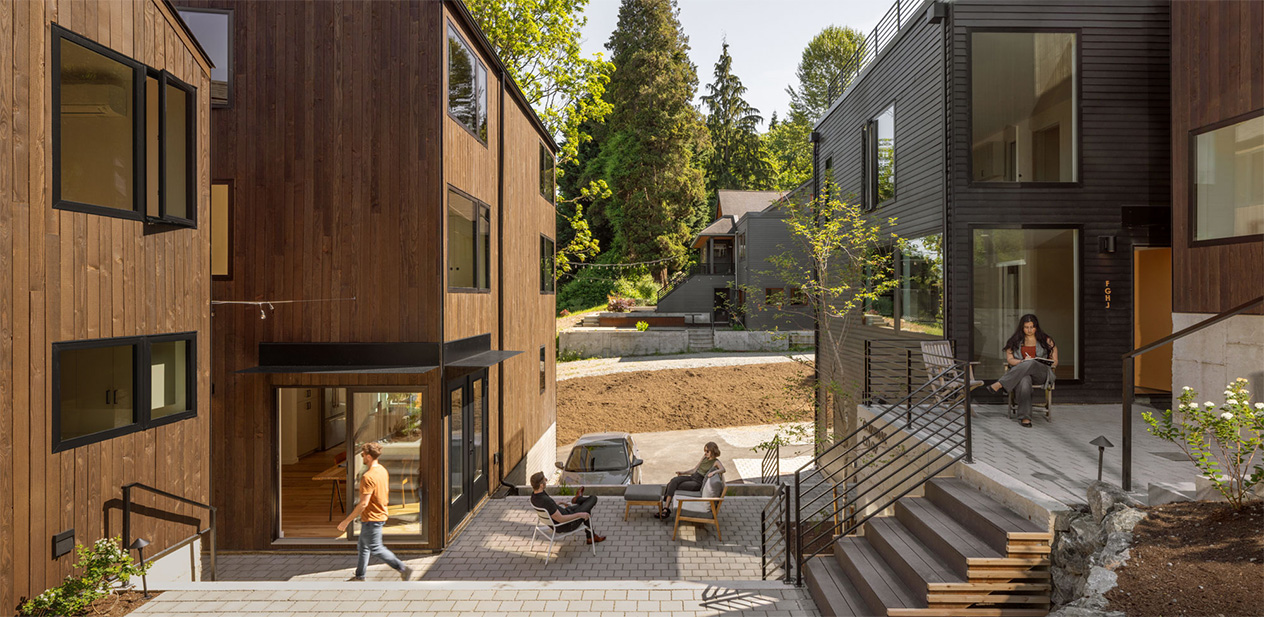
On a tour of the building, Dietz shows off the design choices that make for better multifamily living in Los Angeles, including an outdoor shared staircase and corridor, generous private space in the form of covered outdoor rooms, and well lit rooms with floor to ceiling windows.
Achieving all this, however, has not been easy. Dietz enumerates the layers of code constraints and red tape that add costs and diminish livability, even as the state and city have passed new laws intended to ease construction of housing.
The result, he argues, is a city in which the only housing viable for developers to build is high-end, speculative, single-family homes or government-supported low income housing. Meanwhile, the mom-and-pop developers of the type that built the low rise multifamily housing that shaped much of Los Angeles over the last century are kept out of the picture.
“And if that doesn’t show the stratification of society,” says Dietz, “I don’t know what does.”
He also explains the “Developer-in-Residence” title, which evokes an “artist-in-residence.”
“I like to think developers are artists… you have to take this extremely complicated medium, which weaves architecture with the fabric of the development complexities around Los Angeles, in order to build a project that is ultimately desirable.”
The Good Words
Frances Anderton
Let’s start by asking, what is a Developer-in-Residence?
Schuyler Dietz
The term Developer-in-Residence I made up, and I took that from two concepts. Private Equity and VC firms have entrepreneurs-in-residence. Colleges and Institutions have artists-in-residence. They want to support the entrepreneur or artist in residence and help them grow so they can grow together.
FA
So are you, in a way, trying to reposition the developer with that title, because you’re suggesting that it’s like an artist?
SD
Well, I like to think developers are artists.
FA
Explain.
SD
Well, first of all, there are different levels of artists, right? So there are different levels of developer, different levels of quality of building. And then you have to take this extremely complicated medium, which weaves architecture with the fabric of the development complexities around Los Angeles, with the goal of building a project that is ultimately desirable to the people occupying those spaces.
Developers don’t want to build ugly crap, and unfortunately, a lot of times the ugly crap is what developers think pencils the best because it’s the cheapest. But people, when they’re buying, when they’re moving into an apartment building, while it’s much less emotional than buying a home, it is still an emotional process. Can I see myself living here? Can I see myself longterm feeling like this is my home?
And in order to do that, I believe you need lovely outdoor space, floor-to-ceiling windows, great bathrooms, quality cabinetry, a level of design that is high enough to be appealing visually, but low enough to appeal to the masses. If I put really crazy, purple cabinetry in my kitchen, it might be cool to 1/10 of the people, but that’s going to turn most people off. So it’s the art of finding a balance of what is both attractive, cost-efficient, and buildable, and it’s really hard.
FA
So let’s just talk about you and Six Peak because you’re referencing this project on Nelrose as your personal project. You’re the owner?
SD
Yes, but within Six Peak. This being built by Six Peak’s Construction subsidiary, LV Construction. LV Construction has about 600 units under construction in the City of LA right now, including a 232-unit building in Koreatown that’s about to be in construction in the next 30 days.
Nelrose, the project we are at, is by far the smallest at 11 units.
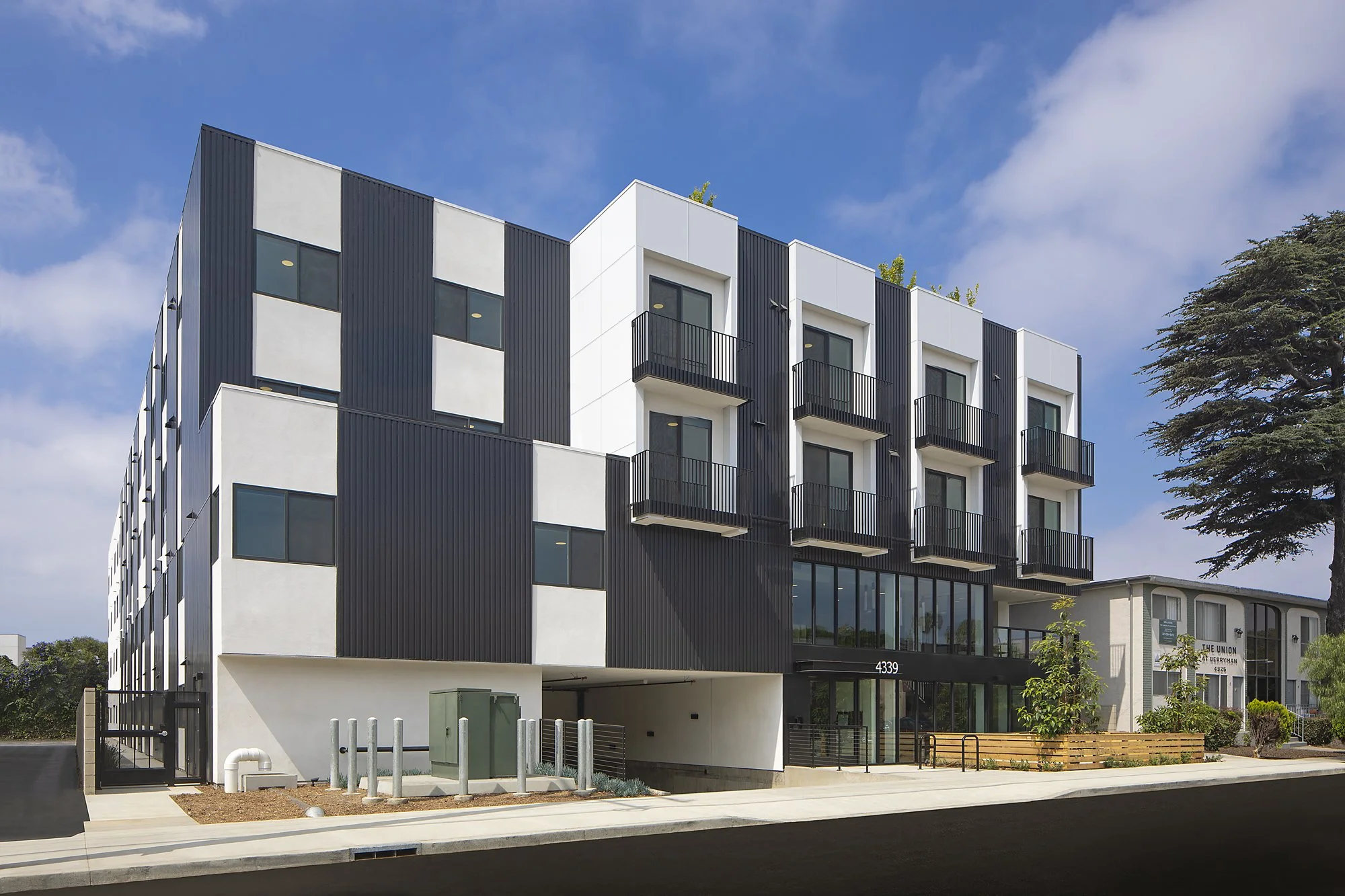
The guys at Six Peak are amazing. I’ve been there for 18 months now, and they’re incredibly pragmatic with finding opportunities and they are willing to shift their business strategy to fit what they believe the market needs and what types of projects you can build.
A lot of legacy developers in the city of LA, their solution right now is to not build (due to cost constraints). Six Peak’s solution is to find a new opportunity, so they started their business building co-living residences, and we sold a very large co-living portfolio to UCLA.
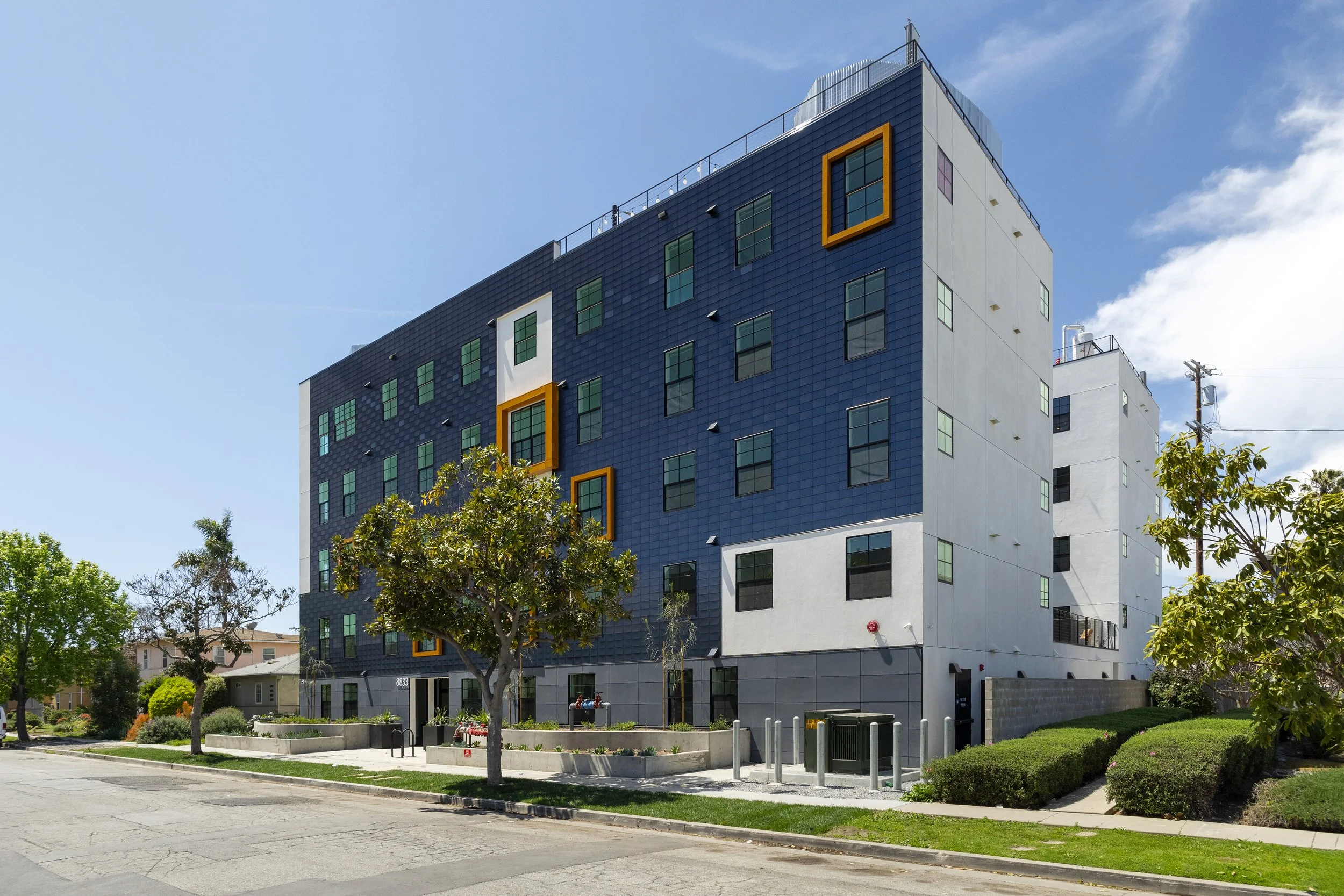
We are now focusing exclusively on LIHTC housing and for sale construction. Every project we work on is a function of Six Peak’s core belief of building attainable housing – whether it’s attainable on a small scale like this, or a co-living product type or LIHTC product type, that is all attainable housing.
The question is only, is it lowercase “a” affordable being privately funded like coliving or Nelrose, or capital “A” affordable funded by LIHTC?
FA
Because current conditions make that easier than the missing middle?
SD
Yes. Since the financial crisis, there have really only been two types of real estate that has continuously performed well over the past 15 years, and that is low-income tax credit-funded affordable housing and high-end spec homes. And if that doesn’t show the stratification of society, I don’t know what does.
FA
How did you get started in development?
FA
I started my journey in real estate on the founding team of United Dwelling, which was an early ADU pioneer. I was sitting in the jacuzzi with my dad (Steven Dietz, a venture capitalist) talking about the need for affordable housing. This was in March of 2018, when the very first ADU laws passed, and we thought this was an intriguing opportunity to create housing. And so he and I started working on this, like a father-son project.
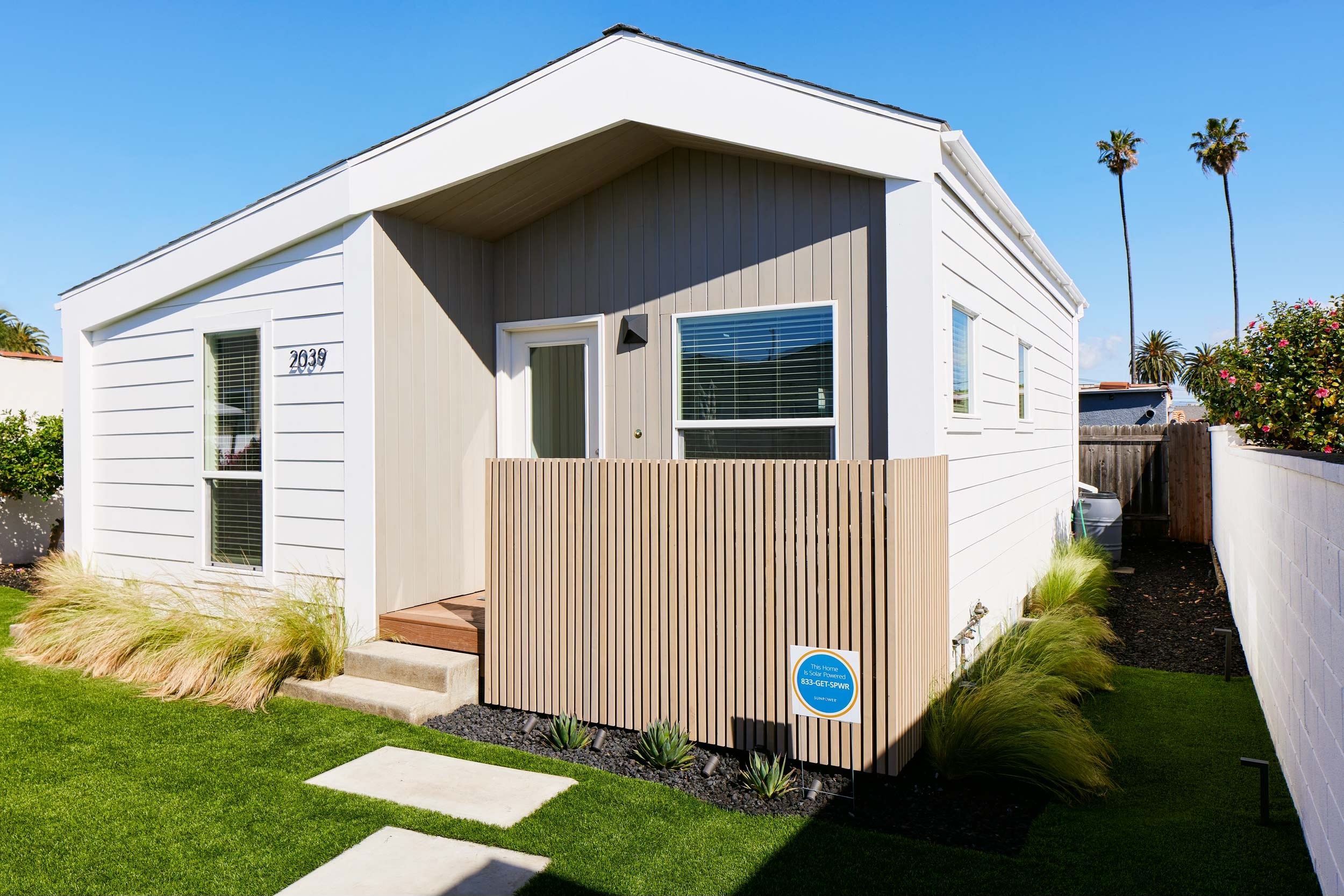
We created United Dwelling to build ADUs in partnership with other people, turning their garages into ADUs. When we started off, ADUs were just a land use concept rather than a widely adopted housing typology. Because of this, we ran into countless issues getting our ADUs approved.
Over the next five years, we helped various governing bodies pass roughly 18 housing laws that allowed for the widespread adoption of ADUs, including AB-68, which introduced the concept of Multifamily ADUs, signed by Governor Gavin Newsom at the site of one of our early United Dwelling units.
I’ve always been obsessed with housing and houses, to a crazy degree. From childhood. It is who I am.
FA
Nice. And did you study real estate?
SD
I was in Marshall School of Business. I went to USC, graduated in 2020, and I chose it because I knew eventually I’d want to be a developer in Los Angeles.
FA
So what came next?
SD
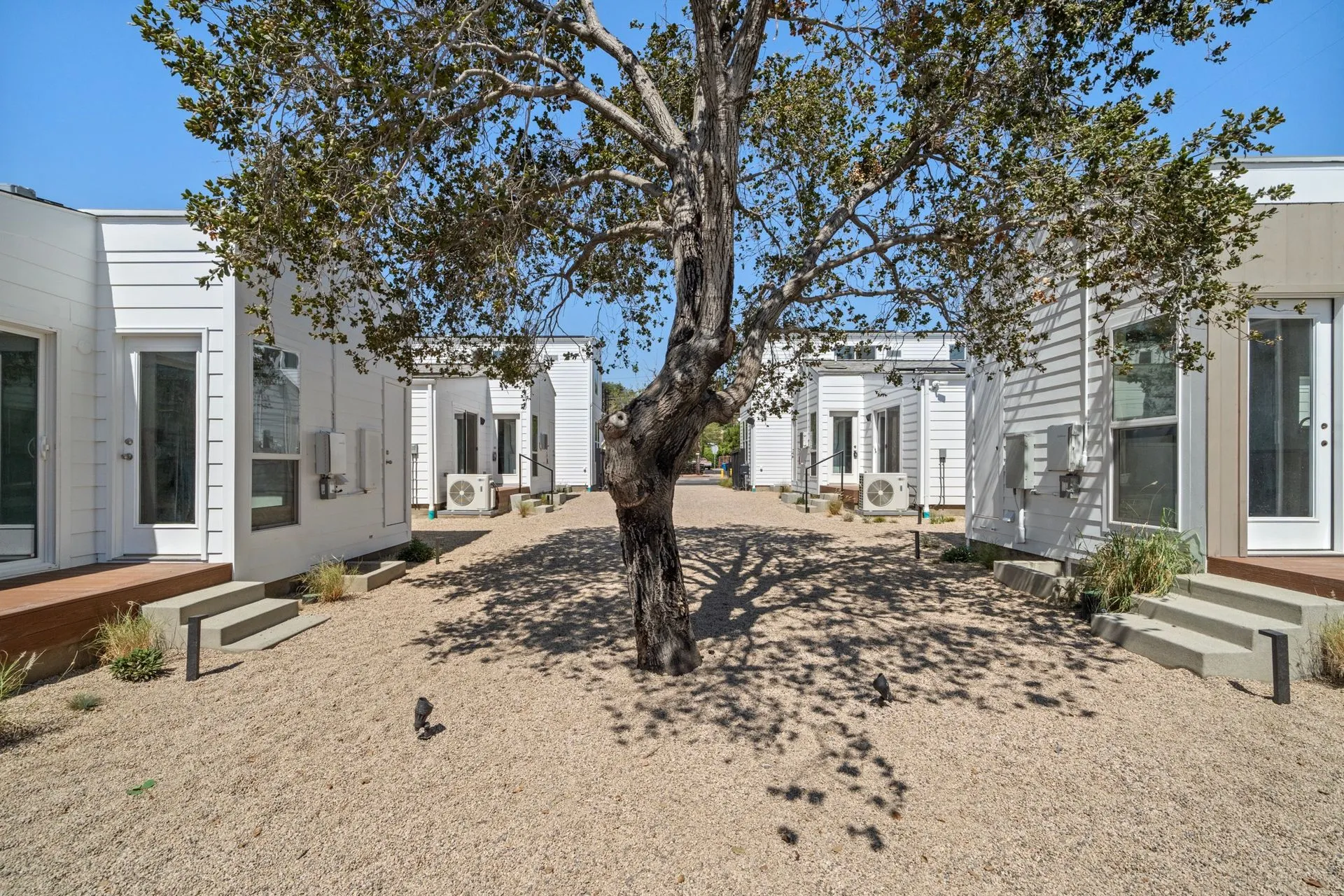
After building over 120 ADUs, we experimented with bungalow courts, in Highland Park and Silver Lake.
Then AB-2097 passed, allowing for higher density without on-site parking (for new residential, commercial, and industrial projects within half-mile of a major transit stop). So this project on Nelrose Avenue was my answer to the next generation of infill housing in LA. I believe it is the absolute tip of the spear in terms of implementing new housing policy in California.
FA
Tell us about it.
SD
I bought the site in June of 2023, which was right around when you published Common Ground: Multifamily Housing in Los Angeles. And I fundamentally designed this building based on things I read in your book.
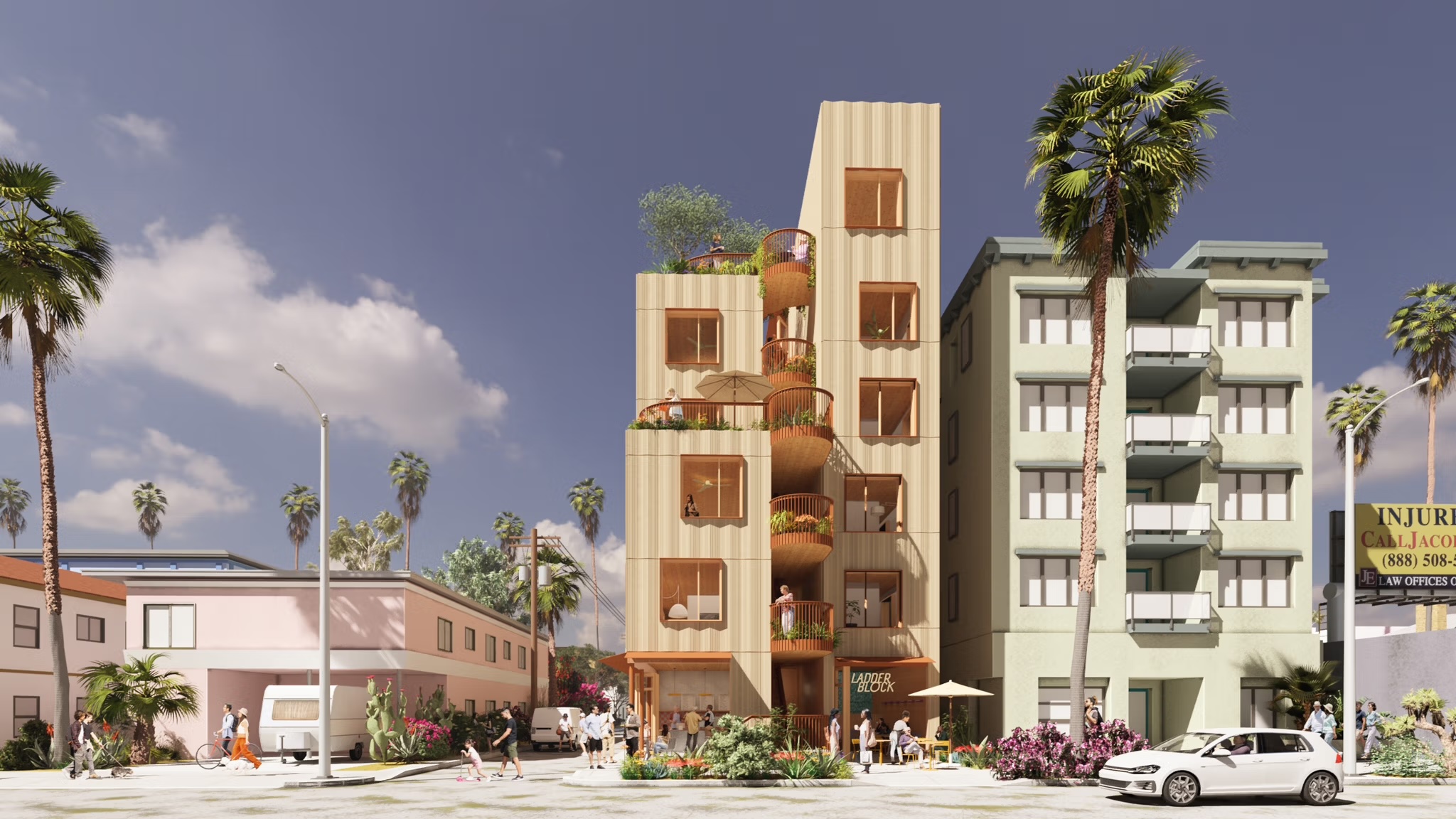
First of all, this building has an outdoor staircase and hallway. When AB-2097 went into effect, the human-scale interaction with a building changed pretty dramatically. In traditional buildings with parking minimums, you drive into an underground parking, you go up an elevator and you walk through an interior corridor to get to your unit. When you get rid of parking, people can enter on the street through the front door, and so it allows for a much more human-scale development.
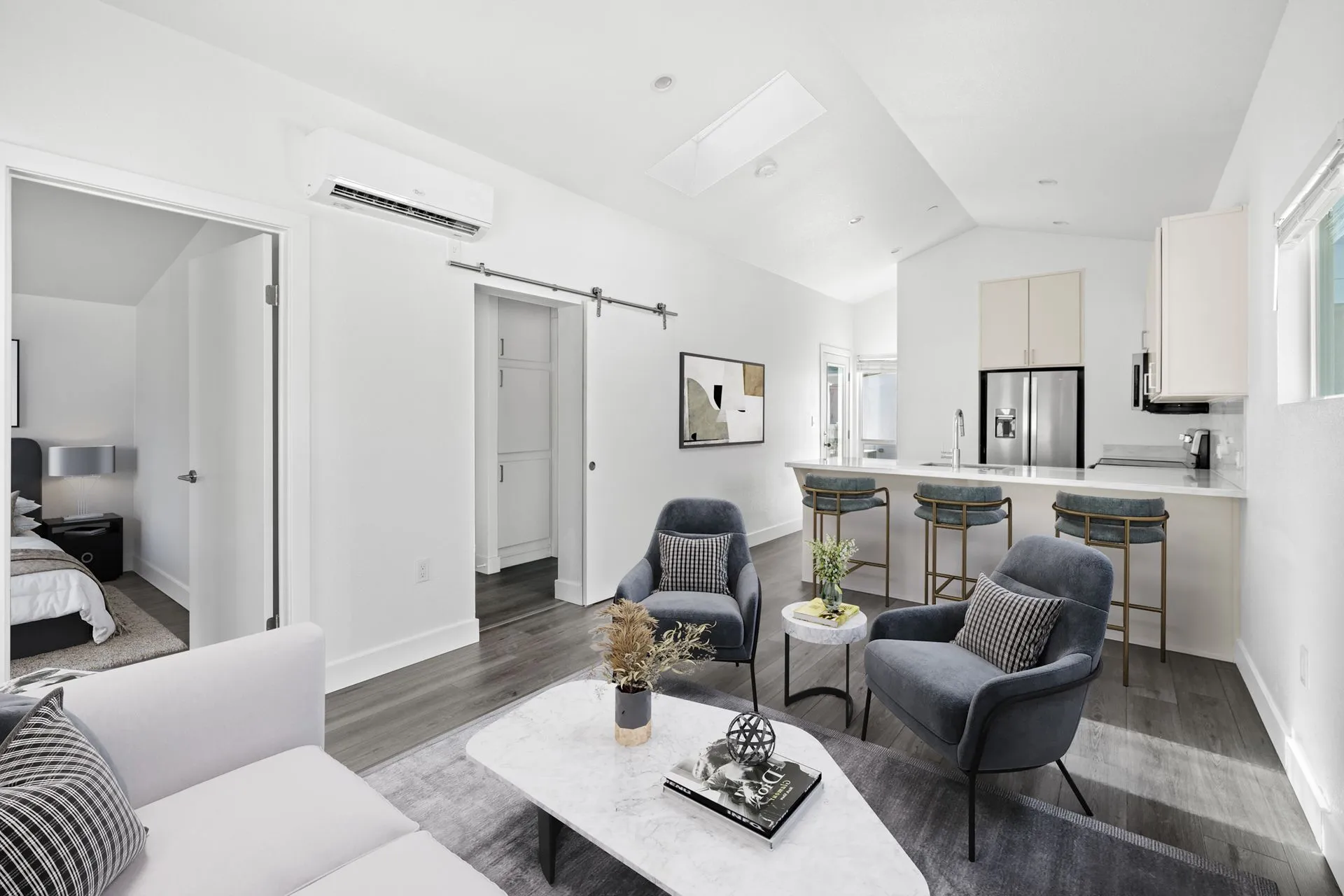
All of the 11 units in this building have at least 100 square feet of outdoor patios, and the patios are shaped like rooms, rather than a long, narrow balcony common in most apartments, which are a lot less usable. I designed this specifically because I so strongly believe in the desirability of outdoor space.
I really tried to make every square inch of each unit livable. I have floor-to-ceiling windows in each of my units, as well as natural wood and stone — all elements that increase livability, although at a significant added cost.
FA
What about parking for people in AB-2097 buildings who have cars?
SD
All AB-2097 does is remove parking minimums in transit dense neighborhoods, and leaves the number of parking spaces in a given building up to the discretion of the developer.
FA
So did you meet any code issues that made this building challenging?
SD
First of all, it’s a close to 12,000 square foot building on a 6,000 square foot lot, so we really had to maximize every square inch of this project. This is also a triangle-ish shaped lot, which does not lend itself to super-efficient floor plans. It’s a constant give and take.
For example, we have an outdoor corridor but it has to be partly walled in. If you have an outdoor corridor or any windows facing a building, as this one does, you’re only allowed to have 25% openings on that side. So this is literally, exactly 25% open. In a perfect world, this building’s outdoor walkways would be fully outdoors.
This is currently the only apartment building under construction in 90291, Venice. 35,000 people live here. In the next 18 months, only these 11 units are coming online in an apartment building.
FA
The only ones?
SD
So there’s one that’s 50 units that was just completed on Lincoln. Then there are a few townhome-style projects, but in terms of ones and two bedrooms, which is really the most needed type of attainable housing, this is it.
The Venice Coastal Zone is extremely prohibitive, so everything west of Lincoln Boulevard is a two to three year permit process. Also, Venice is a mid-density neighborhood, and going from mid-density to missing middle density, which is what this building is, is an almost impossible step. For example, if you have an existing duplex on the site, due to the SB8 replacement unit requirements, this building would not pencil.
Schuyler points to a site next door to his…
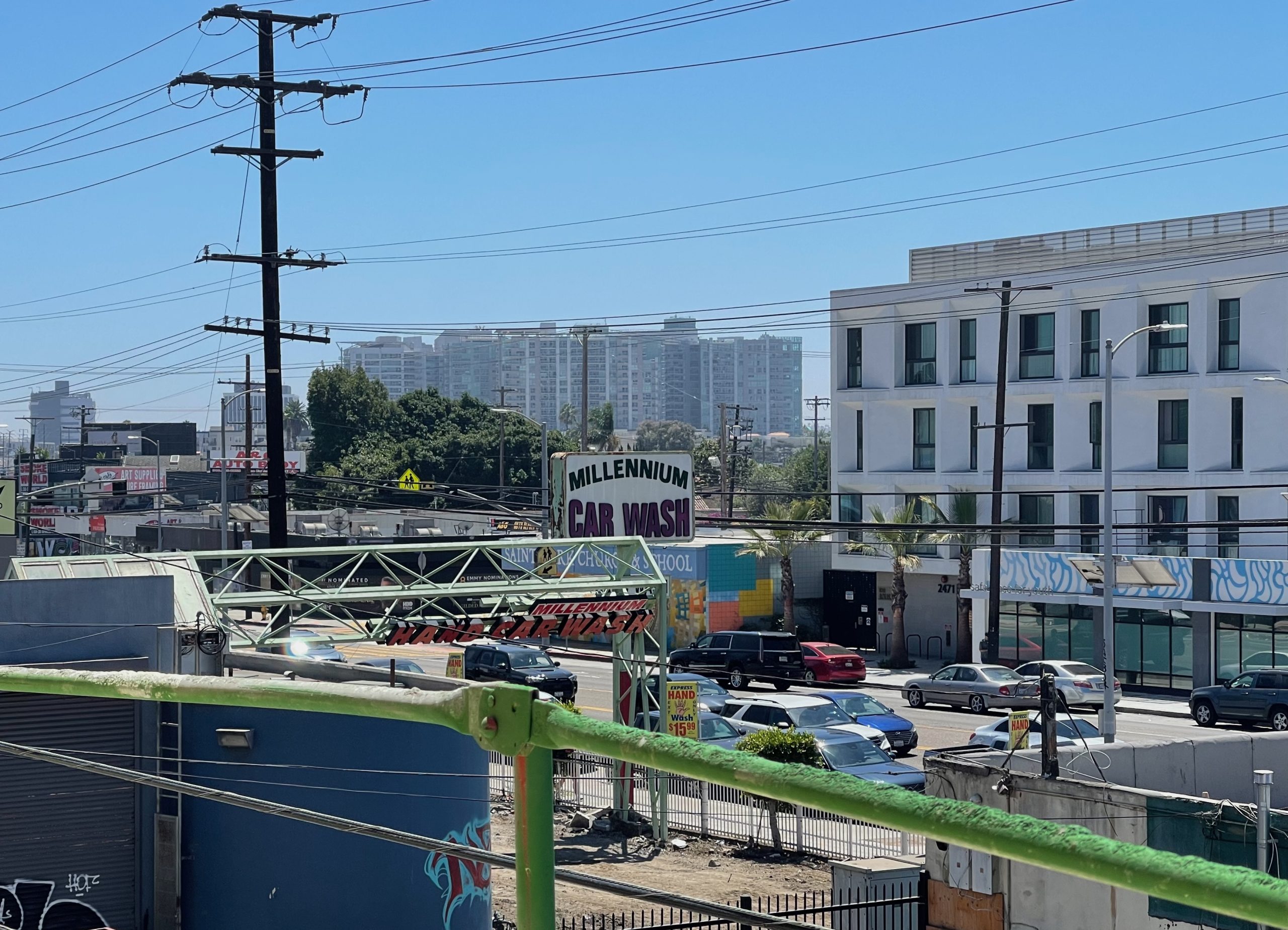
See that building right there, we’re looking at a car wash. That car wash was entitled for a 77-unit building that was permitted in 2018 and was approved sometime in 2018 or 2019. COVID stalled it. After Covid, interest rates increased, and it’s owned by a very large development company, and it has basically remained as a car wash, and their solution now is to turn it into an updated car wash. Because they can’t make a traditional market rate building pencil in L.A. right now.
FA
Because of the interest rates?
SD
And ULA.
“United to House L.A.” (ULA), is the City of Los Angeles real estate transfer tax, also known as the Mansion Tax. It adds a 4% tax on property sales from $5.4 million to $10.89 million and a 5.5% tax on sales of $10.9 million or more.
The fact that one-bedroom apartments are taxed as ULA is is really bad. ULA is the misnomer. It was called the Mansion Tax. That’s fine, but to have developers and to have property owners in existing multifamily buildings be encumbered by this huge tax is really, really hard. Although 4% doesn’t sound like that much, it’s a 4% gross. It’s not 4% on the profits, so it just completely destroys the financial appeal of growing these buildings.
As we continue the tour, Dietz points out the generous windows in the units…
SD
This is a storefront size window.
It has an inoperable middle section between two operable panes (intended for safety reasons).
SD
You know how silly that is! It is because buildings have exterior building maintenance requirements, and this is the largest you’re allowed to build and be able to reach out to clean windows. This should be able to be two large panes that open and not have this silly middle section.
And that’s the thing. Ezra Klein talked (in his book Abundance) about the concept of the “Everything Bagel” (where housing costs rise because of numerous codes and regulations aimed at solving multiple problems). And that is the classic example. Either the landlord has to hire window cleaners, or the tenant cleans it themselves. Having code stipulate window maintenance specifications is egregious government overstep on a missing middle housing project.
From there, we approached another staircase…
SD
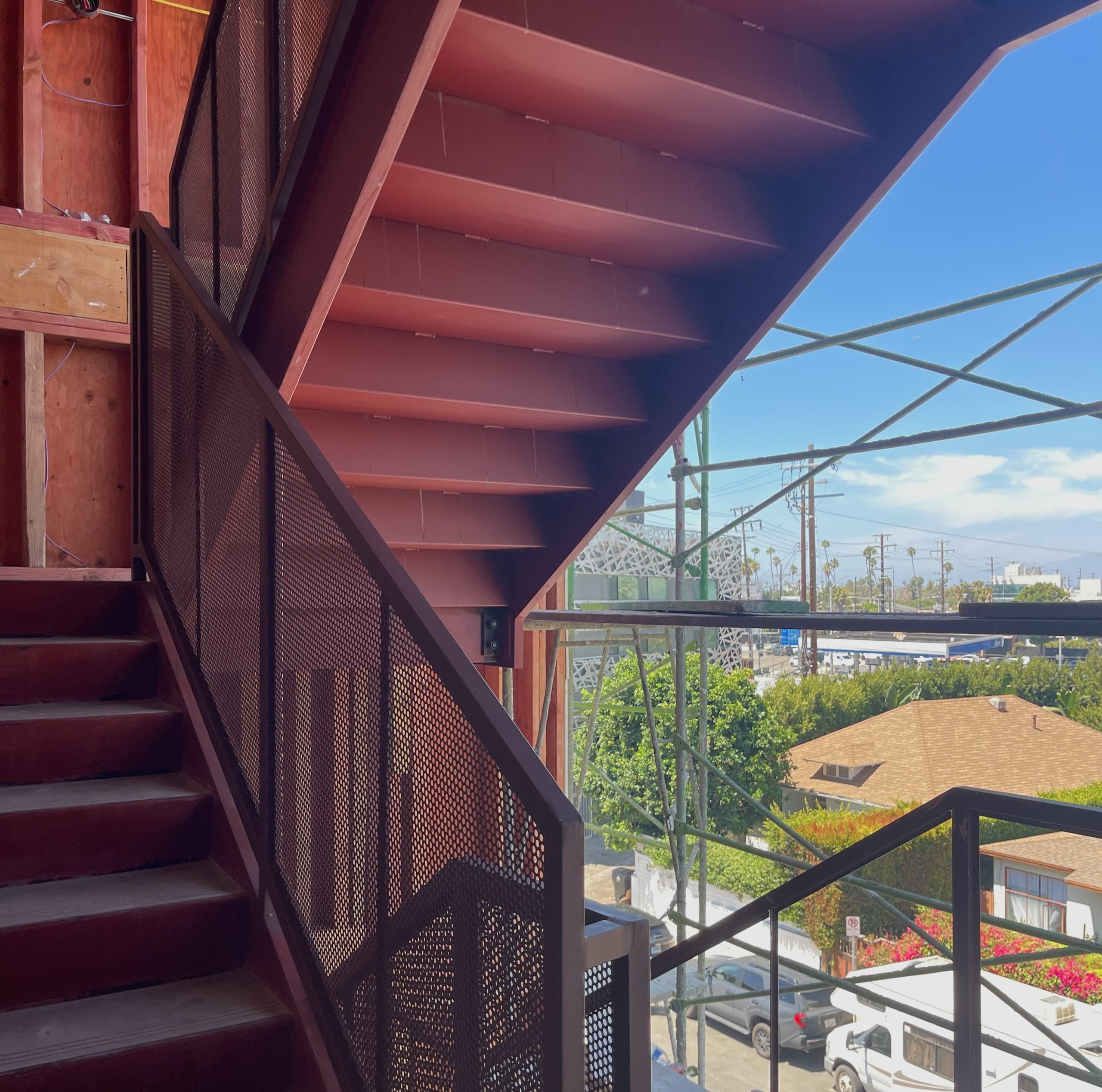
And this is obviously the dreaded secondary stair.
FA
So that’s another thing. Would you have liked this to be a single stair access building?
Currently there’s an effort among housing policymakers and designers to change the building code in California to allow for one staircase only, plus an elevator, in apartment buildings between four and six stories tall; so far, only Culver City has approved it.
SD
This would be the perfect single stair building. It’s five stories tall and only two units per floor above floor two. Because these staircases have to be a certain distance apart, the exterior corridor connecting them equals at least a full bedroom, maybe two. In terms of rent, getting an extra two bedrooms per floor is huge. If you can fit more bedrooms in your project, more missing middle development sites would be unlocked, creating more housing for everyone.
Everything in these infill buildings is so complicated. And that’s why mom-and-pop developers aren’t building, because it has just gotten so complicated, and it’s just been years of added codes.
So there’s the “missing middle” housing problem.
FA
When we say “missing middle,” what do you mean? What’s the rent range?
SD
I look at missing middle as actually the building typology rather than the rent. So missing middle to me is any type of multifamily housing you can fit on a single lot, because the assemblages (of neighboring lots) that you need for the large-scale projects make land costs really expensive. So to me, missing middle housing is the under-five stories, Type V or Type III construction (standard wood frame over a concrete base) on a properties zoned for multifamily housing.
If we look at the number of pathways over the past seven or eight years that both the city and the state have created to make development possible – between ADUs and AB 2097 and SB 79 – what I believe needs to be focused on is the simplicity factor, on eliminating old code and the bureaucratic mess around actually delivering new housing to our City. And then ULA is obviously a very big problem for this type of housing.
FA
If you plan to sell it, yes. Not if you plan to hold on to it.
SD
Well, that’s not true, because if I plan to hold on to it, in 10 years I still have to deal with ULA. So I blame the difficulty of building housing on city bureaucracy and the levels of complication from approval through construction. That’s what’s really hard.
I think the city and the state has done an incredible job for increasing density within the frameworks of what all the constituents want, because there should be single family neighborhoods, there should be multifamily neighborhoods, but you know getting somewhere in between, that is what is really, really hard to do.
You can’t really finance any missing middle housing to be attractive towards investment, which is why I submitted for that award.
FA
So let’s discuss Small Lots, Big Impacts, and the development opportunity on a small lot awarded to your team.
SD
So small lots. There’s a group based in Northern California called Frolic Community, which is really focused on creating attainable for-sale housing. They’ve been experimenting with a co-op strategy. They have a few completed projects in Seattle. They wanted to partner with a developer who has experience with boots on the ground in LA. So they reached out to Chris, one of the managing partners of Six Peak and Chris said, “This is an intriguing opportunity. Schuyler, can you help us do this?”
So I worked with Natasha Sadikin, my counterpart at at Frolic, and we submitted for the award. In terms of the architects, West of West is a fantastic design architect, but they have limited practical implementation experience in Los Angeles. Aero is a fantastic pragmatic architect that perhaps does not have a lot of for-sale level projects. So working together was a really good solution for everyone. So we’ll buy a property with the funds awarded and get it built.
FA
Do you get any kind of discount on the purchase price?
SD
You don’t get a discount on the property. But cityLAB-UCLA and LA4LA partnered with a group called Genesis LA, which is offering below-market rates on land and construction loans.
FA
When the Small Lots, Big Impacts process commenced, it was concerned with city-owned pieces of land. Is this something different?
SD
Yes, this is private land. We acquire it with a Genesis LA (not Genesis Capital) land loan. We then design and entitle it with basically a tranche of the loan dedicated towards entitlement, and then we will begin construction with a Genesis LA construction loan, and that’s how we build it. But it is private land, privately funded.
FA
So how many sites do you get?
SD
We will get one. In the next 60 days we’ll find a site, and we will then go through the entitlement and construction process for that project, and that’ll end up getting somewhere between six and nine small lot subdivision-style dwellings (for sale, with up to half aimed at people on moderate to low incomes).
FA
So Frolic specializes in some kind of collective ownership. What’s their role in all this?
SD
We’re technically co-developers. The Six Peak team is going to lead from acquisition through construction, and Frolic is going to work on the ownership structure and the subdivision process, and help with the design. There were a lot of people applying. We just said, let’s work together and see what happens. We won. We’re still figuring it out.
FA
So you don’t have a design yet?
SD
No. The application was so much more focused on a developer’s chops. The first phase of the Small Lots, Big Impacts competition dealt with the art of building a beautiful missing middle housing type project. This phase was more like, can we find developers who can actually get it done?
FA
Well, good luck, Schuyler, with moving mountains to create missing middle homes.
SD
Thank you!
Read about our other Good Developers, and the Introduction to the year-long series.