The Good Developer
September, 2026
Sandy Albert, Citypads
Making Change!
By Frances Anderton, for FORT: LA
Key Buildings: Helms Place, Kramerwood Apartments (144 units close to Helms Place, in design).
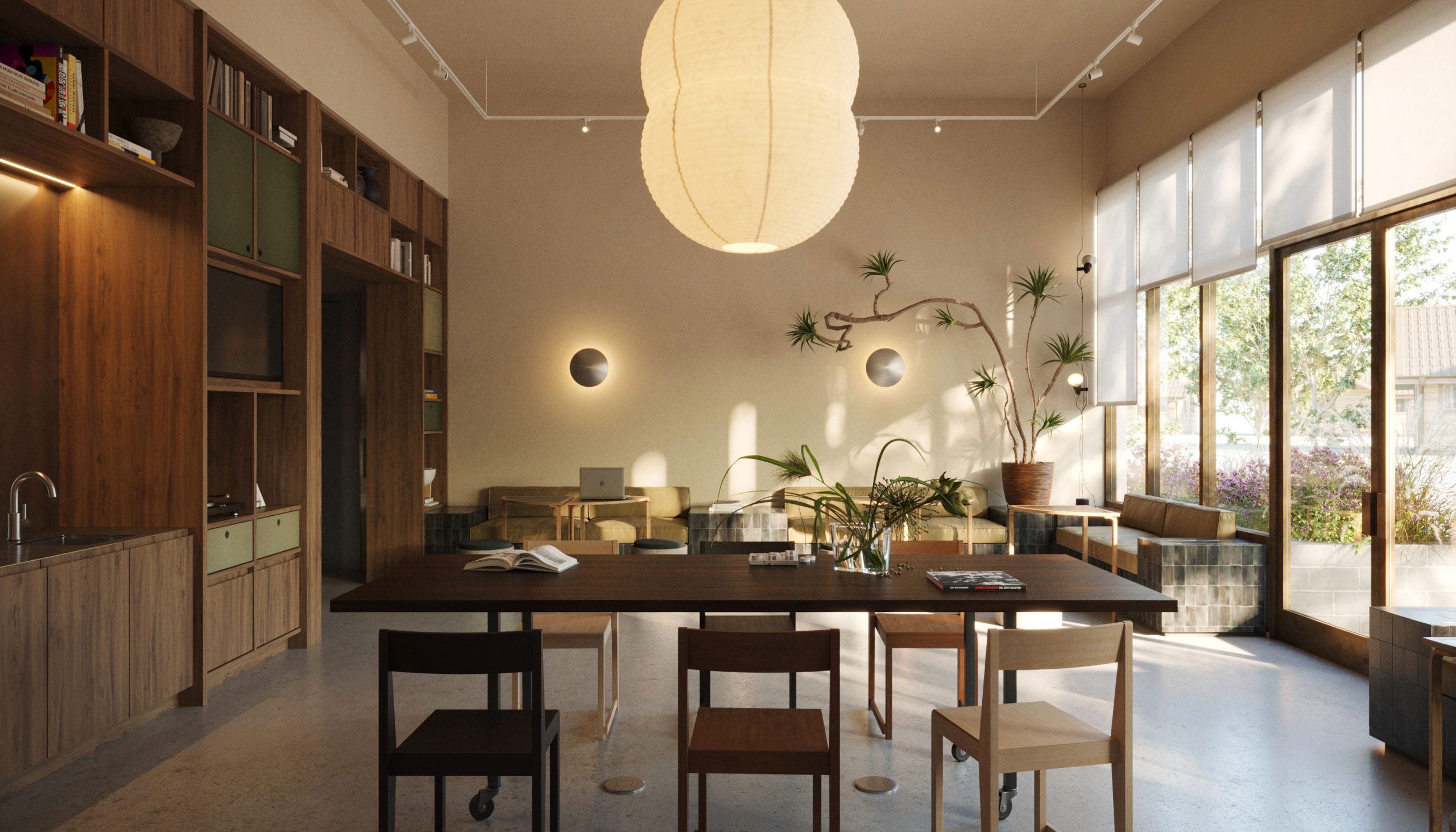
Best Amenity: The lobby, lounge, and co-working space. So many people work from home now, and want a third place. And everybody loves a beautiful, amenitized roof deck with views.
Favorite Construction Site Sandwich: Breakfast Burrito from Delia’s Restaurant, Eagle Rock.
Fantasy Building Name: I don’t like building names. I think you risk alienating people and it becoming about the building and not about the people that live in the building. It’s their place, not mine.
Most Annoying City Code/Tax/Department: DWP, and Measure ULA (Mansion Tax). I think it’s important that we have money and funding for homelessness and so forth. But ULA has been a major blocker towards getting the requisite housing to address our current affordability crisis.
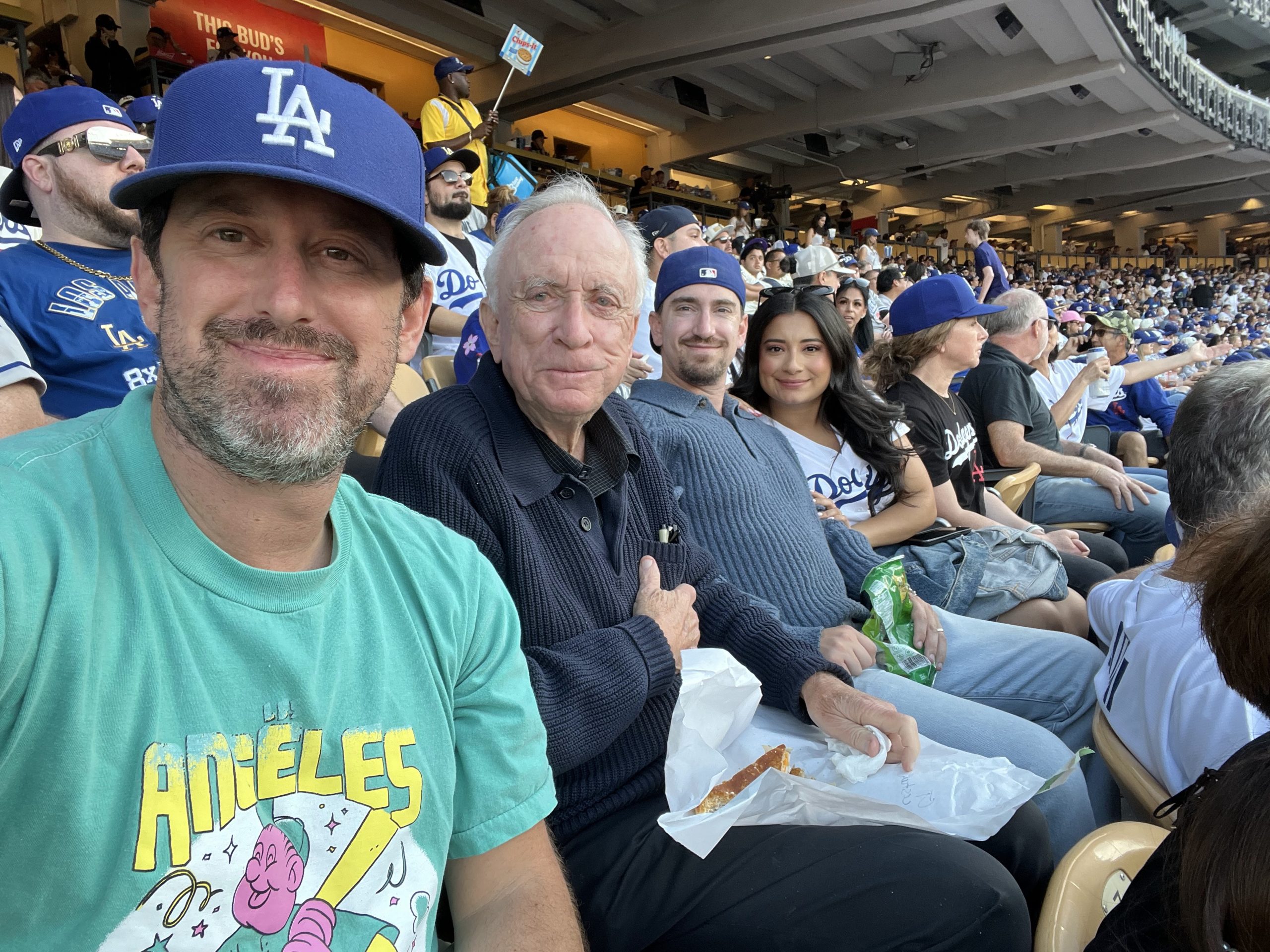
LA Developer Hero: He’s not a developer, but my hero would definitely be my father, an architect.
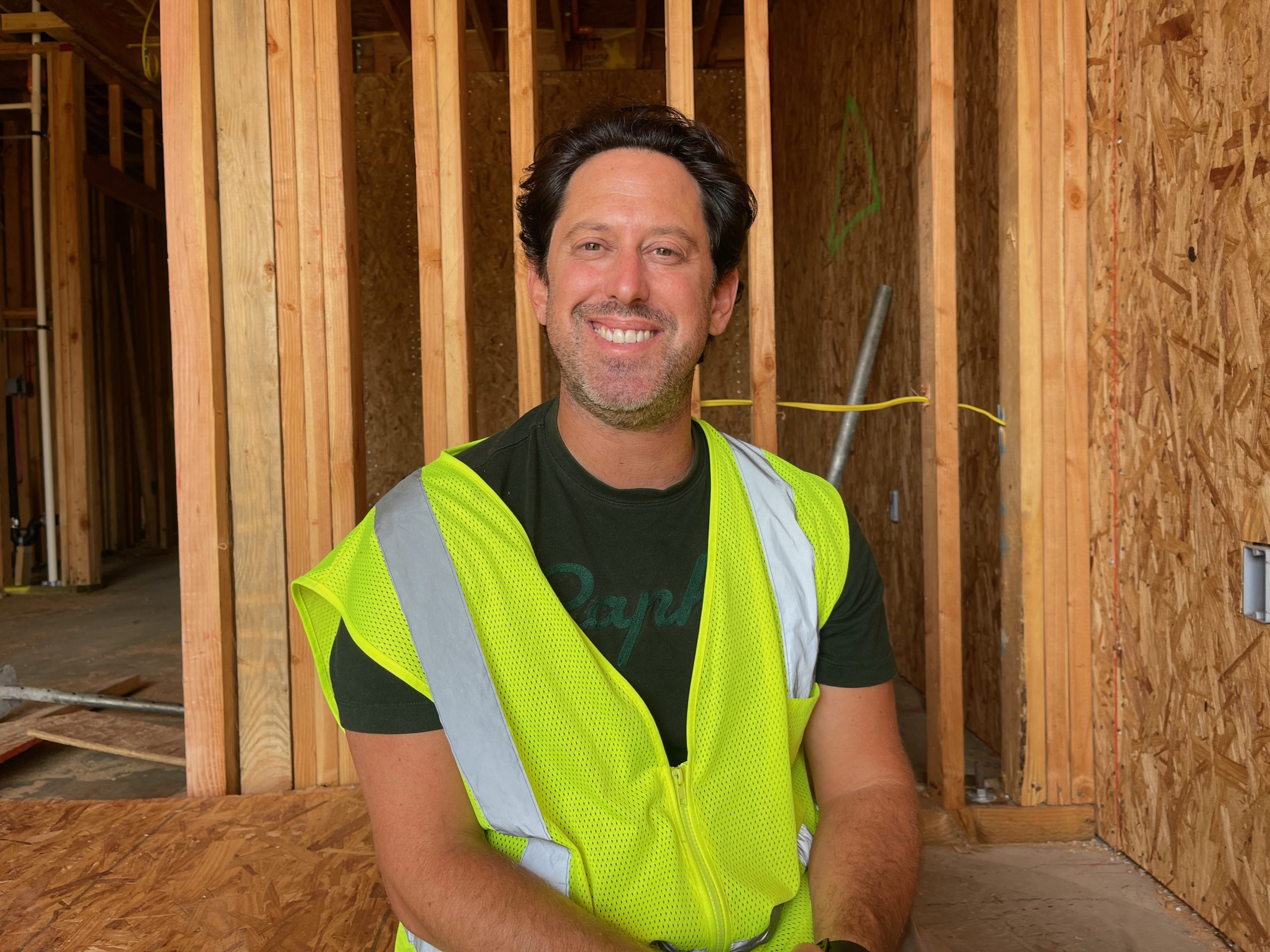
For Sandy Albert, partner and principal of Citypads, a multi-family housing investor and developer building in Chicago and Los Angeles, “the future of LA is about density, walkability, affordability, public transportation, and neighborhood retail.”
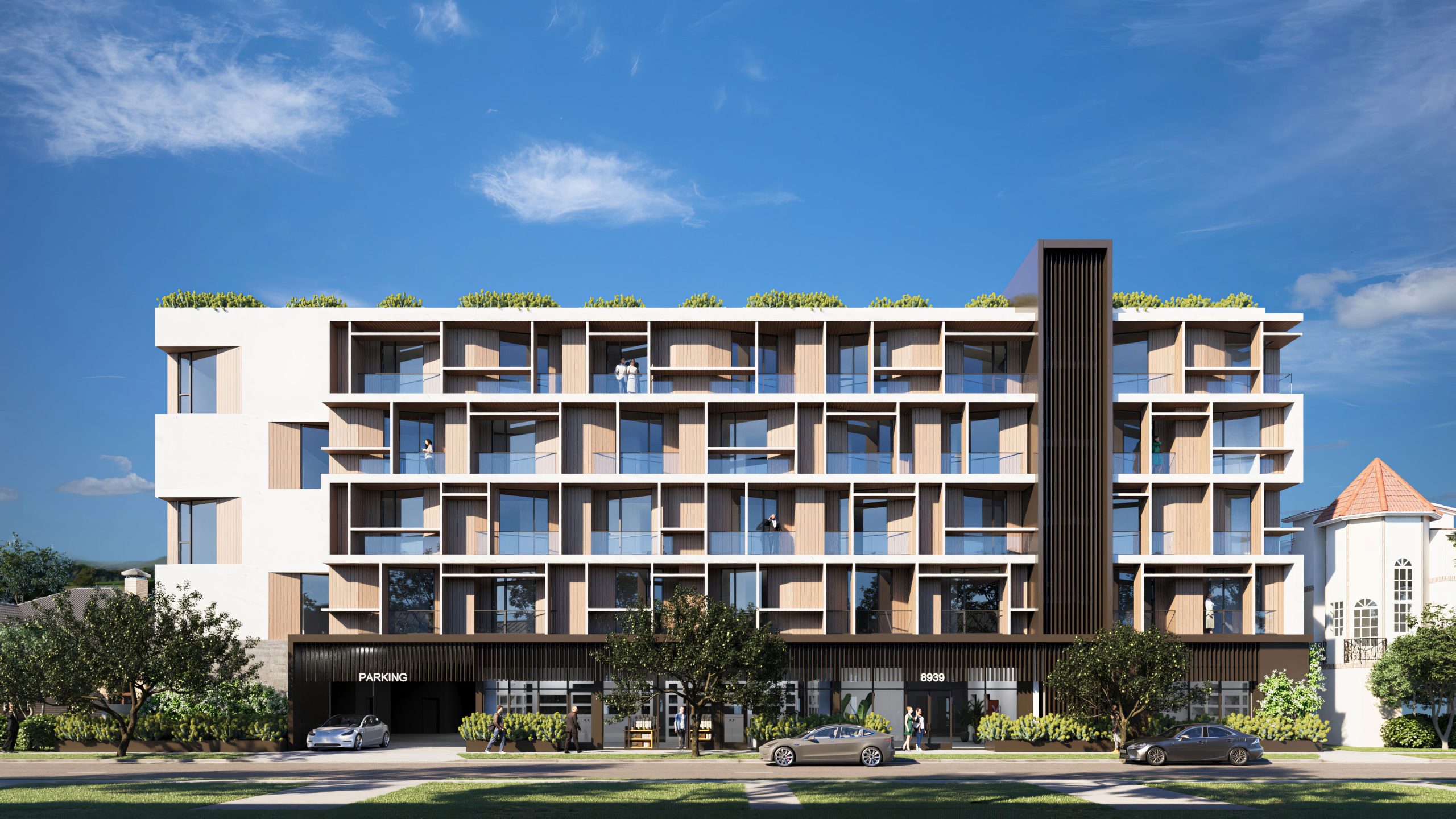
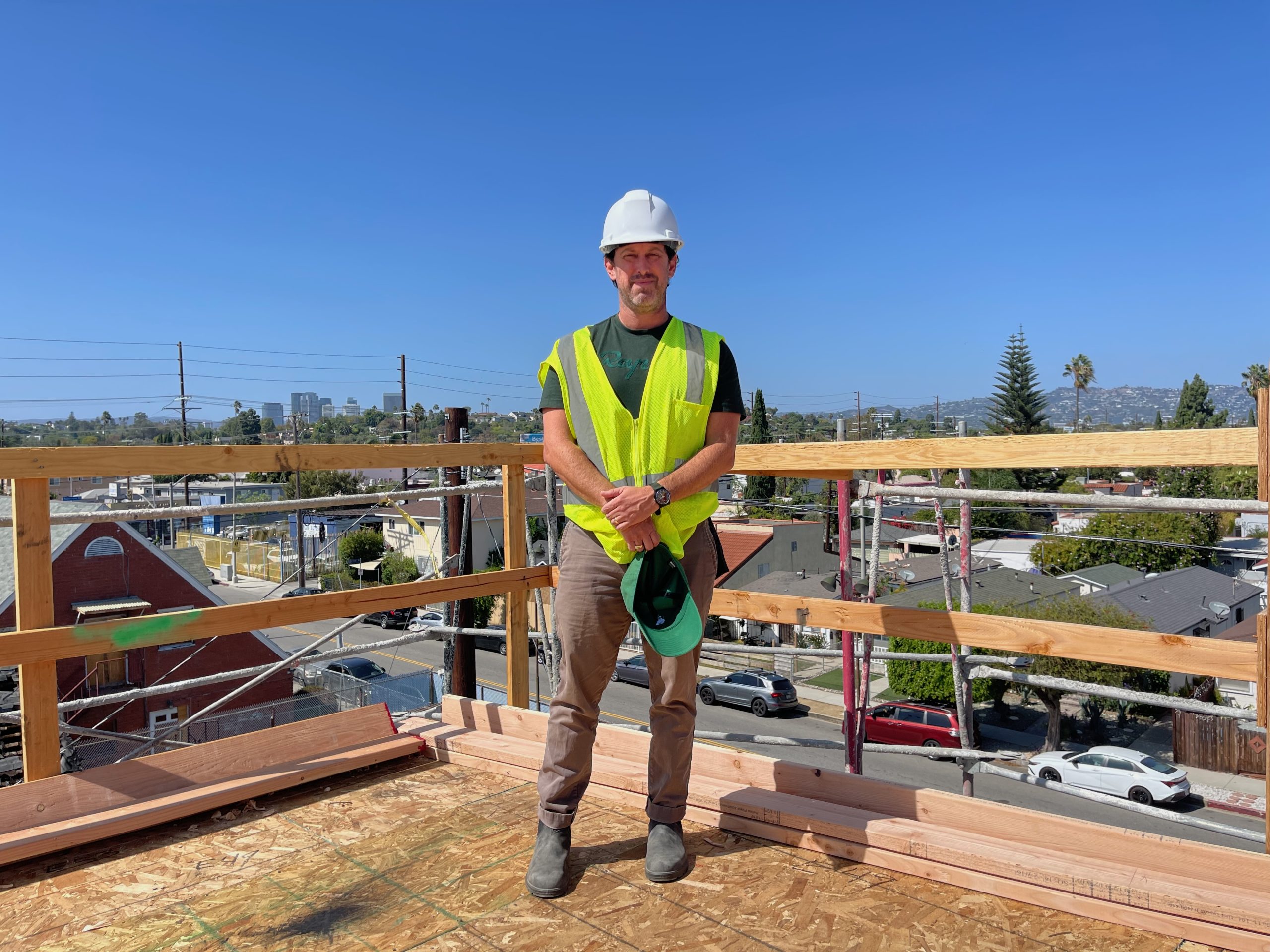
He is building a model for this worldview on Helms Place in Los Angeles close to the Robertson Boulevard, at the border of Culver City and walking distance from the Culver City E-Line station and the emerging campus for Apple TV Plus and Apple Music.
It is a five story, 92-unit building, designed by his father Stephen Albert, whose company The Albert Group is a longtime designer of multifamily housing in Beverly Hills, Santa Monica and West LA. Helms Place contains mostly studios and one bedrooms with ample light and balconies, a coworking lobby lounge and a rooftop hangout with dazzling views. And by the way, it has ground level parking for just 17 cars.
Albert is a fifth generation Californian who believes the state and his home city have to ring the changes. If the region is to address its housing needs, it has to stop preserving single family neighborhoods and fiddling around with “gentle density.” “We know what will solve these problems,” he says. “It is with hundreds of thousands, if not millions, of new housing units.”
In a tour of Helms Place, due to be completed next year, Albert explained the design thinking that he believes will keep marketrate apartments “relatively affordable” for the Westside. He spoke about the joys and professional benefits of working with his father: “I love the places and spaces that he creates. But it’s a lot about the things that people don’t see, like… all the details in designing a building that’s actually buildable from a cost standpoint.”
And he reflected on being a “nice” developer, who aims to listen to the concerns of Angelenos about new development while pressing forward.
“Change is the most difficult thing. I think that’s where conflict lies, and I think that people don’t take enough time to listen and understand each other, and I try and do that. It doesn’t mean that I’m not going to try and change things… They must change. That is the nature of cities. That is the nature of London and New York and the great places and the cities that have continued to thrive and survive. Period.”
The Good Words
Frances Anderton
Let’s talk about the building we’re in.
Sandy Albert
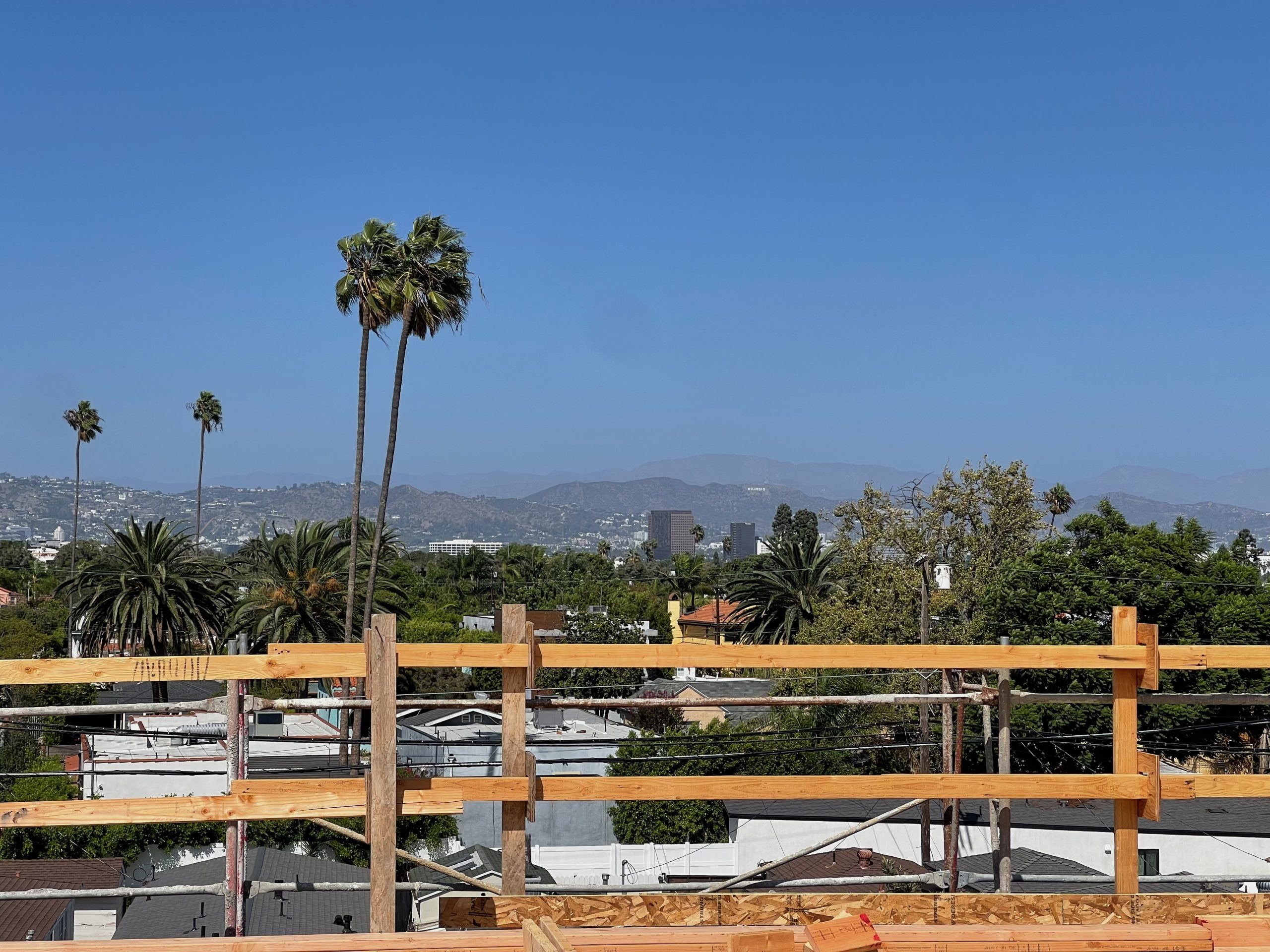
This is our Helms Place project, with 92 units, pretty much all studios and one bedrooms. We’re in a one-bedroom unit right here. This is going to be a big balcony here. It is five stories, four levels of wood over one level of concrete. Parking on grade. We’ll have a lobby-lounge, co-working space and a fully built-out amenitized roof deck with wonderful, dramatic views of the Hollywood Hills and West Hollywood and Beverly Hills and Century City. And then we’re smack dab in the middle of Westside of L.A. So, right next to Robertson Boulevard, and right next to Culver City too. We are an eight-minute walk to Helms Bakery and Ivy Station, and, most excitingly from my perspective, Apple’s new corporate campus, which you can see from here, and which is going to be the new global home of Apple TV Plus and Apple Music (currently under construction.) So we’re really excited about this location.
FA
Your dad Steve Albert designed this building. Tell me a bit about working with him.
SA
It’s just a dream come true. It’s just a blessing and something that we’ve been wanting to do for a long time.
FA
You’re a developer, your dad’s an architect. They are different disciplines. What do you learn from each other?
SA
I think we learn from each other every day. I’m the luckiest person in the world. I truly am. He’s a not only a great architect, but an even better father and person. So I’ve learned so much from him about how to be a good person. And he is a phenomenal architect. He’s not just our architect in LA because he’s my father. No, he’s also the best fit for what we’re doing because he’s basically one of the most active, sub-institutional, multifamily architects in Los Angeles over the past 10, 15, 20 years.
So I know the work that he’s done, and I know his clients, and there’s a huge level of confidence and trust, and it’s really a close partnership. And he’s been in business for so long that he has relationships with all of the other consultants and people and groups that it takes to do what we do, and we’ve been able to leverage those relationships, which is incredibly meaningful. This business is so difficult, and it’s all about the people and the team that you have, and so having access to the best talent in Los Angeles in that regard is huge.
FA
What is it about his designs that works for your Citypads buildings?
SA
I love his designs. I think they’re beautiful. I love the places and spaces that he creates. But aside from that, it’s a lot about the things that people don’t see, like all of the technical and structural systems, mechanical systems, all the details, designing a building that’s actually buildable from a cost standpoint.
That is I would say 80% of it, and then the other 20% is the aesthetics and everything else, and just creating really quality spaces from a light and air standpoint. You’ll notice we have really high ceilings in the units. You’ll notice these windows are going to be all sliding door glass (onto the balconies), so you’ll have a ton of light and air coming into the units and the spaces.
We look at our apartment buildings as people’s home, as a consumer product, and we want to make that experience as good as possible. It’s good business. Apple pays such close attention to the App device we have in our hands. Shoemakers pay such close attention to shoes, but from a consumer product standpoint, your home or your apartment is your largest expense, and it affects your day-to-day life more than anything. So we want to give that as much attention, care, and thought as possible.
FA
What does Citypads connote?
SA
We’re an urban investor-developer, and we focus on creating relative affordability and attainability — lowercase ‘a’ affordability and attainability — with slightly smaller unit sizes, slightly higher density housing. So I think that Citypads connotes all of those right things.
FA
But when you say they are small ‘a’ attainable. What does that really mean?
SA
We’re aiming towards relative affordability, because to live on the Westside of LA is still extremely expensive and probably always will be. There’s no getting around that. The trick is how can we make it as affordable, as attainable as possible. How can we keep it from getting insanely expensive?
FA
And how can we?
SA
More supply? Everybody knows that.
FA
But the supply is quite restricted.
SA
No, it’s not. California and Los Angeles currently has some of the best, if not the best, prohousing, pro-development zoning policies.
FA
But it’s the implementation of these policies that seems to be tricky.
SA
That’s true. So for example, from an entitlement standpoint, we’re getting all of the height and density and unit count that we need – with state density bonus laws – and the fact that CEQA (California Environmental Quality Act) is off the table means you can’t have NIMBY lawsuits and the local politics from the neighborhood constituents who we love. I am a neighbor. I love people and our lovely elected officials. Now, do I trust those people to not get in the way of what I think needs to happen? Of course not.
FA
I’ve heard that projects are getting entitled but they’re not getting permitted. The question is whether they’re moving to shovels in the ground.
SA
Exactly. So the big issue with Los Angeles specifically, which is a really large issue, is LADWP, the Department of Water and Power. It’s a quagmire. It’s mind-boggling, and it’s a really serious problem. It can be difficult to get water and power to sites and to predict how long it’s going to take and how much it’s going to cost, and that just makes it really extremely difficult, if not impossible, to be able to do these projects.
Housing doesn’t just get built by somebody that owns a piece of property. The bulk of housing in the United States gets built by investors and developers. Whether it’s affordable or market rate doesn’t matter. And for investors and developers it’s less about cost and more about predictability.
It shouldn’t take nine to twelve months to get a building permit. It should take less when AI is implemented, which is not a matter of if, but when.
FA
And what’s the AI going to do exactly?
SA
You will need fewer people to do plan check, and it will take less time. The planning and the building code are all documented. There’s very little room for interpretation. And so you can have machines do that.
FA
Do they have to be checked by humans afterwards?
SA
Yes, so that’s why now a building permit takes nine or 12 months. That’s just ridiculous. Even without AI, it should not take that long. It should be four or five months. So maybe with the implementation of AI for plan check then it gets cut down two or three months. Because the actual time for the machines to plan check is maybe a matter of hours or days, and then you take another month or two for the humans to make sure everything is right.
FA
This building is infill, and these mass transit oriented projects tend to be primarily studios and one bedrooms, not necessarily larger households. If infill is the future on the Westside, where do families go?
SA
I think there’s definitely a dearth of higher bedroom, higher count units on the Westside of LA. But if you’re truly trying to create affordability, it’s very difficult to build larger units that are relatively affordable.
FA
You said the parking is on grade. So that saved the cost of digging. Has it taken away space for units?
SA
There are only 17 parking spaces for 92 apartments. Part of our big thesis here in Los Angeles is that really the future of LA is not about cars and parking, but the future of LA is about density, walkability, affordability, public transportation, and neighborhood retail.
FA
I do think about women coming home late at night from the subway. That first mile, last mile is fine at 12:00 noon, not so fine at 12:00 midnight. Is the idea they might rideshare or get on a scooter or bicycle?
SA
That’s a good point. I think this walk is relatively safe. Obviously, late at night, it’s not as safe. But the more housing, the more people, the more eyes on the street, the more safety.
FA
You said that this business is difficult. So, what is the draw? What makes you get up in the morning and be excited about being a developer?
SA
First of all, getting to work with my dad and people that are really inspiring and close to me. I’ve always been interested in people. I’ve always been interested in cities and places and creativity and really storytelling. Especially growing up in LA. I like organizing things. I like planning things. I think I’m really interested in politics and finance, and creating something tangible. It’s a cliché thing, but it’s spiritual. I decided I wanted to be a developer in college when I was 19, 20, years old. I’ve been in the business my whole career, about 23 years.
FA
But what made you want to be a developer?
SA
I think it’s contributing to the city, building something for people, and the challenge of being able to see a project through, and the excitement of switching gears from creative design to politics to finance and to construction to interfacing with the city and municipalities, whether it’s from a bureaucratic sense or from a collaborative sense. I mean, every day is different. There’s never a dull moment, and it’s a lot of fun.
FA
I’ve heard on the grapevine that you are “nice.” That’s not an adjective that one typically associates with developers. In fact, the reason why we called our series The Good Developer was to take on the negative perception of developers. So, one, are you nice? And two, if you are, is it possible to be a nice developer? Or is it by definition an industry that brings up a lot of challenging situations? Maybe having to buy people out of their unit, or maybe, yes, putting a great big building in a neighborhood where the nextdoor neighbor would rather there wasn’t a great big building.
SA
That’s interesting. First of all, yes, I think I’m nice. Probably too nice, actually. But that doesn’t mean I’m not ruthless. Seriously, like really, really, really tough. And I think I’m actually trying to be a little bit less nice and more tough. But that doesn’t mean that I don’t care or have a huge heart, and it also doesn’t mean that I don’t want our city to be as vibrant and affordable and accessible and attainable to as many people as possible.
So it doesn’t mean that my worldview and my strategy and stance in terms of getting there might not come into direct conflict with someone else’s reality.
I think people are really afraid of change. Change is the most difficult thing. I think that’s where conflict lies, and I think that people don’t take enough time to listen and understand each other, and I try and do that. It doesn’t mean that I’m not going to try and change things because I think that’s going to be for the better for more people, for our neighborhood, for our communities, for our city, for society.
FA
Have you had any situation that’s come up where, for example, maybe you’re doing an infill project and it involves evicting people who are there?
SA
No, not really. I’m a fifth generation Californian, third generation Angeleno. I love this city and this state more than anything, and I believe in it deeply. I love our history. I love our neighborhoods. I know the laws and I know the rules. So I want so deeply to get the housing built. I know how difficult it is to evict people, how controversial it is. So I try and avoid that.
But I think that we have to be careful. I believe in tenants’ rights. But we know the only path towards affordability and obtainability and a vibrant Los Angeles is more supply.
FA
There’s a supply issue, but I do wonder if there’s also a constraint on existing housing, for example Prop 13, locking homeowners in place.
SA
Absolutely. Then there’s a preciousness here towards single-family homes, and gentle density, which is terrible.
FA
Oh, interesting. Why do you think gentle density (ncreasing the number of housing units in a neighborhood through relatively low-rise, low-density, small-scale structures) is terrible?
SA
Stupidest thing. It’s the stupidest thing ever.
FA
Do you see it as just too small, too low scale to make an impact?
SA
Everybody likes to complain, oh, the city’s too unaffordable. The homelessness. The this. The that. Everybody complains, and yet we know what will solve these problems. It is with hundreds of thousands, if not millions, of new housing units. Period.
The city must change. Our built environment must change. And you can’t have it both ways. You can’t have your nice, gentle density, three or four unit thing. That’s nostalgic.
Everybody loves the West Village. Everybody loves Europe. I love it too. But if you want to address the real issue, which is affordability and homelessness, and you really want to make our city vibrant and beautiful, it has to change.
Now, that doesn’t mean you don’t focus on phenomenal architecture and crafting the ground floor, because you must do that. But the city is going to change, and the question is, where do you draw the line? We should be going up 5, 7, 8, 9, 10 stories. And if you live in a single-family neighborhood that’s no longer single-family because of SB 79, you can sell your house and move.
Things will change. They must change. That is the nature of cities. That is the nature of London and New York and the great places and the cities that have continued to thrive and survive. Period.
Read about our other Good Developers, and the Introduction to the year-long series.