The Good Developer
October 2026
Sandra Kulli
Cross-Pollinator!
By Frances Anderton, for FORT: LA
Key Projects: Hollywood Park, Inglewood; Store One, City of Anaheim; The Great Park Neighborhoods, Irvine; The Pinehills, Massachussets
Best Amenity: A learning library (planned as a community benefit for a Skanska project in the Arts District, unbuilt). It’s physical and it’s also social. You can come in and say what you want to learn, and see if you match up with somebody who lives in the building or works in the building, and they share their knowledge with you and you with them. The learning library is not just books, but it’s learning across ages, across talents, and across styles of learning.
Favorite Construction Site Sandwich: I love any food from any food truck on any construction site. I just love the food, the ordering, and the hanging out with people and talking.
Fantasy Building Name: Holly House. At Hollywood Park we envisioned this incredible Market Hall for all the women chefs of L.A, and we named it Holly House. So that’s my fantasy building and name: Holly House, filled with women entrepreneurs, chefs, writers, creators!
Most Annoying City Code/Tax/Department: I’m not sure it’s a department or where the authority comes from, but I was enchanted by Jonathan Hale (of People’s Vision Zero) who decided he would paint good crosswalks, since the city was taking forever to put them in. Then he got a ticket for painting these great crosswalks, and the city painted over them. That’s like Catch-22.
LA Developer Hero: Jason Foster, who worked at River LA and then moved over to Destination Crenshaw, has worked really hard to retain the memory of Crenshaw and the area, and then the build prophecy with the art. I really admire the effort within Destination Crenshaw and Jason’s tremendously hardworking team playing and collaborating with everybody. He’s a great guy.
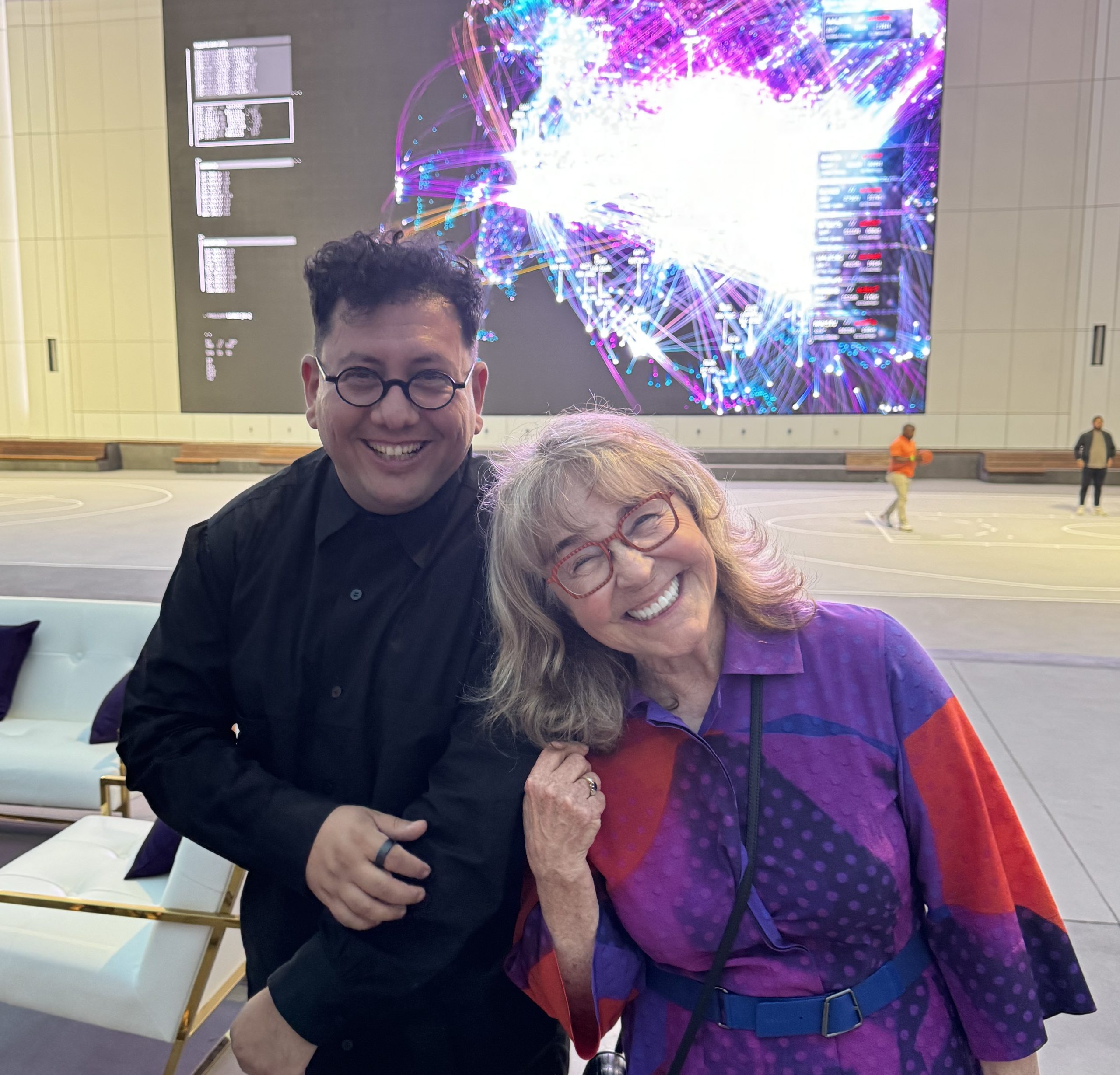
Show up at the ribbon-cutting of a new building, attend a public conversation, or join the throng at cicLAvia, and it’s likely you’ll run into Sandra Kulli – a sunny Angelena who lights up the room with big smile and laughter, before delivering whipsmart, whippet-speed insights into the scene at hand.
Kulli is not a developer per se but she’s worked with some 75 of them, over a 40-year career in which she serves as a kind of developer-whisperer – a “cross–pollinator,” in her words – who helps pave the way for new projects, often very large ones, and ease fears of change by finding ways to bring locals into the process so they can feel invested in the newly created place. This means working with development teams to take cues from outside the world of real estate, and create, she says, “a stew of possibility that is not literal in terms of sticks and bricks and costs and ROI, but how might we make this place special?”
Kulli has worked for private developers and for municipalities, from the builders of Hollywood Park in Inglewood to the City of Anaheim, and the makers of the Pinehills residential community in Plymouth, Massachusetts.
Her work is “randomly amorphous, and undefined,” but often involves storytelling through art or words, or sending out developers to scope out the neighborhood – on bikes or on foot. She recalls that on an adaptive reuse project in the Valley, she and her clients sent team members to scout the neighborhood four blocks away. One of them “came back with a bottle of Russian vodka, and said, ‘there are a lot of young women who live in this neighborhood, and this is their favorite, favorite vodka’. Well, you are not going to get that from a piece of marketing research. You are going to only get that by going out on your own and making these discoveries.”
Kulli, who was born in LA and raised in Pasadena, has a deep and passionate love affair with Los Angeles, expressed in her involvement with community serving nonprofits including KCRW, cicLAvia and, now, the Library Foundation and LA’s schools. She understands, and helps weave, the web of connections between culture and commerce, between past and future. So for this month’s profile we talked to her about lessons learned over long experience about what she believes makes a “good developer.”
The Good Words
Frances Anderton
How did you get into development?
Sandra Kulli
I was a teacher in El Sereno, and I wanted to buy a house, but I didn’t make enough money as a teacher. So I went to real estate school, and told my principal, I’d like to buy a house, and I think I can sell houses to all the other teachers I know in Altadena and Pasadena. And he said, “Well, when that doesn’t work out, come on back.”
So that worked out very nicely. I bought a house, and then I thought I would really like to make better places, and started working for a builder. My husband Dan said to me, “you don’t well work well in captivity, so maybe you need to work for yourself.” One can touch so many more people and places. That’s when I started my own company. At this age, I get to pick and choose my collaborators. Today it’s more work for LA and the future of our beautiful city, kids, libraries, and schools.
FA
How would you describe what you do?
SK
I am a cross-pollinator. I started as a school teacher; there’s a thing in teaching that makes you a cross-pollinator with the kids in the classroom, understanding where they are, what they need to learn, what their interests are, and how you might ignite that fire to have them adore school and go on and become whatever they’re dream about becoming.
Every development is unique, and when you’re working with a great development team, we can take lessons learned from outside the world of development, and apply them within the team to create a stew of possibility that is not just literal in terms of sticks and bricks and costs and ROI, but how might we make this place special?
And you never work with just one person, because once we start thinking this way, everyone is a cross-pollinator. Everyone can bring something to the development that makes it more wonderful for the people who are going to come work there, live there, or even live near it. It’s a win-win-win, and then of course the developer makes money as well.
FA
But you are hired by the developer to come in and nurture this cross-pollination through reaching out to various stakeholders?
SK
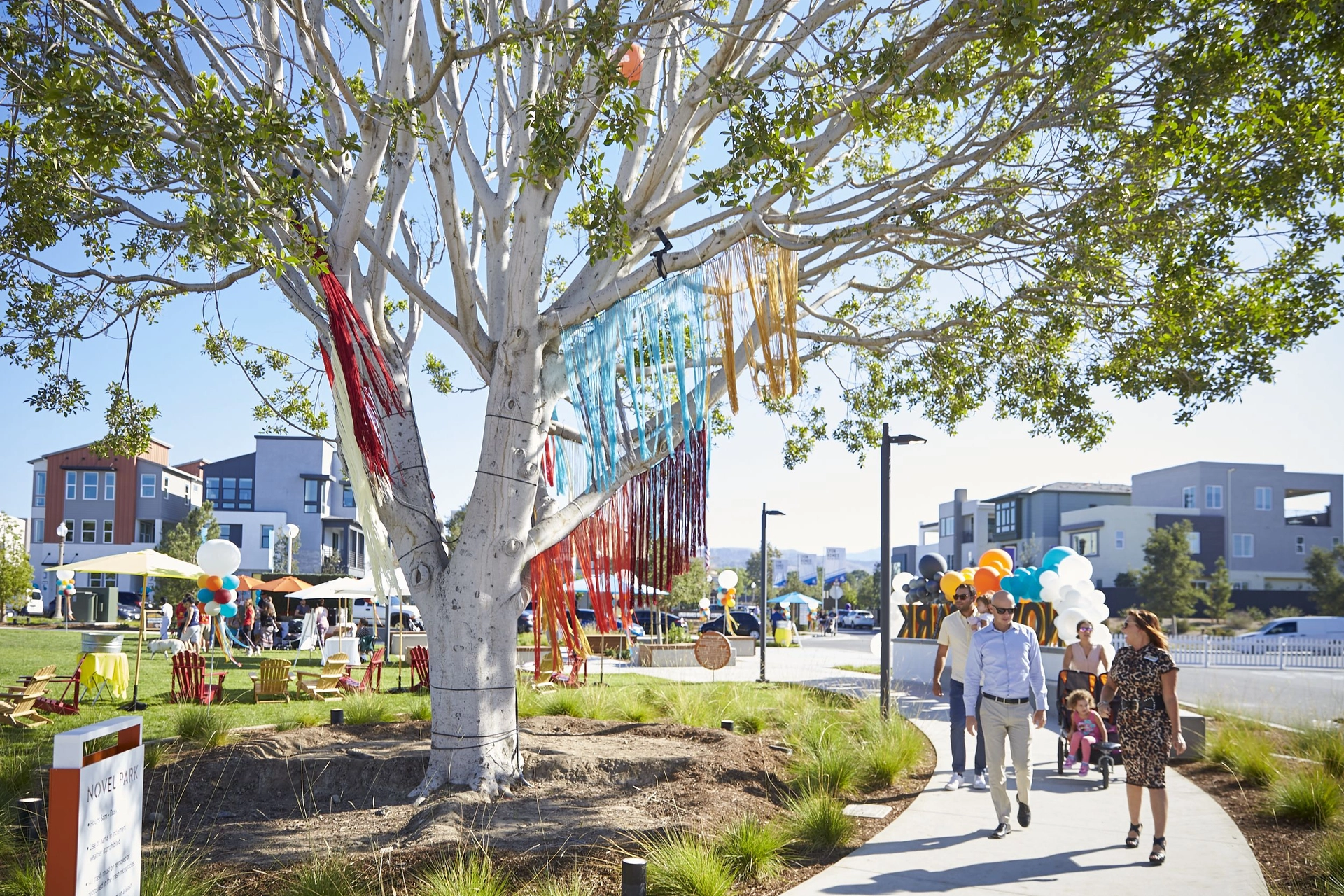
Here’s a Southland example: the Great Park Neighborhoods at El Toro Marine Base. My husband was an Air Force fighter pilot, so a fighter base is pretty interesting to me. How did that turn into the Great Park Neighborhoods? I worked with a developer who did the Great Park Neighborhoods, and the question was, how might we create a master plan community in the City of Irvine that is not similar to that which has become before us?
Irvine is a really beautifully planned community (by Donald Bren, Chairman of the Irvine Company, which built Irvine Ranch). So the Great Park Neighborhoods were going to be something different. It came from us talking to young people who worked for the developer and asking them, if you were going to do something fun and cool this weekend, where would you go?
And they said, “Well, there’s nowhere in Irvine to do it. We’d go to L.A. or to San Diego. There’s nothing here. We might go to Costa Mesa and go to The Lab, but in terms of what Irvine is, it’s pretty blah and pretty boring. So the thought was, how might we create in the Great Park Neighborhoods something that young people would say, “This is cool.”
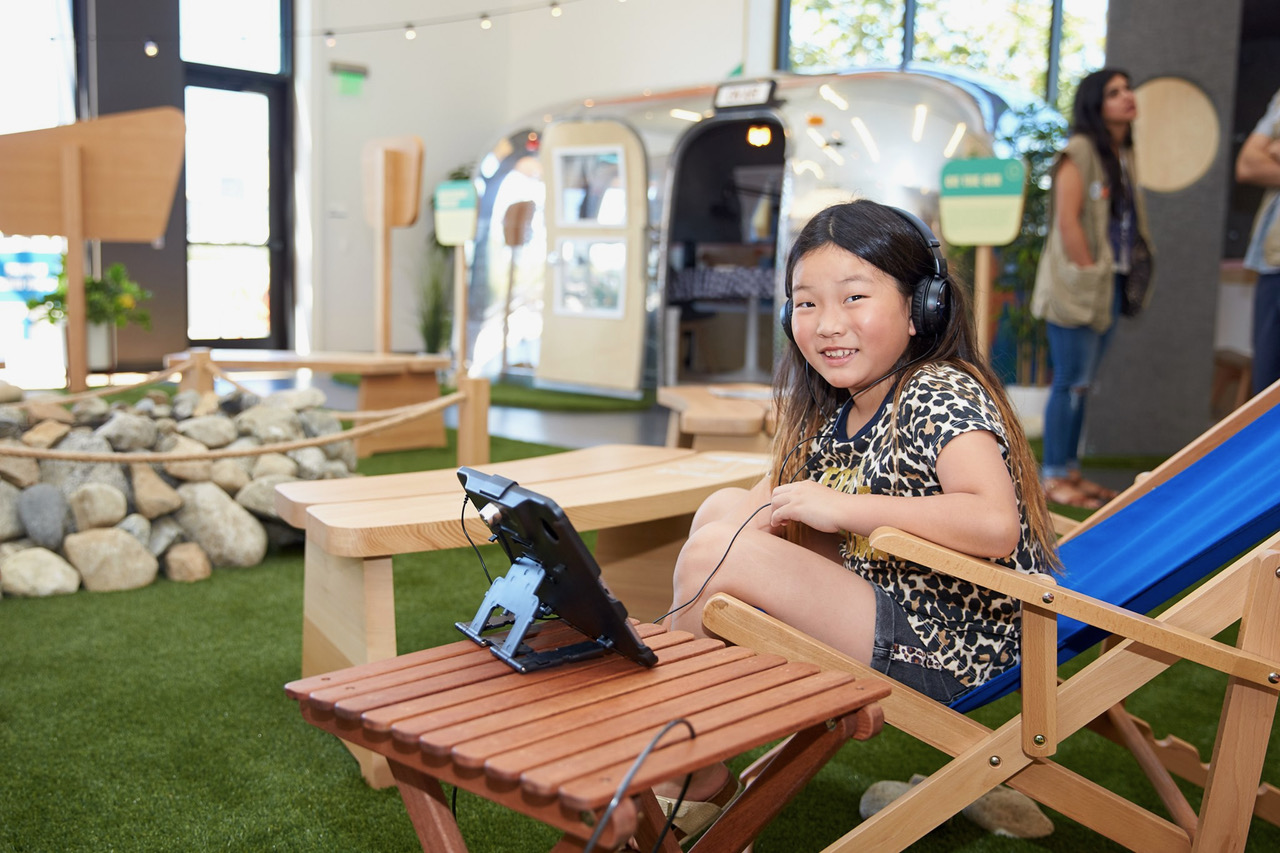
One thing we did was bring in KCRW for summer nights, and we brought together the broader OC community. We brought in StoryCorps – two people talking to each other, sharing their stories – and for three months we recorded the stories from the OC, over 100 of them, and it was record-breaking for StoryCorps in the Southland.
We invited people to come in. We trained the volunteers. It allowed people who came into the Great Park Neighborhoods to see that people ‘like me’ live here. Orange County is not the Orange County of your grandmother. Orange County is extraordinarily diverse, and the StoryCorps collaboration with an Airstream in the community made it visible and fun.
That’s an example of my randomly amorphous, undefined job. My work is all referral. I’m not really defined clearly, because it depends on the place and the case and the team.
My favorite small key building I’m working on in the Southland is Store One in the City of Anaheim (a hub for workforce training being developed through a private public partnership between the city of Anaheim and the Anaheim Community Foundation). It was the original Northgate grocery store. The González family came from Mexico and created this market where people could buy food that was like where they came from in Mexico, and from that start in Anaheim, the González family has gone on to build 50 grocery stores across the Southland from San Diego to the Valley.
When they were selling this original store, Northgate, the City of Anaheim decided to buy it – in one of the poorest zip codes in Anaheim – and turn it into a entrepreneurial hub for teenagers where they can learn cooking, management, filming, storytelling, how to run a business, a lot of hospitality that will serve them well when they go on to work. The Gonzalez family has been a great supporter of this job creation opportunity.
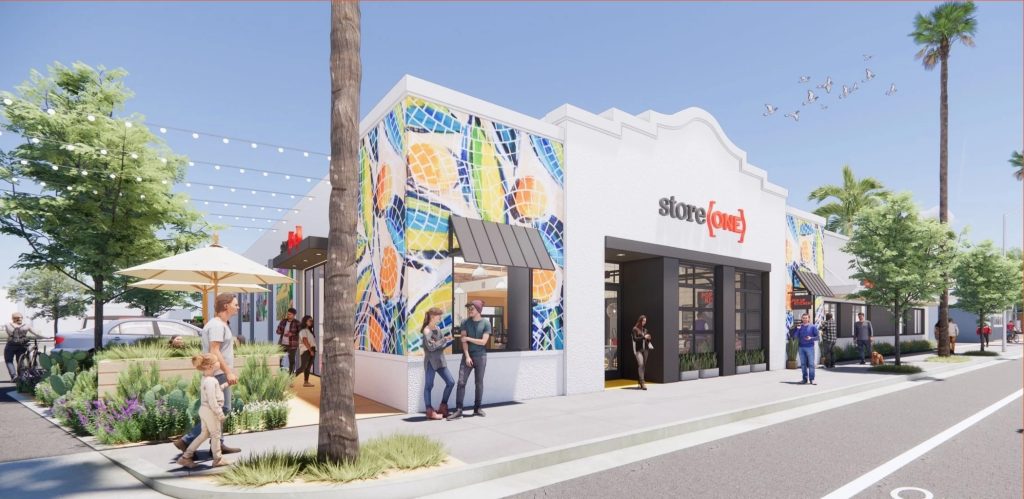
When Anaheim first purchased Store One, we created a zine. Three photographers worked with eight neighborhood teens, and asked, “What does this store mean to you?” The zine tells the story of Northgate Market in ways that reflect what a good developer needs to be: one who listens, hears the community, listens for the stories that exist there, and to what might come later.
There’s a great book called Thunder At Twilight: Vienna 1913/1914, and the author Frederic Morton said, “all great places have two things in them: one foot in memory and one foot in prophecy.” That’s what Store One is doing right now: creating a great place.
You asked a question about why do developers have a bad rap. I think there’s a lot of, you know, a guy comes in, bulldozes the old apartment, puts up a high rise and fills it with rich people. That is the cartoon of developers, and is true of some developers. Good developers are very thoughtful. They take a lot of time. They talk to people. They figure out what’s needed. They work with all the agencies.
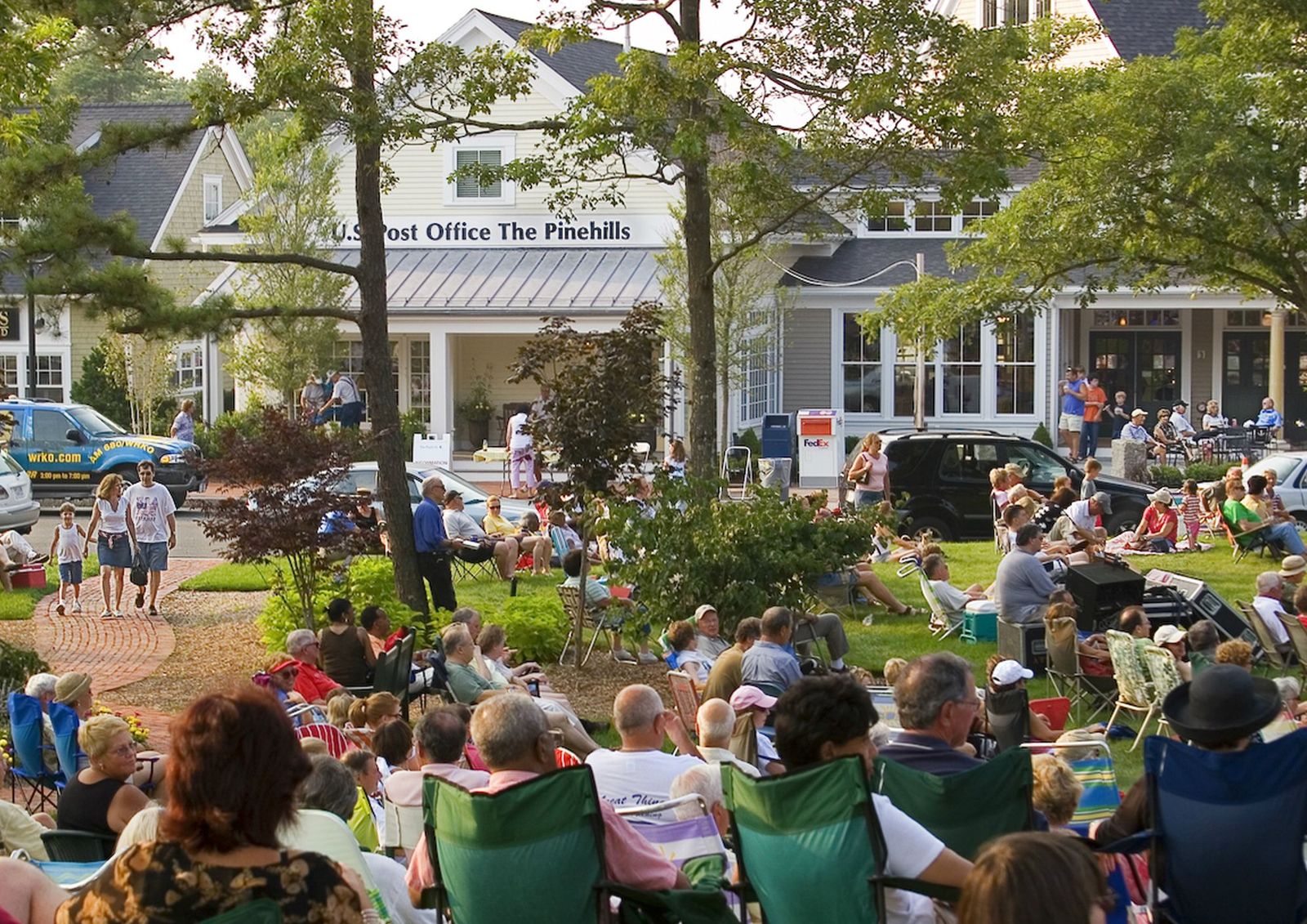
At Pinehills in Massachussets, I was part of the initial 6-person team that remained at the community for over 20 years. We honored the untouched land – 3000 acres of kettles and kames and cranberry bogs – and helped create a new community within Plymouth that invited everyone to gather at The Village Green. Trails, the rye tavern, post office, market, apartments, fire station. We were “good developers” who were able to see it grow in nuanced and ever-better ways. If I were a road, I would bend.
Good development is a very complex, sometimes very long process, and it usually takes a visionary to keep it going over the time it takes, whether it’s a Jason Foster or a Wayne Ratkovich or Grace Stepter (Director, Housing and Community Development, City of Anaheim); it’s people who make development with intention.
FA
What about your work in Inglewood?
SK
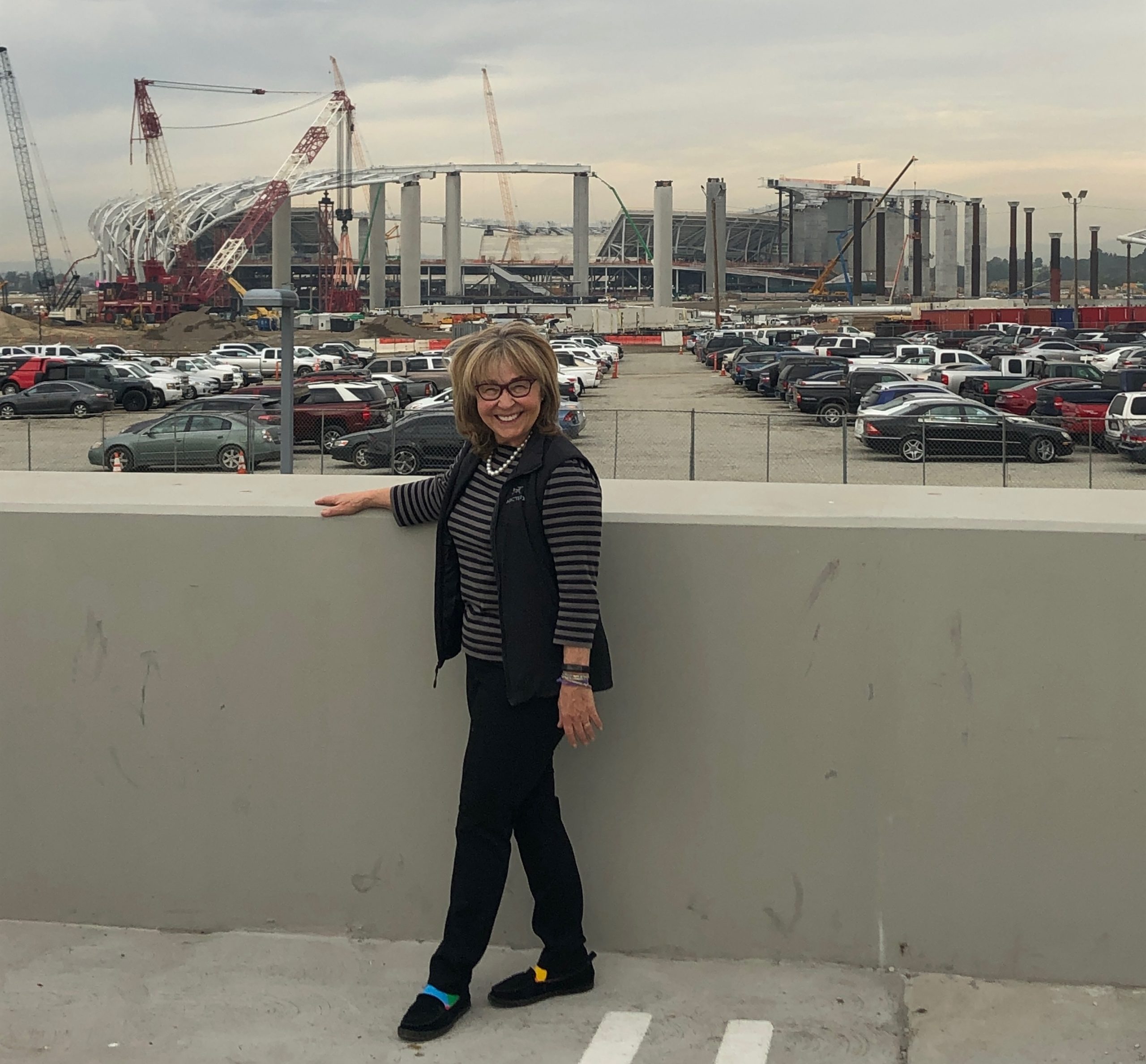
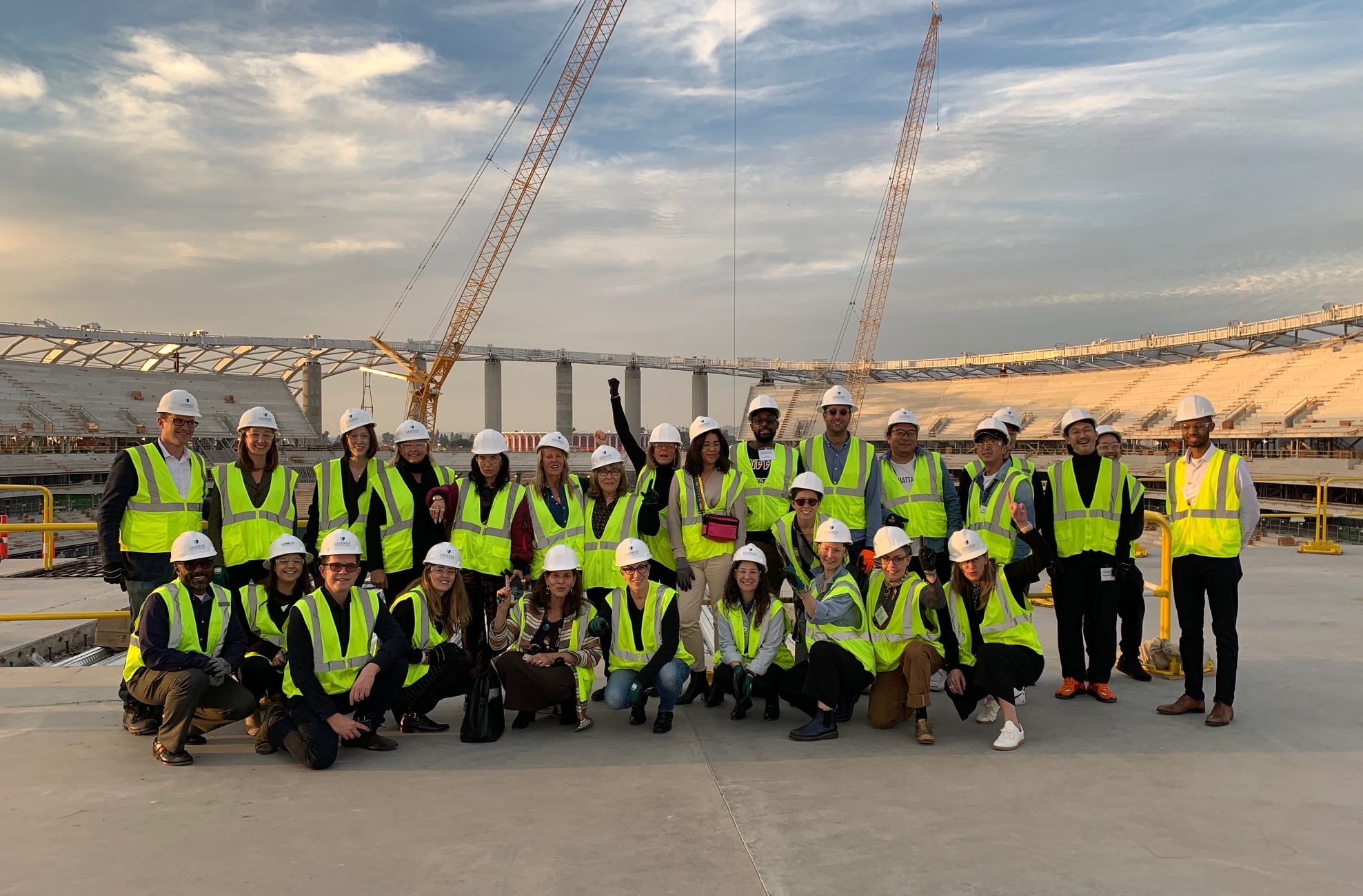
Inglewood has always been an interesting small town. Before SoFi came it had culture, Inglewood Open Studios and high home ownership, a great diversity of people who live there, great food. And then came SoFi, and also the Clippers’ Intuit Dome. Taking parking lots and an old racetrack and turning it into something new; the Stadium is like the Acropolis, an exquisitely huge building into which community benefits were thought about and delivered in some intentional ways.
I worked with Wilson Meany, who owned the land before Stan Kroenke came, and then they partnered with the Kroenke team to create the new Hollywood Park.
Early on we found photographer Michelle Asselin who had done Love, Money and Other People’s Children, about nannies and the kids they took care of in Manhattan. She had a studio in Inglewood and is a world-class photographer and artist. She worked with Wilson Meany, and before the racetrack was gone, she gathered stories about Hollywood Park. From that, she created a book for Angel City Press at L.A. Public Library.
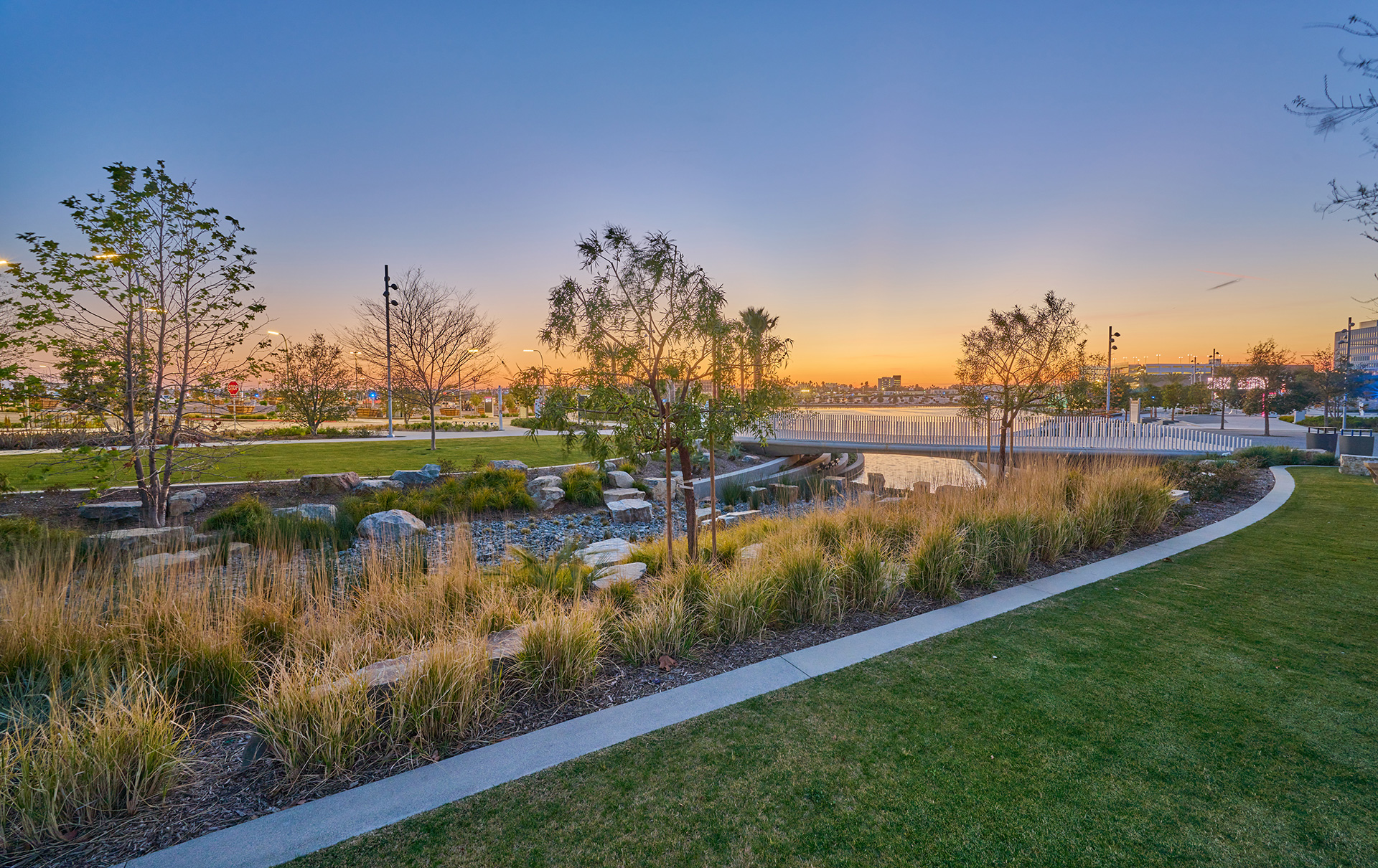
For me, documenting that story before it was erased was a poignant and meaningful moment for the community. Working with Hollywood Park, and blending it with SoFi Stadium, by means of walkways and gardens (designed by Studio-MLA) and a lake and a basketball court and art and food and fun that was available to everyone if they were just wandered through. It is both a challenge and a joy to be involved in a way that had some good community benefits — a part of what makes a good developer.
FA
So aside from your community development work you are deeply involved with the life of the city. You’ve served on numerous boards including CicLAvia and the Library Foundation. Talk about the urban fabric and how you see it intersecting with development, which often happens on self-contained parcels. Talk about that kind of synergy, and to what extent it’s even possible to create it.
SK
It’s super possible to create it, and the reason I love CicLAvia is you can see our city when you walk, or skate, or bike or take the Metro, and how might we do that when a project’s kicking off? One of the things we do is get on bikes and explore the neighborhood. CicLAvia has influenced peoples’ thinking about: Are you safe biking? Can you look at a neighborhood on foot? I’ve heard people — when they go to Pacoima and they see the mural district, or they’re in Watts and they go see the Watts Towers for the first time —say they are amazed at how glorious our city is on a bike, and how safe it is, and how welcoming the people are who live in the neighborhood. Every time CicLAvia does an event on MLK (Boulevard), there are people who live there who are out barbecuing, welcoming you in.
How do people begin to become local? You can’t do it online on a Zoom. You can only do it by getting out and being in the neighborhood with the people who live there. CicLAvia is one of the tools that allows us to do that. The library does a good job on that too. They set up a game making a passport and suggest, “Go visit the other libraries that exist in the city.” The notion is, how do you get people out of their comfort zone and their bubble where they live, and get them out into communities they don’t normally see? So that’s what we do with developers when we kick off.
One time we were in the Valley doing an adaptive reuse community. We got the team together and we had everyone go out four blocks north, south, east, and west, and bring back something they discovered. Somebody came back with a bottle of Russian vodka, and he said,”‘there are a lot of young women who live in this neighborhood, and this is their favorite, favorite vodka.” You’re not going to get that from a piece of marketing research.
There’s another book called The Art of Noticing by Rob Walker. A guide not to looking but to seeing. When you equip your team to notice, they will create a better community. Just start thinking differently. The art of noticing.
FA
In the course of working on The Good Developer series, I have heard a lot about developers’ current frustrations, and it’s a constellation of things: high interest rates, costs of labor, land and materials, tariffs, the war in Iran, linkage fees, transfer taxes, and then the endless red tape and what is perceived as resistant municipal departments. How do you see it?
SK
My big frustration is a lack of common sense. I’m not sure it’s a department or where the authority comes from, but I was enchanted by Jonathan Hale (of People’s Vision Zero) who decided he would just paint good crosswalks, since the city was taking forever to put them in. Then he got a ticket for painting these great crosswalks, and the city painted over the crosswalks. To me, that’s like Catch-22. How crazy can we be that we have a citizen contributing to the safety of children in our city, and then it’s whitewashed over by a city employee who is following a law?
So that probably tracks across all departments. There are wonderful people who work in the city who really do make a difference. So I can’t just paint out the whole city with one brush. I have found heroes in every department, but it doesn’t feel like it’s the easiest thing to do.
There’s a great Harvard Business School study on “lean consumption,” and the company that won the award for best lean consumption was a Portuguese auto body shop where, when you took your car in, had every single part ready for you, and it was done on time, perfectly, at the price they promised. We need some of that lean consumption — an easier way to do good stuff in our city. Bloomberg did some great digital work for City Hall, they created a map where you could see every single piece of vacant land in the city. That’s priceless to people. I’m hopeful that in the coming years we will get more lean consumption behavior for developers when they’re working with the city.
FA
So I look back on the development of Los Angeles and I see many women – in mom-and-pop partnerships, for example, like Nina and Arthur Zwebell. I also see many female solo proprietors, women who owned homes, leased them out, added extra dwellings, etc. One of the most famous early real estate entrepreneurs was Biddy Mason.
However, I don’t see that many women in corporate real estate, or at least not back in the day. You’ve worked at different scales of development, for cities and the private sector. As a woman in this field, have you felt kind of any sort of resistance to what you have to offer?
SK
I went to an all-women’s college and learned that my voice could be heard no matter what. And so, from 1968 on (after graduating from Wellesley, a year ahead of Hillary Clinton), I have felt any room I’m in that I’m the equal of any other person in that room. If there was resistance, I disregarded it.
When I look at the Sixth Street Bridge, one of my favorite things is the engineering team was almost all women. A Girl Scout troop came to the bridge and met the women engineers so these Girl Scouts saw their future in the women standing on the bridge in their hard hats, having built this remarkable place.
FA
Did you want to talk about your house, lost to the Palisades Fire, which was so important to you and your sense of place?
SK
I haven’t thought about it for a bit. Yes, I was doubly wounded, by losing my treasures – not my husband, not my cat, not my dog, just everything else in my house, all my books and things like my mom’s recipes in her hand – and I went to John Muir High School. So when Altadena burned, it was another heartache. Grief is not a straight path in recovery. But there was one book I read that has very much to do with this and with development and good developers. Together, by Vivek Murthy, talks about love. Not a sentimental thing, but love as community. And in the loss, I was helped and aided and supported by community,
People healed me, and that is what our communities do. It’s not just about where we live. It is not all about happiness. We all have loss in our lives, and community can comfort in those times of need. All the ways in which we go through life that make it meaningful, those things happen in the buildings we work in, and the places we go to see concerts, and the restaurants we stop into, and the homes we live in, and we’re at a moment in our lives in our country where the thing that will save us is community.
Read about our other Good Developers, and the Introduction to the year-long series.