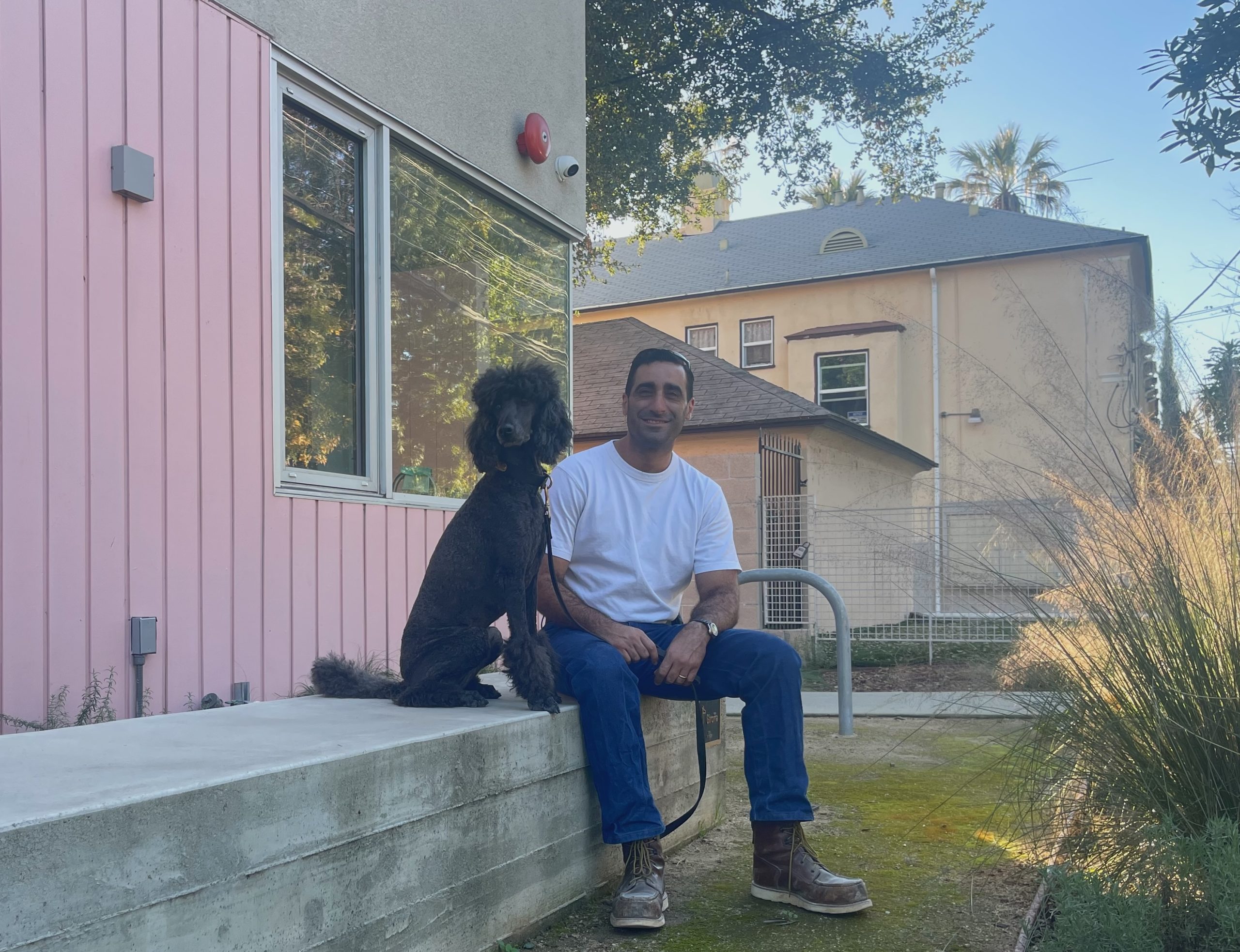
The Good Developer
January 2026
Joe Sharaf, Giraffe
Small Scale, High Style!
By Frances Anderton for FORT: LA
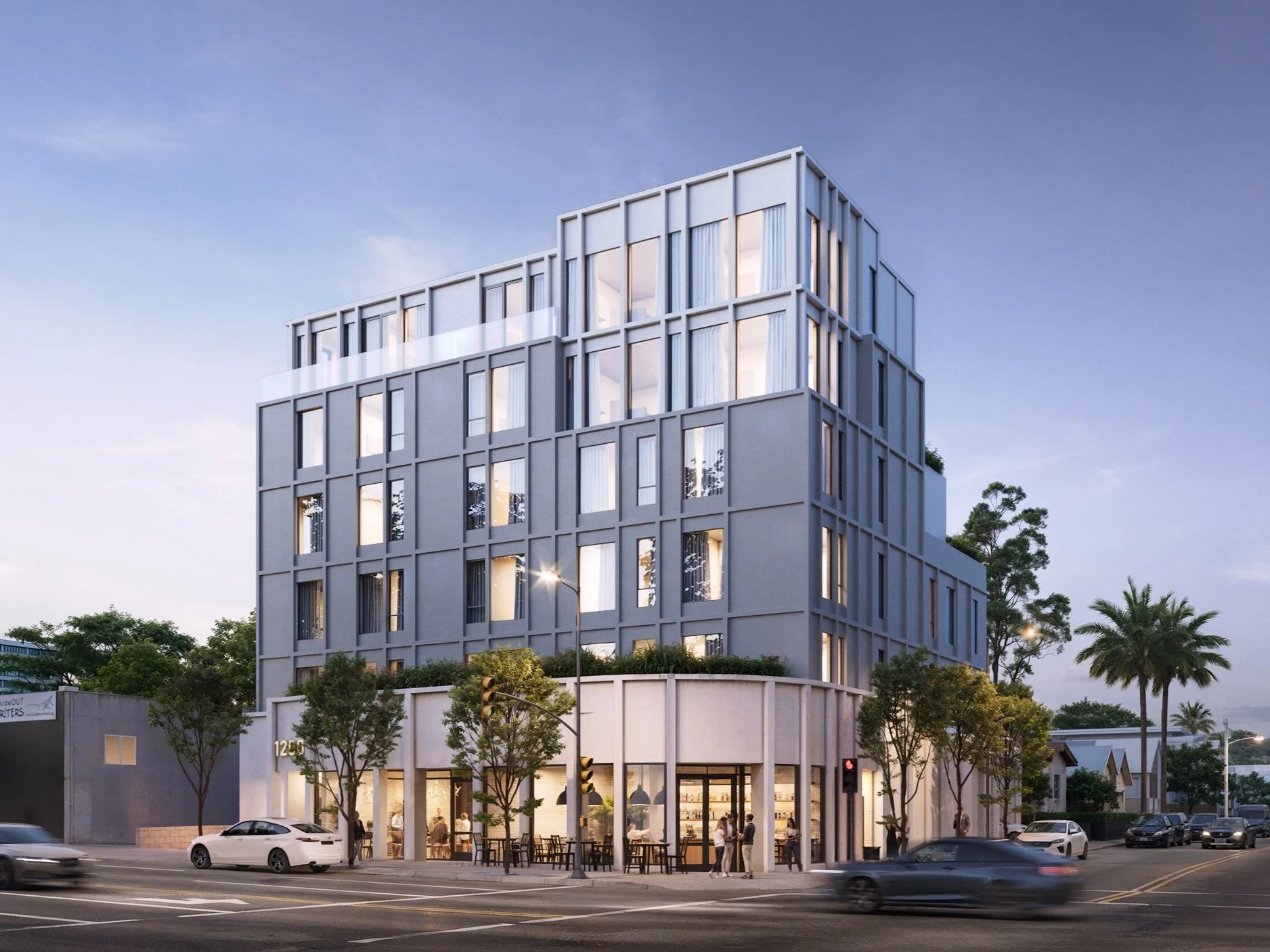
Key Buildings: The Donna (7-unit multifamily, designed by Yu2e); Pending: Rodney (20-unit multifamily housing, designed by FreelandBuck), 1200 Vermont Avenue (26-unit mixed use, designed by Bittoni Architects)
Most Annoying City Code/Tax/Department: Second egress stair, Low Impact Development (LID), the DWP
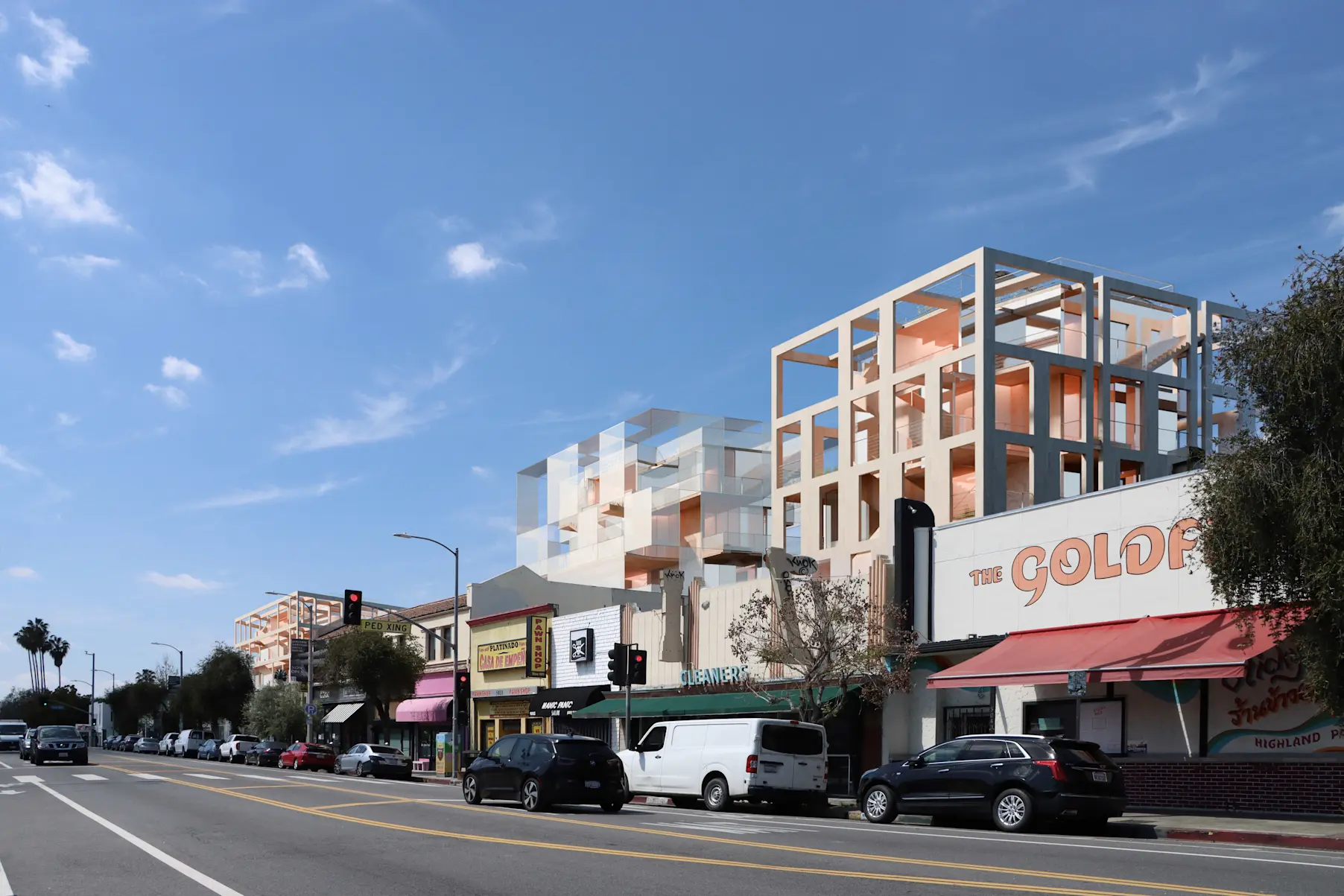
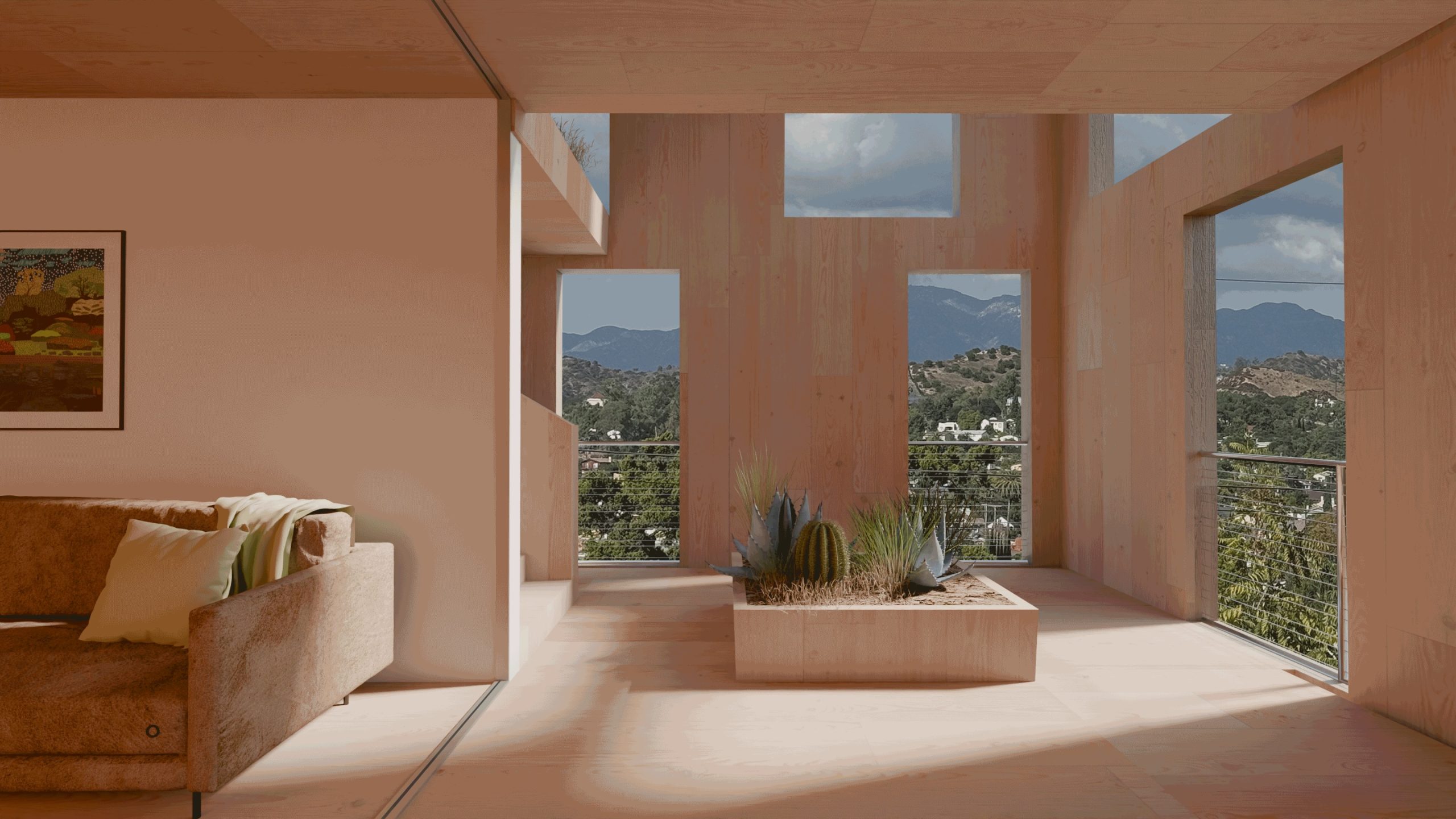
Best Amenity: The inside-outside courtyard at the Rodney, blending all the circulation and shared spaces together on the perimeter, behind a mesh screen that’s an architectural and experiential element.
Favorite Construction Site Sandwich: Soppressata Salami sandwich #3, Larchmont Village Wine, Spirits & Cheese
Fantasy Building Name: Primo (after his other dog)
Developer Hero: I have architects that I admire
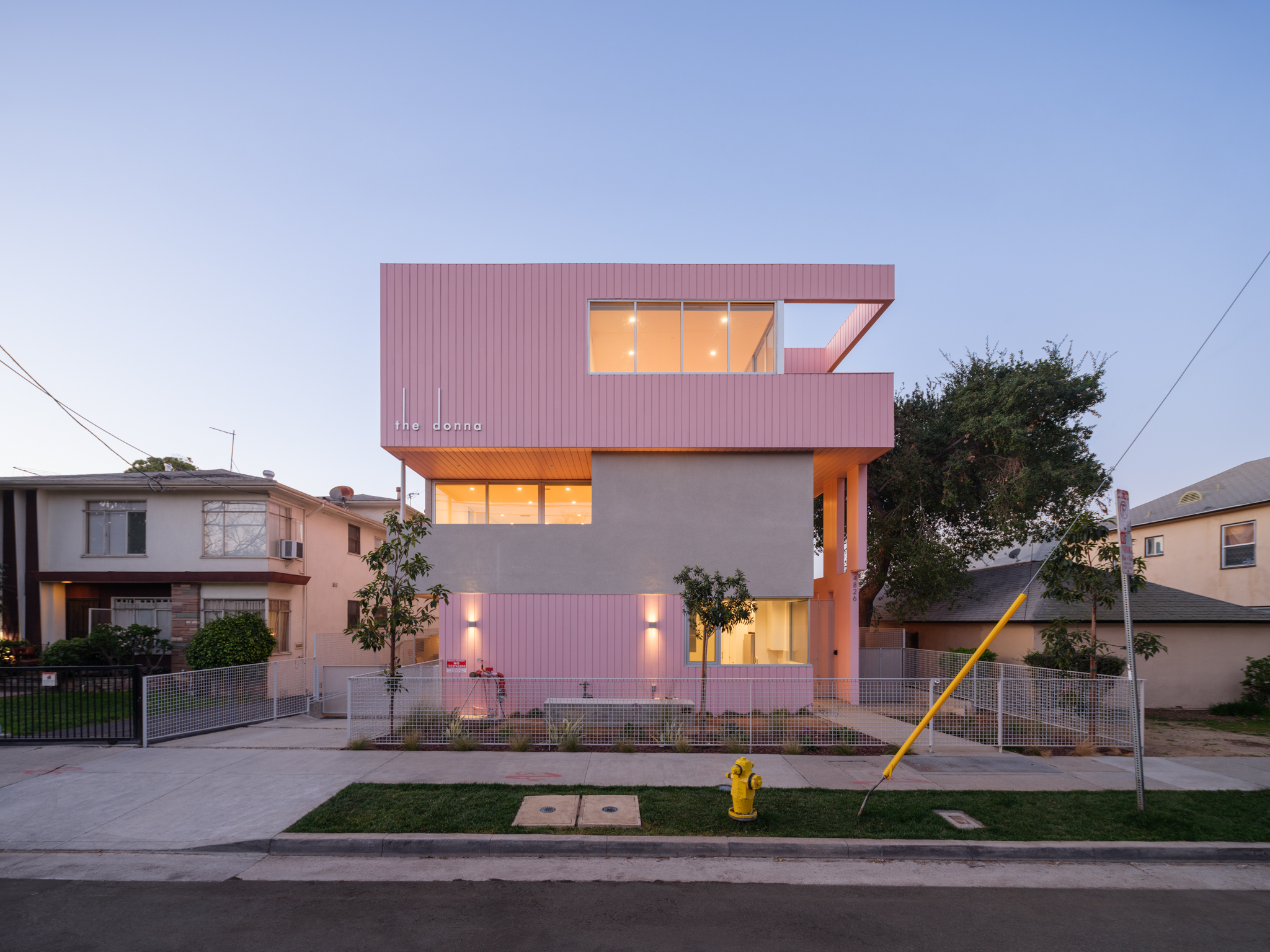
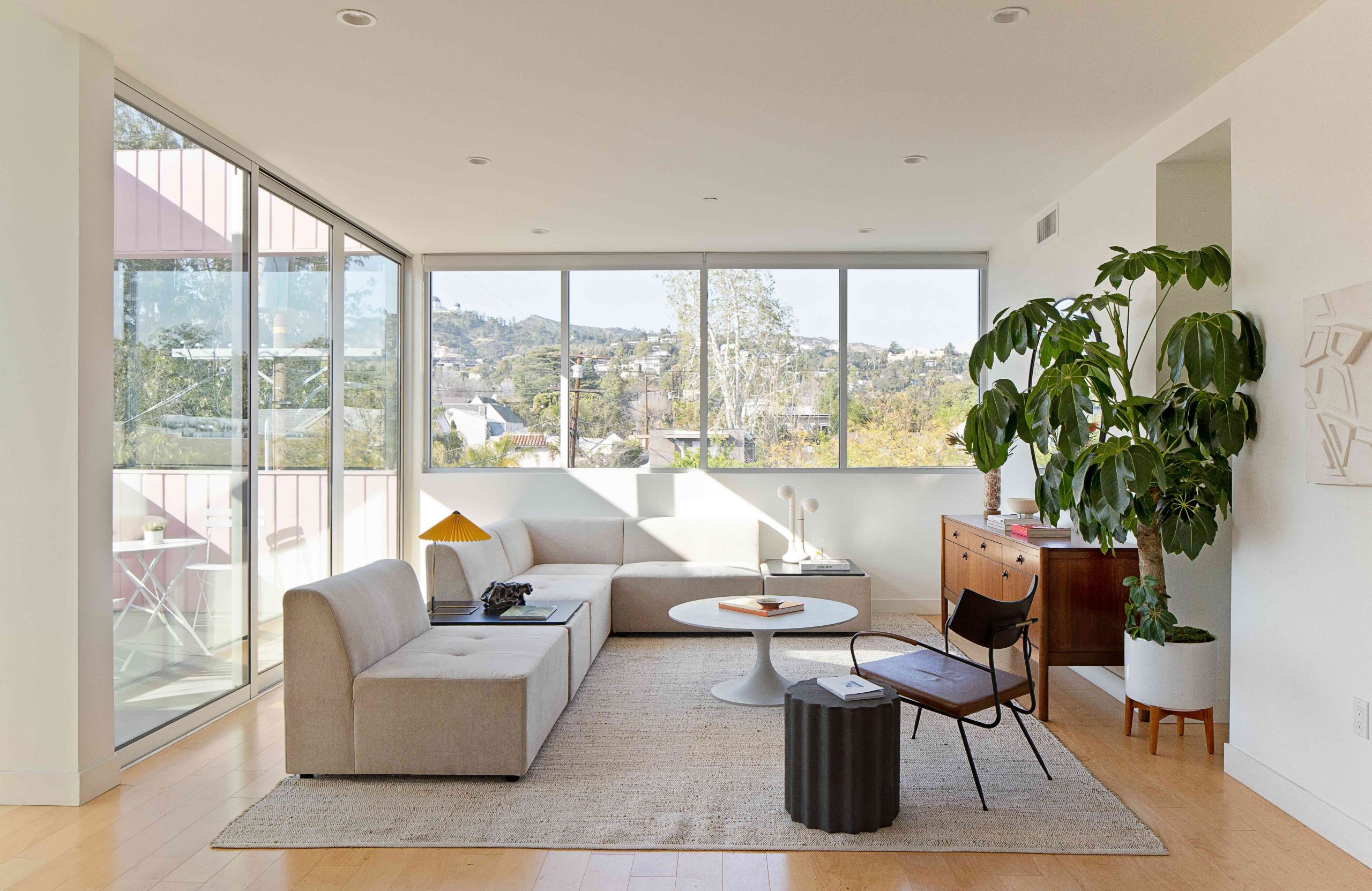
In the first interview in the FORT series The Good Developer, meet Joe Sharaf. Sharaf is head of his own company Giraffe, and he first garnered attention as a developer to watch when he unveiled The Donna, a 7-unit rental building on Franklin Avenue in Los Feliz. It was designed by architecture and engineering firm Yu2e and featured lofty ceilings, abundant natural light and generous balconies, all wrapped in a soft pink shell with a name in a quirky font, reminiscent of a midcentury dingbat.
Sharaf is a contractor and developer who focuses on small scale multifamily buildings. He uses the various paths offered locally and statewide to achieve extra density, meaning his buildings typically include one or more affordable units, and he aims for high design. In the pipeline is Rodney multifamily housing, designed by FreelandBuck, a six-story building also on Franklin Avenue, featuring 20 one- and two-bedroom apartments, along with parking for eight vehicles. It will replace a single family house (that will be shipped and rebuilt by a homeowner who lost theirs to the Eaton fire).
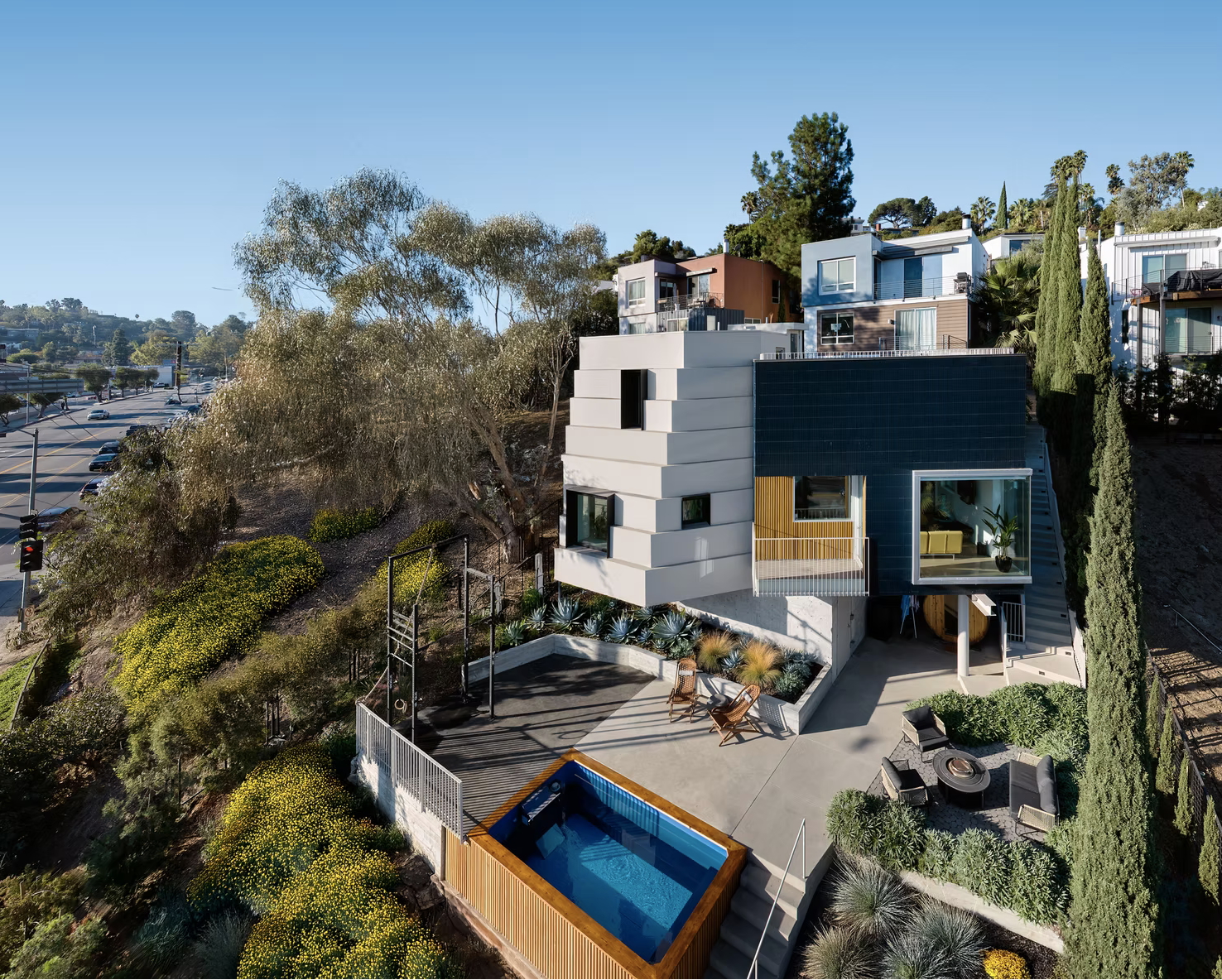
While developing his own projects, Sharaf builds for other clients, such as Ivan Hill ADU for Vivian Mo and Michael Trobisch, designed by Warren Techentin, and Ivan Hill Terrace, a 3-unit Small Lot Subdivison, designed by Oyler Wu Collaborative.
Sharaf studied at USC Architecture school and spent a summer working in the Shanghai office of former Dean Qingyun Ma. He subsequently worked for WET fountain designers, as a project manager in Las Vegas for the hospitality design company SBE, and then as a builder constructing high-end homes, after which, in 2016, he founded his own company Giraffe.
He is currently being hotly courted by architects hoping to garner a city owned site via the Small Lots, Big Impacts design and build competition launched by cityLAB-UCLA with the City of Los Angeles. They see in him a builder who values good design, and he returns the sentiment. In a Q&A at the construction site of Ivan Hill Terrace, he said, “if I had one piece of advice for developers starting out, it is, choose your architect wisely.”
The Good Words
Frances Anderton
Why did you name your company Giraffe?
Joe Sharaf
The name is a play on my last name.
FA
How did The Donna get its name?
JS
I named it after my poodle. That project was not intended to look like a midcentury building, and then my wife weighed in on the color, and then the building was pink. And all of a sudden it looked like a nod to midcentury dingbats. I never intended to have a sign on the building either, but the building turned into this thing that had a cute element to it. And I have this gorgeous, supermodel, standard poodle. Her name is Donna. We thought that is perfect. (The architects Yu2e have referred to the building as The Axolotl)
FA
You’re being courted by many architects. Why?
JS
I have a background in architecture. I went to architecture school, and I value good design a lot more than most other developers. I’m a builder, general contractor and a developer. I love building complex, interesting things. The projects that I work on for myself, I like them to actually pencil out. So I like a project that’s buildable and efficient, but is also design-forward and interesting. My biggest passion is building great architecture and housing, in particular at this small scale.
FA
How did you become a builder-developer?
JS
When I moved back to LA from Las Vegas, I became the right-hand man to a developer who was building a bunch of spec houses all over the West Side. He was building 15 houses a year and he was a one-man show like myself. And that’s really where I learned construction and also built relationships with a lot of the subcontractors. I was dealing with inspectors. I was pulling permits in the city. I knew how much things cost.
And then I bought a property in Hollywood Dell, and I built a 3-unit project. It was a house in the front and a duplex in the back, with a 3-bedroom and a 1-bedroom unit. I lived in the 1-bedroom and rented the others out, and it was covering my mortgage and putting an extra 5k in my pocket a month.
Then I segued into a 7-unit project, and now on to a 26-unit and a 20-unit project that hopefully will get built pretty soon. By the time those are built, it will probably be three or four years from now. And it would be nice to scale it up from there and maybe do a 50-unit project.
FA
How do you make these projects pencil?
JS
The only way to make these projects work from a development perspective is by building them in neighborhoods where there is a market, so that there is a return in the investment.
I strategically picked the lot for The Donna in Los Feliz, on an urban street, Franklin. There’s a certain demographic that lives in the neighborhood, and the level of detail and costs that we put into the project justify the amount of income that the project makes (the top floor 3-bed with large terrace leases for around $6,000.)
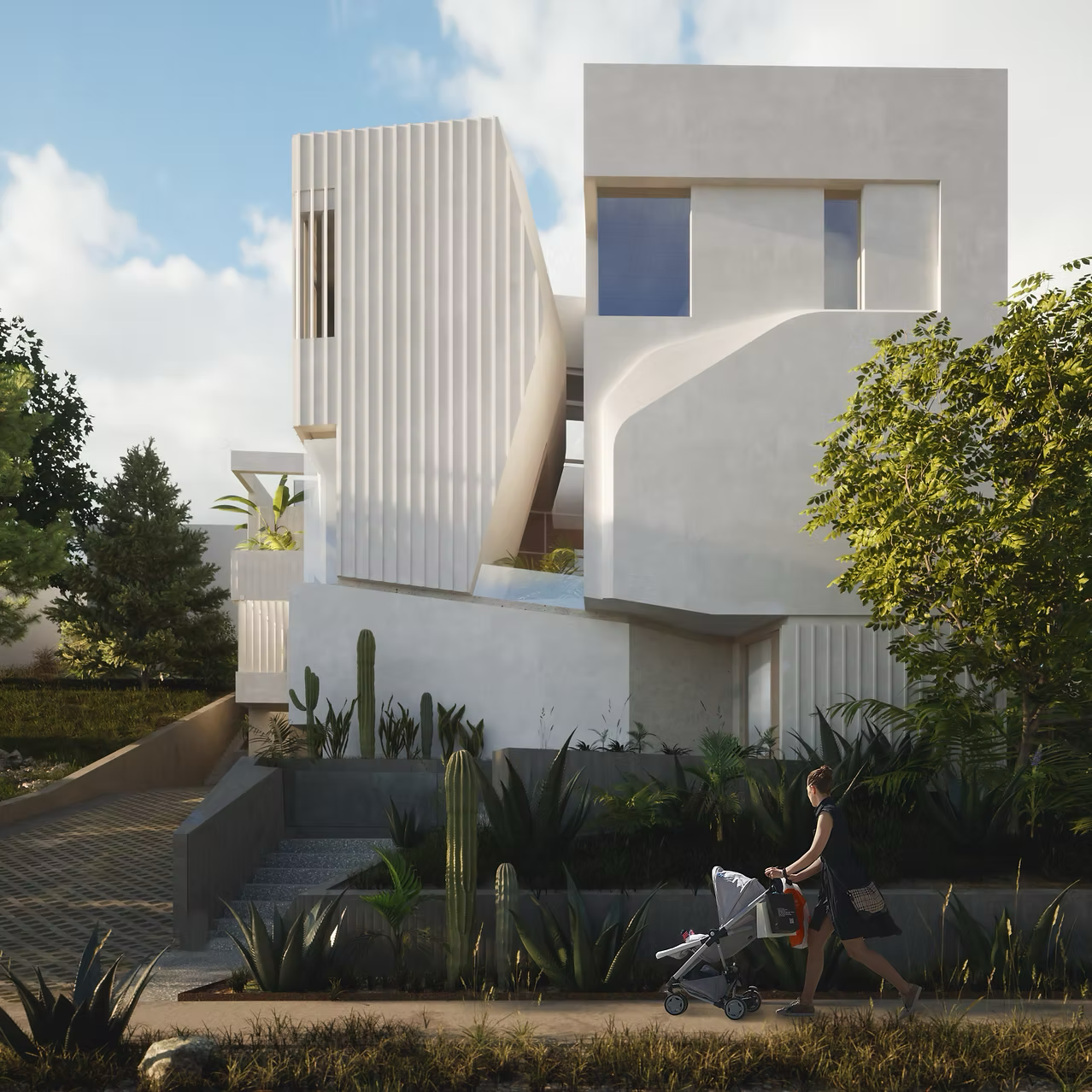
As far as the scale goes, I didn’t have an option to go for a larger housing project. I’m small and scrappy. I’m trying to take some swings right now and develop a couple of interesting multifamily projects for the next 10 years and get to a point where I’m just managing units. In the meantime, architects have noticed my projects and I get phone calls to build projects for clients, which wasn’t something that I had set out to do.
FA
Why is this custom, lower rise scale a hard nut to crack for a developer?
JS
I think traditionally, developers are interested in numbers and spreadsheets and cap rates, and this is asking for more. But my main thing as a developer is the collaboration with an interesting architecture firm, and my excitement is very similar to the architect’s excitement. It’s about like just creating something special, you know, that is going to serve a good purpose.
FA
So tell us about the project we are in, designed by Oyler Wu?
JS
The client lives in the house in the back, accessed on Ivan Hill Terrace, and they’re building these three houses. They’re moving into this one in the front and then potentially selling everything else off.
It’s a Small Lot Subdivision, so you have to split the lot up. The one we are in is 4-stories tall, with two CMU walls. I think it is still very much a lucrative way to develop stuff, a lot smarter than building spec houses, because you’re creating some light density, and I think the profit margins are better too. You’re creating multiple units on one lot.
This is a pretty exciting space (kitchen, dining and living areas combined in one flowing space that wraps around an inner courtyard). There’s all this double height space, and this really cool, corner window and inner courtyard that’s open to the sky. All the windows are wood. They’re really a beautiful product.
Most of the guys I work with are excellent craftsman, tradesmen.
FA
Why would someone choose small lot subdivision over, say, the options allowed by new laws like SB 1123, or SB9, or the city’s TOC or density bonus or CHIP? For developers such as yourself, if you’re looking for the route to building a small complex, what do you think is the best tool?
JS
Well, there are so many paths you can take, and it depends on whether you’re intending to sell them off or hold on to them and keep them as rentals.
It’s all starting to be over my head at this point, over a lot of people’s heads, and I have a land use consultant to start the conversation of, “what are we trying to accomplish here?”. And he’ll study all the paths and put them on the table and weigh in on what he thinks is the best route.
But I think they’re great. There’s more housing going into more urban areas where there’s existing infrastructure and walkability, and it’s incorporating these affordable units that get to live amongst the marketrate units. Everybody wins. It makes it more profitable for developers. It provides more housing in areas that we need the housing and and it provides some low-income housing.
FA
What I heard from some of these other developers is that despite the paths to small, gentle density complexes, they’re still coming up against obstacles and mandatory add-ons that add thousands of dollars.
JS
Yes, and they cause a lot of delays. You know, it’s always something. LID, for example, Low Impact Development. It sounds like a really lovely thing. It’s just catching rain water on your roof and using it for irrigation and putting it in rain barrels and and stuff. But it’s expensive and you need to get it cleared towards the end of the project. And (city staffers) don’t come to the site. You have to take photos of a process and send it through a portal, as the project is about 100% finished. It’s just rules on top of rules and all these clearances and costs that that just make it really difficult to get to the finish line.
The DWP sucks. They’re, “Do What we Please.” That’s the acronym for the DWP. They’ll make you wait as long as they want.
A big part of my challenge as a builder is just staying on an even keel. There’s just so many things that feel like a punch in the stomach in construction, whether it’s having the project on hold from utility companies to the subcontractors who are rough around the edges. If you’re too nice, they’ll walk all over you, and if you’re too hard on them, they’ll disappear on you.
FA
Still, the rewards must outstrip the stresses. You’re still doing it.
JS
I love seeing these projects built. I’ve been living in this neighborhood for 15 years and I really put myself in the shoes of potential tenants.
FA
What makes a good developer?
JS
I would say my secret sauce is my experience of having gone to architecture school and also being a builder. And if I had one piece of advice for developers starting out, it is, choose your architect wisely.